Iran-Made Device diagnoses Upper Gastrointestinal Cancers Accurately
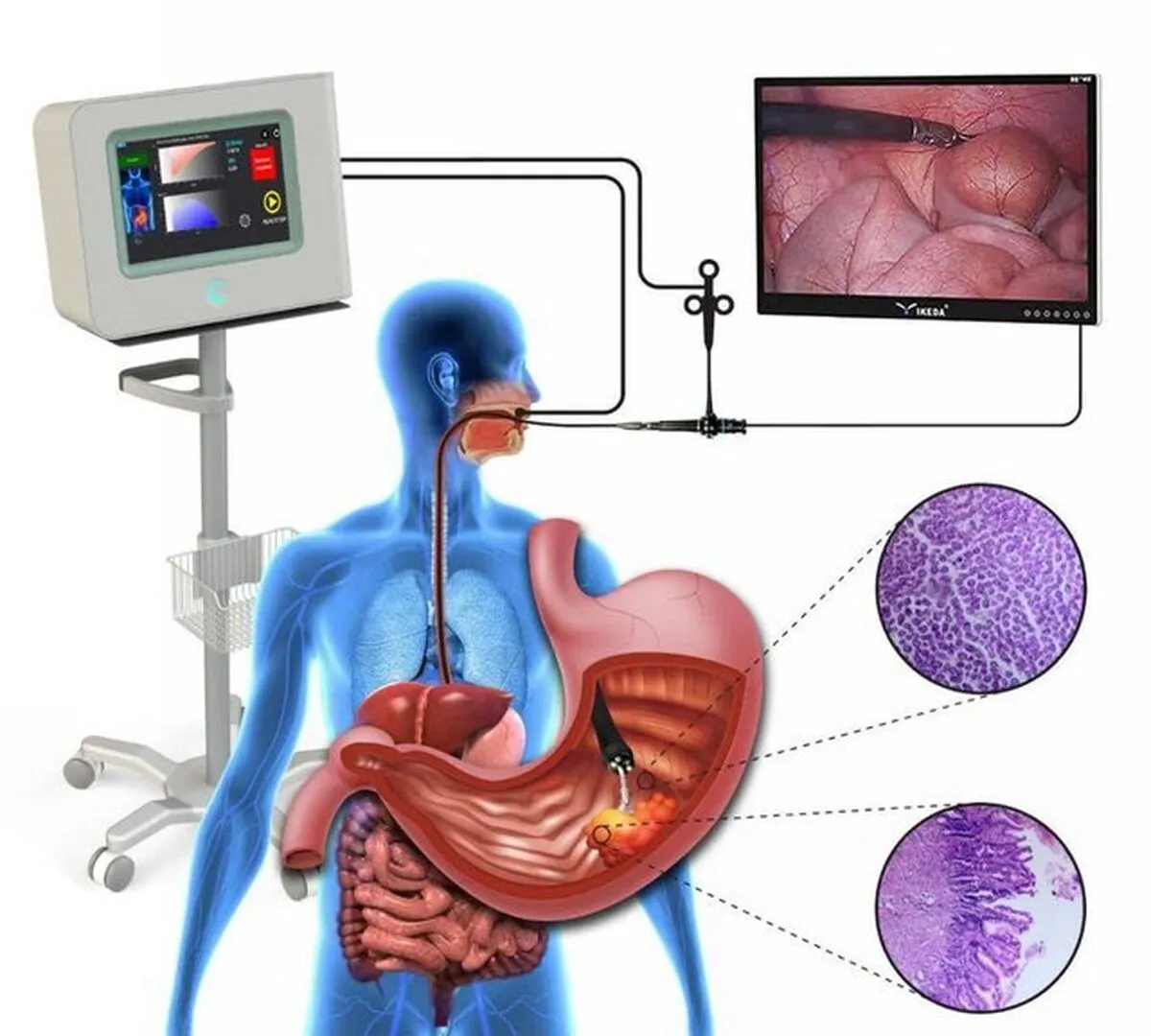
In this research, which was conducted as a pilot study within the framework of a collaborative work by Mohammad Abdolahad, a professor and Reyhaneh Mahdavi, a faculty member of the Faculty of Electrical and Computer Engineering of the University of Tehran, Reza Taslimi, an assistant professor of the Department of Gastroenterology and Liver Diseases, and Rouhollah Miri, an associate professor of the Department of Surgery of Tehran University of Medical Sciences, and the results of which were published in the journal Digestive Diseases and Sciences, an electrical sensor was introduced that can help in real-time diagnosis of high-risk lesions of the upper gastrointestinal tract.
The device, called the Electrical Endoscopic Mass Characterizer (EEMC), uses the principles of Electrical Impedance Spectroscopy (EIS) to distinguish between high-risk lesions that require excision and low-risk lesions that only require periodic review.
“One of the advantages of this system is that it is designed with modifications to the endoscopic biopsy forceps and, without interrupting the routine endoscopy process, can provide a pathology-calibrated diagnosis as the gold standard and help increase the accuracy of endoscopy,” Mahdavi said.
“In this study, which was conducted at the Imaging Center of the Gastroenterology Department of Tehran University of Medical Sciences, researchers tested the EEMC device on 52 patients undergoing endoscopic biopsy, and among these samples, 18 lesions were classified as high-risk. Statistical analysis results with standard pathology sampling showed that the device performed remarkably well; sensitivity of 94.7%, specificity of 93.9%, and overall accuracy of 94.2%. These figures indicate the potential of EEMC to reduce unnecessary sampling and increase the timely identification of lesions requiring treatment,” she said.
In a relevant development in October, an Iranian knowledge-based company had also increased the effectiveness of drugs in the treatment of breast and gastrointestinal cancers by producing a new medicine.
“This drug has created a major revolution in cancer treatment and is produced by using the conjugate drug method,” said Ali Aqajani, the business development manager of the knowledge-based company.
He explained that in this complex technology, antibodies as carriers deliver cancer cell-killing drugs precisely to the target, adding, “This method significantly increases the effectiveness of treatment compared to conventional drugs, while reducing side effects.”
“This drug significantly increases the lifespan of patients by delaying the recurrence of the disease and worsening of their condition by 6 times, and this achievement is considered an important development in the field of cancer treatment on a global level,” he said, noting that the drug is at present in full production and is ready to enter the third phase of clinical studies after receiving the code of ethics.
4155/v