Iranian Scientists Convert Agricultural Waste into Biochar
“The process we designed here is to convert biomass waste, including agricultural residues and the like, into value-added materials that have various industrial applications. We tried to produce value-added products from materials that are known as waste in Iran,” Bijan Yeganeh, a faculty member of the Faculty of Civil, Water, and Environmental Engineering at Shahid Abbaspour University and a member of the board of directors of a knowledge-based company.
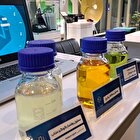
He explained that the main function of this system, known as the Thermal Conversion Catalytic System, is to convert biomass such as agricultural waste into a solid phase of biochar and a liquid phase called bio-oil, adding, “These two products can be used in various industries and play an important role in agricultural waste management.”
“Due to the high porosity of the biochar structure, this material enjoys a high capability to absorb and gradually release moisture, which can reduce the water requirement of agricultural products by 15% to 30%. This feature is very vital in the country's water shortage conditions,” Yeganeh said.
“In addition to its use in agriculture, biochar can be used in various industries; including as a source of carbon, in membranes, and even in enriched form in animal and poultry feed supplements. In some countries, like India, 2% to 5% of this material is added to animal feed,” he added.
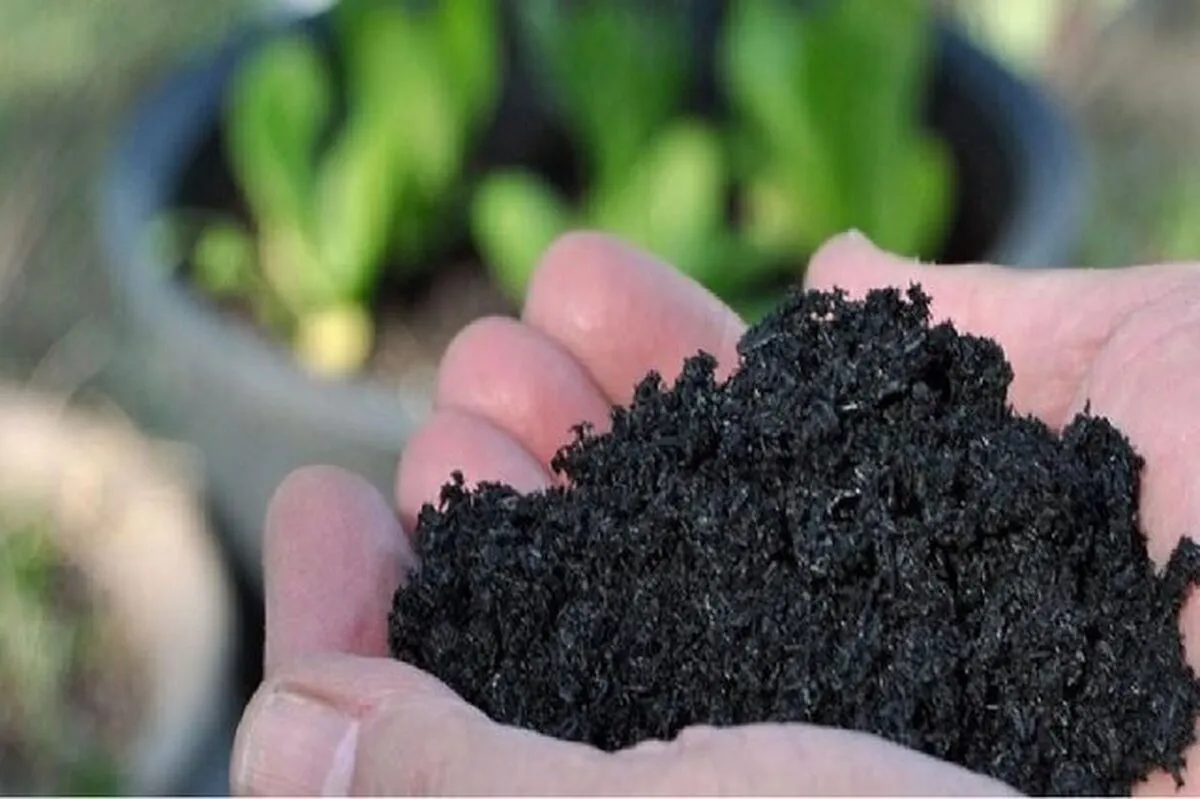
Biochar is black carbon produced from biomass sources [i.e., wood chips, plant residues, manure or other agricultural waste products] for the purpose of transforming the biomass carbon into a more stable form (carbon sequestration).
Black carbon is the name of the range of solid residual products resulting from the chemical and/or thermal conversion of any carbon containing material (e.g., fossil fuels and biomass) (Jones et al., 1997).
Biochar does not refer to a singular product with a given set of chemical and physical characteristics. Rather, biochar spans the spectrum of black carbon forms (Spokas, 2010) and it is chemically and physically unique as a function of the feedstock, creation process (pyrolysis unit), cooling, and storage conditions.
4155/v