Iranian Experts Develop Small-Scale Wastewater Treatment System
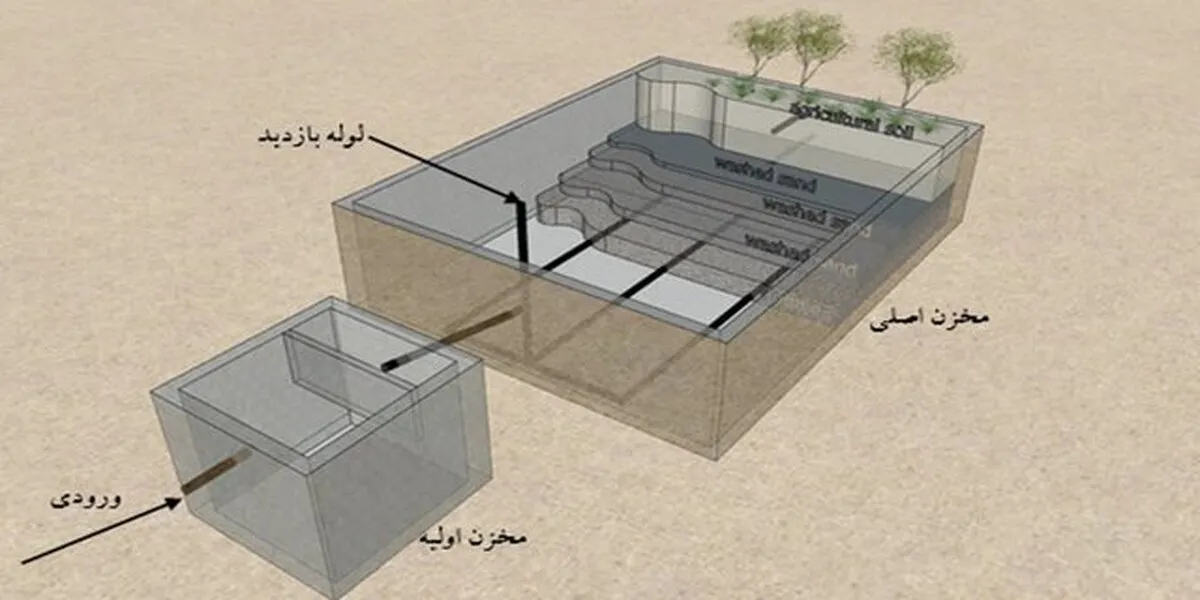
“The proposed system is a nature-based sanitation solution (NBS) or a wastewater treatment system that combines natural processes for the treatment and management of black and gray water and is considered an alternative to traditional septic systems or other wastewater treatment methods,” said Amirhossein Beikian, a member of the research team and a student at Isfahan University of Technology.
“This system offers a more sustainable and environmentally friendly way to treat wastewater using natural processes, helps with water scarcity, and operators can use its output to create green spaces or produce a productive crop,” he added.
“The results of this project are effective reduction of all parameters (BOD, COD, TSS, nitrate, phosphate, coliforms), final output fully compliant with Iranian standards, no need for electricity, pumps or specialized operators, simple, localizable design, suitable for arid and semi-arid climates, and the ability to generalize to villages without a sewage system,” Beikian said.
In a relevant development in September, a new study by Iranian researchers at the University of Tehran shows that advanced carbon membrane technology can remove hazardous pollutants from fish farm wastewater with an efficiency of over 90%.
The study showed that using carbon membranes in reverse osmosis systems can significantly reduce key pollutants in the industry's wastewater, including nitrate, phosphate, ammonia, and salinity.
“The study examines different types of carbon membranes, including carbon molecular sieves, activated carbon membranes, carbon nanotube membranes, and graphene oxide membranes, and emphasizes that these materials enjoy exceptional filtration capabilities due to their unique structure and extraordinary porosity,” said Arash Javanshir, a professor at the Faculty of Agriculture and Natural Resources at the University of Tehran.
“The research showed that the efficiency of removing critical pollutants by these membranes can exceed 90%. This achievement not only significantly improves the quality of the effluent water, but also allows for the recovery and reuse of water, which means less consumption of fresh water and the protection of natural resources,” he added.
Javanshir described the development of hybrid membranes and nanocomposites as another key finding of this research, and said, “This new generation of membranes, by combining the advantages of different materials, offers superior performance and enables the design of customized solutions for specific types of wastewater.”
“The research showed that factors like acidity (pH), temperature and composition of the incoming water leave a direct impact on the efficiency of these membranes. To this end, the research has proposed the use of real-time monitoring systems that provide operators with the ability to adjust and optimize the treatment process by providing immediate data,” he noted.
4155/v