University of Tehran Researchers Develop New Method for Corneal Wound Repair
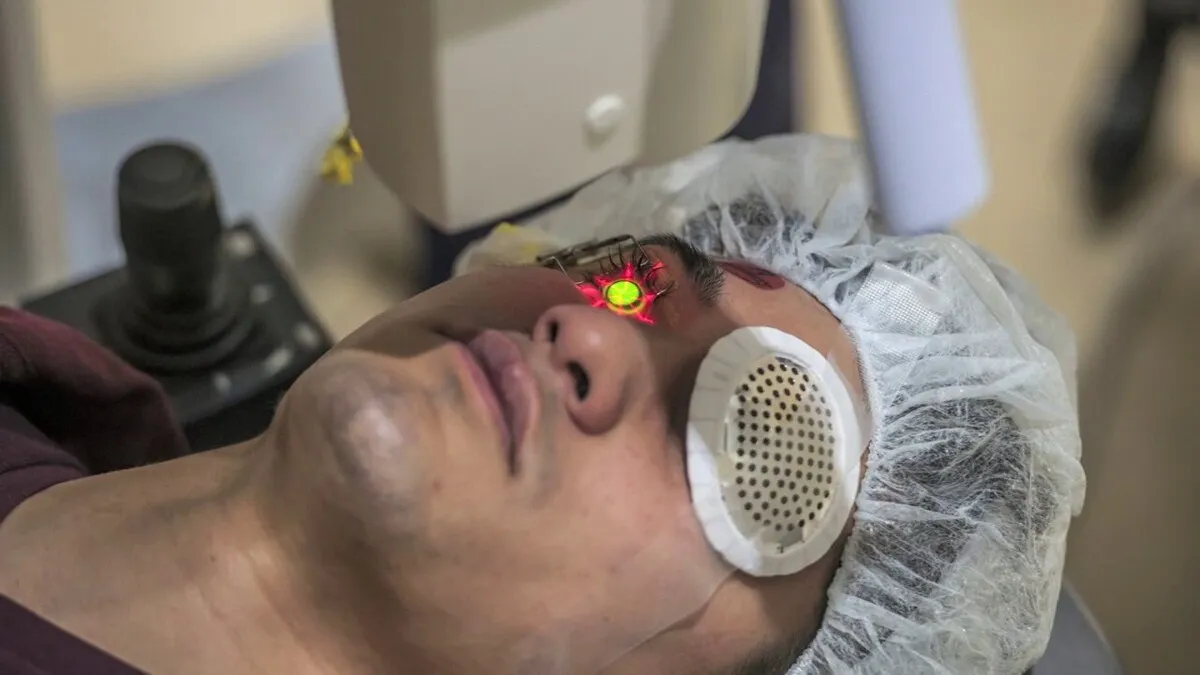
The University of Tehran scientists in collaboration with researchers at Shahid Beheshti University of Medical Sciences and the Faculty of Veterinary Medicine of the Islamic Azad University’s Karaj branch, investigated the effect of limbal tissue with conjunctival flap and bovine amniotic membrane on corneal wounds caused by alkaline burns.
The results can create a major revolution in the treatment of eye injuries and the prevention of blindness. The results of this study, which was conducted on 25 rabbits, show that the use of amniotic membrane - alone or in combination with limbal tissue - has increased the healing process of corneal wounds. Better corneal wound healing due to reduced keratocyte loss and increased angiogenesis are other results obtained in the use of amniotic membrane in the treatment of corneal wounds in the aforementioned method.
“In this study, we investigated the therapeutic potential of directly applying crushed limbal tissue fragments to alkaline corneal wounds in rabbits, in combination with bovine amniotic membrane or a conjunctival flap as a physical bandage,” said Mir Sephehr Pedram, a faculty member of the Veterinary Medicine department of the University of Tehran and head of the research team.
“Our aim was to assess the wound healing response in terms of re-epithelialization, inflammation, and neovascularization and to compare the biological effects of the two bandage techniques,” he added.
In a relevant development in October, Iranian researchers at the University of Tehran had also taken an effective step in the assessment and rehabilitation of children with autism by designing two native tools, ‘Hafbak’ and ‘Beta’, in the context of augmented reality.
Researchers at the University of Tehran, led by Ali Akbar Arjmandnia, a professor at the Faculty of Psychology and Educational Sciences at the University of Tehran, have succeeded in designing and indigenizing the new diagnostic and rehabilitation tools for children with autism, and the scientific effectiveness of these tools in improving working memory, executive functions, and reducing behavioral problems in children has been confirmed.
Arjmandnia stated that autism, as one of the common neurodevelopmental disorders, is accompanied by challenges in the field of social communication, stereotypical behaviors, and poor eye contact, and said, "In addition, serious problems in working memory, executive functions, and concentration are also considered as other symptoms of this disorder. This research project, using augmented reality technology, has developed two training packages for rehabilitation of inhibition, attention, and flexibility.”
“Based on the findings of this research, the use of the Beta package in the context of augmented reality has led to significant improvement in working memory and executive functions in autistic children, and has also reduced the severity of their behavioral problems. Since autistic children have difficulty communicating directly with those around them, using tools based on new technologies like augmented reality facilitates the interaction and learning process for them,” he added.
Arjmandnia explained that in one of these studies, we found that by using the Beta Rehabilitation Package in the context of augmented reality, the working memory and executive functions of autistic children had been improved and their behavioral problems were also reduced, adding, “At present, Hafbak and Beta are being used in more than 300 counseling and treatment centers across the country by psychologists, counselors and therapists in the field of children and adolescents.”
4155/v