Iran Develops High-Efficiency Organic Solar Cell Technology
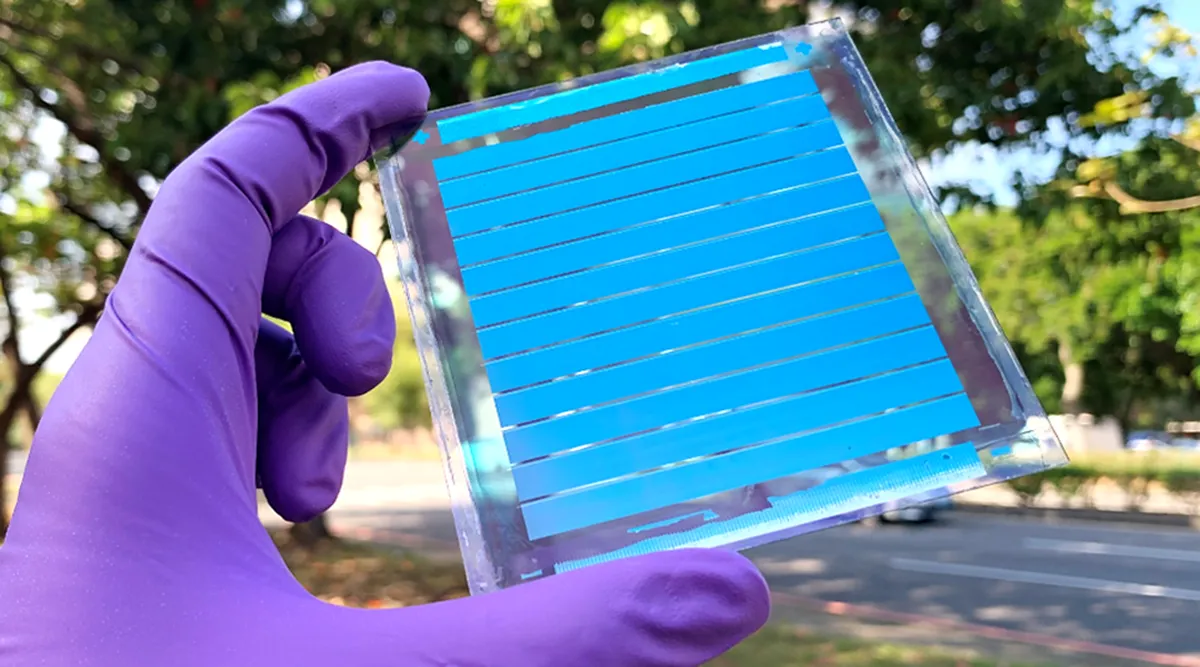
“Organic solar cells, as a new energy conversion technology, have attracted considerable attention in the past two decades, due to their advantages like low cost of preparation materials, highly scalable roll-to-roll devices, light weight, and mechanical flexibility,” said Asqar Asgari, a PhD graduate in photonics physics from the University of Tabriz.
“In this joint project, we were looking for new, low-cost, high-efficiency n-OS donor and acceptor polymer materials, and the efficiency of the studied system was optimized by structural design and selection of active morphology, exciton separation, carrier transport, and we also achieved the technology for growing and manufacturing cells in commercial sizes,” he added.
Noting that during the joint project, the power conversion efficiency of these cells reached more than 13% on a laboratory scale and over 8% for large commercial cells, Asgari said, “Organic solar cells have attracted much attention in the last two decades due to their several advantages like fast and low-cost fabrication, lightness and flexibility, and optical transparency. However, three problems of power conversion efficiency, device lifetime, and mass production of organic solar cells should be solved for this technology to compete with existing technologies in the industrial market.”
An organic solar cell (OSC) or plastic solar cell is a type of photovoltaic that uses organic electronics, a branch of electronics that deals with conductive organic polymers or small organic molecules, for light absorption and charge transport to produce electricity from sunlight by the photovoltaic effect. Most organic photovoltaic cells are polymer solar cells.
The molecules used in organic solar cells are solution-processable at high throughput and are cheap, resulting in low production costs to fabricate a large volume. Combined with the flexibility of organic molecules, organic solar cells are potentially cost-effective for photovoltaic applications.
4155/v