Iranian Firm Makes Nanosynthesis Devices
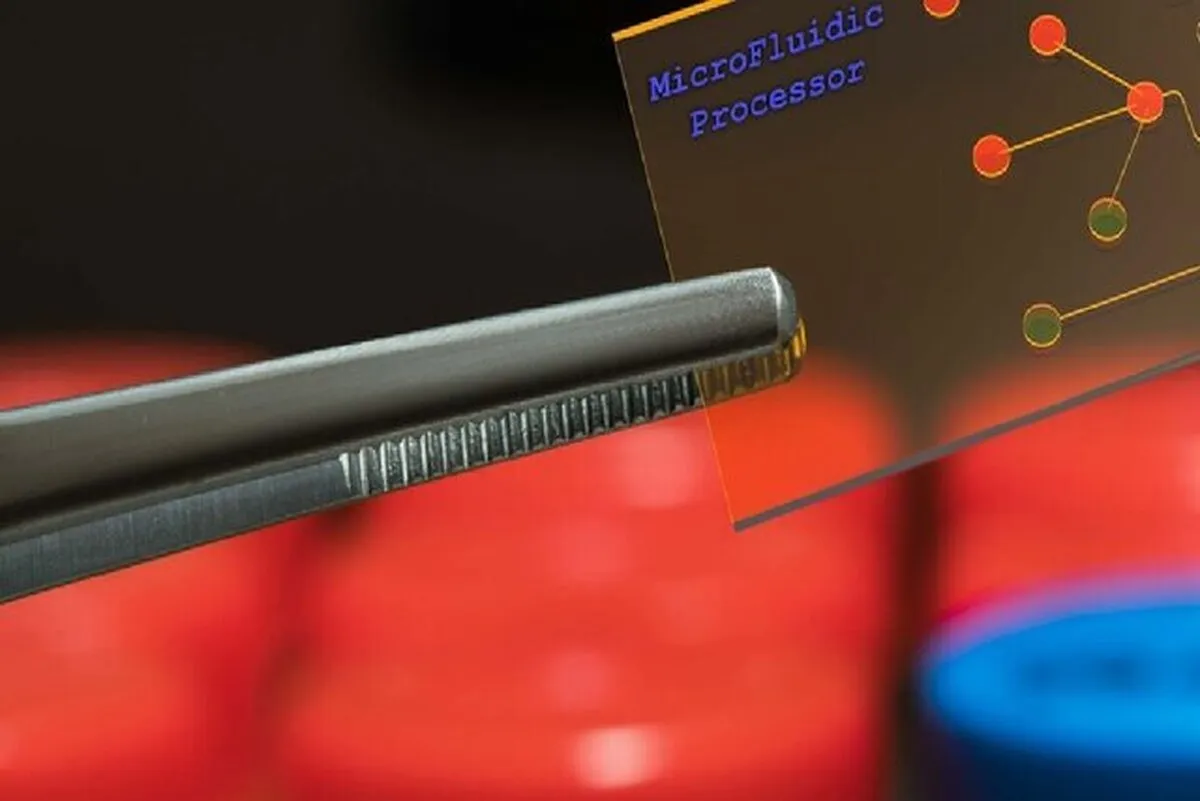
This technology facilitates the research and development of new drugs and the production of vaccines and chemotherapy drugs.
“Our device is actually designed for the production of microfluidic technology and can produce a wide range of drug nanocarriers or nanoparticles,” said Seyed Ali Mousavi Sha’eq, the managing director of the knowledge-based company.
“The device is available in both desktop and industrial classes and is used to produce various types of drug-containing nanoparticles or nutrients for applications in production of vaccines, chemical drugs, food supplements and skin care products,” he added.
“This device operates on the basis of highly rapid mixing of the solutions required for the production of nanocarriers. The two solutions are quickly mixed inside a microfluidic chip, forming drug-containing nanoparticles. The particle size produced by this device is very suitable, eliminating the need to use size reduction methods to reduce the particle size,” Moussavi Sha’eq said.
Iran has made nanotechnology a priority in recent years, achieving remarkable success. The nanotechnology research website StatNano has ranked Iran as fourth in the world in nanotechnology publications.
Head of the Strategic Technologies Development Center of the Iranian Vice-Presidency for Science, Technology, and Knowledge-Based Economy Saeed Sarkar announced in August the production of three advanced cancer and fungal drugs in the country by using nanotechnology.
“At present, nearly 140 health products based on modern and nano technologies are produced in the country, and some of these products are exported abroad,” Sarkar said.
“Last year, three anti-cancer and anti-acute fungal infections drugs, which previously had a total import of over $6.5 million, were produced and presented to the market with domestic technology. These three drugs include a drug for treating leukemia, a drug for treating pancreatic cancer, and an injectable drug for fungal infections,” he added.
Sarkar also announced the start of implementation of 20 technological development projects this year, including the SMA drug, diagnostic kits for gastrointestinal cancer, and health products.
4155/v


















