Genetic Prediction of Hearing Loss Moves a Step Closer
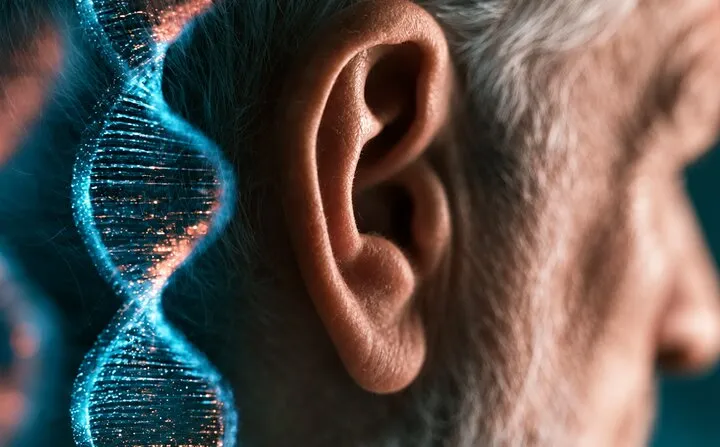
Sensorineural hearing loss is one of the most common sensory impairments worldwide. However, detecting it early enough to alter its clinical course remains a major challenge in modern medicine. Traditionally, identifying the genetic basis of complex sensory disorders has relied heavily on large electronic health record databases.
These databases primarily track patients’ conditions through diagnostic codes, which often fail to capture the subtle, subjective and physiological changes associated with hearing impairment.
Now, a multidisciplinary team of clinical audiologists, otolaryngologists and bioinformatics specialists at Vanderbilt University Medical Center (VUMC) has demonstrated that replacing broad diagnostic codes with detailed clinical test results—a method known as precision phenotyping—can substantially improve the identification of genetic variants associated with hearing loss.
The findings point toward a future in which individuals at increased risk of hearing loss could be reliably identified before experiencing noticeable declines in hearing.
To overcome existing limitations, the researchers used BioVU, Vanderbilt University Medical Center’s large biobank, which contains de-identified genetic data linked to electronic health records. They identified and cross-referenced comprehensive clinical audiometry records—including detailed measurements of hearing thresholds across different sound frequencies—with genomic data from 16,000 individuals.
Using this extensive dataset, the team developed polygenic risk scores (PRS) based on precise quantitative audiometric measurements and tested them in an independent validation cohort. The results showed that scores derived through precision phenotyping had greater predictive power for hearing loss than scores modeled solely on standard diagnostic codes.
The ability to predict hearing loss at the genetic level could have important clinical implications. Early identification of at-risk individuals could enable timely hearing rehabilitation, noise-protection strategies and monitoring protocols before damage to the sensory hair cells progresses to functional communication difficulties.
The research team plans to refine its genomic models further so they can predict not only whether hearing loss will occur, but also specific hearing profiles and the frequencies most likely to be affected. This approach could provide a new roadmap for preserving hearing health throughout a person’s lifetime.