New Strategy Could Improve the Durability of Organic Solar Cells
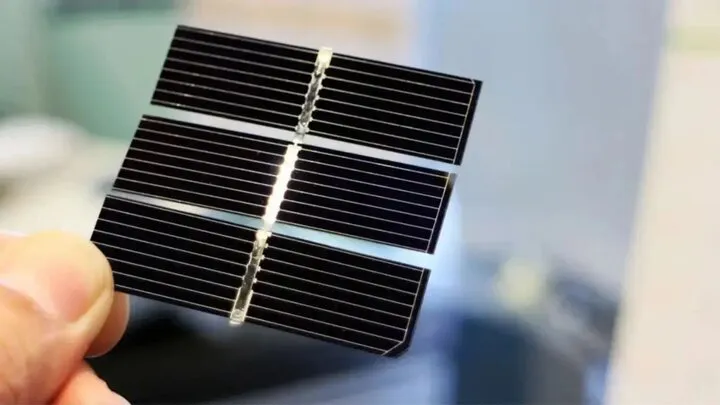
Organic solar cells offer a lightweight, flexible, carbon-based alternative to conventional silicon cells and hold considerable commercial potential. However, their delicate layers typically degrade rapidly when exposed to heat and prolonged sunlight.
To address this stability challenge, a research team at the Ningbo Institute of Materials Technology and Engineering (NIMTE), part of the Chinese Academy of Sciences (CAS), has developed a molecular-locking strategy that chemically anchors the delicate layers of solar cells to one another.
The approach introduces a specialized interlayer into the cell structure, connecting the photovoltaic materials to the electrodes through chemical bonds. This architecture creates strong molecular linkages that improve energy-conversion efficiency and the long-term durability of large-area solar modules.
The Challenge Facing Next-Generation Solar Cells
Organic solar cells (OSCs) capture sunlight using ultrathin molecular layers known as self-assembled monolayers (SAMs), which are deposited on transparent electrodes. The interface between the electrode and the organic layer is inherently unstable. Under intense heat and prolonged light exposure, chemical bonds can break, causing the layers to detach from the surface and ultimately leading to device failure.
This problem presents solar-cell researchers with a difficult three-way challenge: balancing high efficiency, long-term stability, and the ability to manufacture devices commercially at scale. Until now, optimizing one of these properties has often come at the expense of the others.
To strengthen the vulnerable interface within the solar cell, the NIMTE research team incorporated an ultrathin indium chloride interlayer into the device structure. When heated, the interlayer undergoes a localized chemical reaction that releases chloride ions and forms a dense network of interconnected indium–oxygen–phosphorus bonds. The resulting chemical network acts as a robust anchor, securing the photovoltaic molecules in place rather than allowing their attachment to weaken.
Durability Testing
Heating the material triggers a chemical reaction that removes free chloride ions and establishes strong bonds between indium, oxygen, and phosphorus. This process creates a durable protective network across the surface. The newly formed interlayer firmly anchors the solar-cell materials, substantially enhancing the overall stability of the device.
The researchers explained that the interlayer initiates ligand exchange, forming a robust, dense, and uniform indium–oxygen–phosphorus coordination network with multidentate bonding. This network firmly attaches the self-assembled monolayers to the surface.
The strategy immediately improved device performance across all the major metrics evaluated in the study. Small-area laboratory cells achieved an impressive power-conversion efficiency of 20.4%. Meanwhile, larger modules with an area of 15.6 square centimeters recorded a record-breaking efficiency of 18.8%.
The devices also demonstrated remarkable durability. After 2,000 hours of continuous operation under constant illumination, they retained more than 85% of their initial performance.
Professor Liu Quan, a researcher involved in the study, said: “We extended this approach to large-area modules with an aperture area of 15.6 square centimeters and achieved a record-breaking power-conversion efficiency of 18.8% based on the active area.”
Toward Commercial Applications
This broadly applicable chemical-locking strategy offers a potential pathway toward the commercial deployment of organic photovoltaic technology. By addressing the three-way challenge of efficiency, stability, and large-scale manufacturing, the approach could bring flexible solar technology one step closer to mass production.
According to Interesting Engineering, future applications could include surfaces such as skyscraper windows, vehicle roofs, and smartwatch casings, which may quietly generate clean electricity through these sophisticated chemical connections.