Reddit sheds light on drug side effects
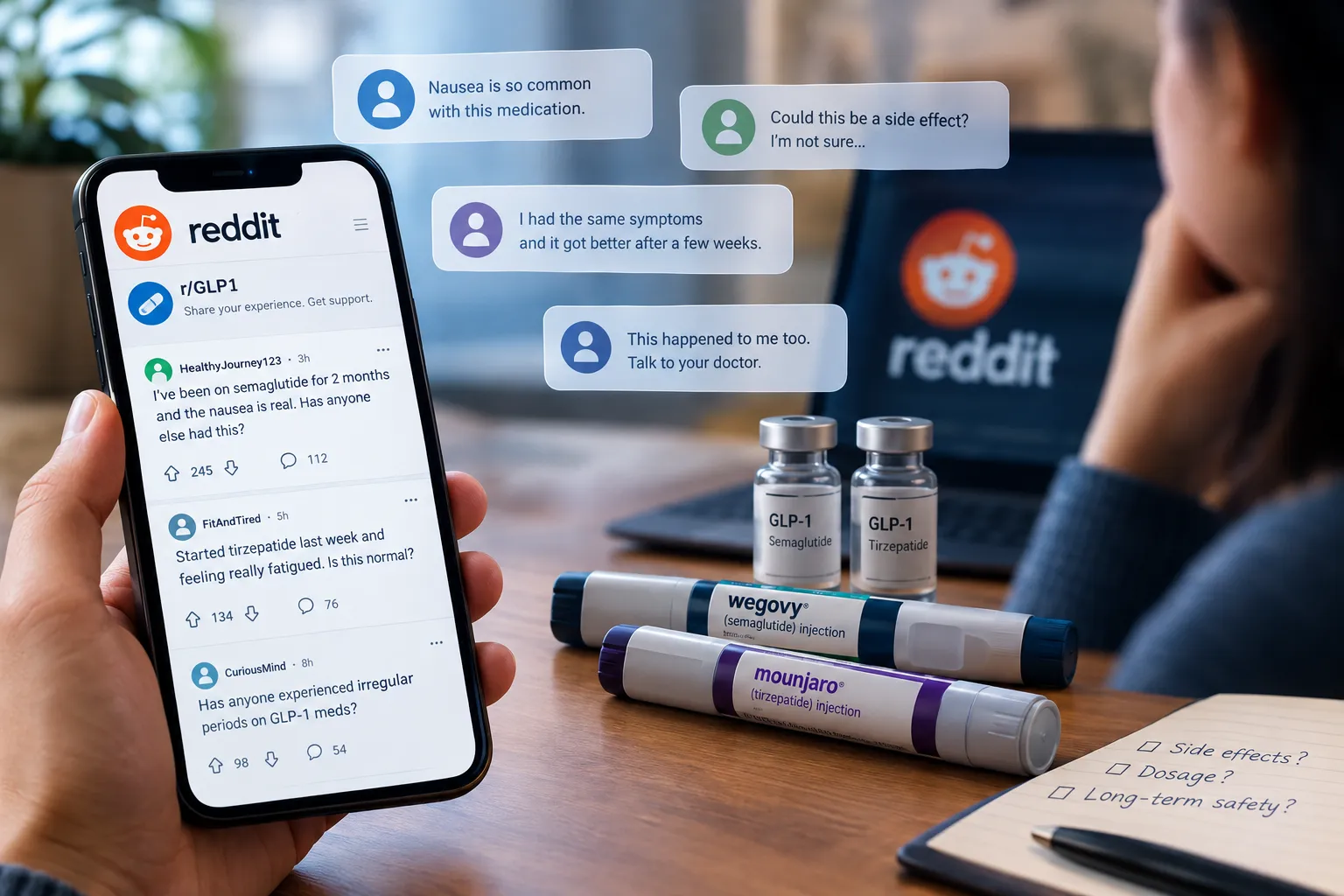
The use of GLP-1 medications, including semaglutide and tirzepatide, has risen sharply for the treatment of type 2 diabetes and weight management. Given their widespread use, clinical trials have primarily documented gastrointestinal adverse events such as nausea and vomiting.
In their study, titled “Self-Reported Side Effects of Semaglutide and Tirzepatide in Online Communities,” researchers at the University of Pennsylvania hypothesized that online communities could reveal a broader range of real-world experiences that may not emerge in the controlled setting of clinical trials.
They chose to focus on Reddit because its anonymous nature and specialized subreddits encourage users to provide long and detailed accounts of their experiences.
The research team collected 410,198 posts and comments from nine large subreddits focused on GLP-1 medications and weight loss between May 2019 and June 2025. They used the artificial intelligence model GPT-4o-mini to identify posts in which users confirmed that they had personally taken one of the medications.
A second model, GPT-4.1-mini, was used to extract adverse events mentioned in the posts and map them to standardized medical terminology from the Medical Dictionary for Regulatory Activities (MedDRA). The AI-based pipeline showed strong performance during validation, achieving 97% sensitivity and an 87% positive predictive value in identifying adverse events.
Among the 67,008 users who confirmed actual medication use, 43.5%, or 29,172 people, reported at least one adverse event, with an average of 2.7 reported adverse events per user.
Gastrointestinal symptoms were the most common category, reported by 65.8% of users. Nausea was the most frequently reported symptom, at 36.9%, followed by fatigue at 16.7%, vomiting at 16.3%, constipation at 15.3%, and diarrhea at 12.6%.
Psychiatric adverse events were reported by 12.9% of users, including anxiety in 4.2% and depression in 2.8%. A comparison of the two medications also showed that nausea was reported more frequently among semaglutide users (39.4%) than among tirzepatide users (28.6%).
One notable finding was the identification of adverse events that had not been fully documented in drug labels or clinical trials. These included menstrual-related symptoms such as intermenstrual bleeding (0.9%), heavy menstrual bleeding (0.9%), and irregular menstrual cycles (0.7%), as well as symptoms associated with thermoregulation, including chills, hot flashes, and fever.
The authors suggest that these effects may be related to the drugs’ influence on the hypothalamus, a part of the brain involved in both appetite regulation and the menstrual cycle.
The findings demonstrate how analyzing experiences shared by users in online communities can help identify potential adverse-event signals that may be less apparent through traditional pharmacovigilance methods.
The authors explicitly acknowledged that Reddit users are not representative of the broader patient population. They tend to be younger, predominantly male, and based in the United States. Voluntary reporting also makes it impossible to determine the true incidence of these adverse events or establish causal relationships.
Nevertheless, the overall conclusion of the study is that analyzing social media data could serve as a valuable complement to traditional pharmacovigilance systems and help identify emerging safety signals at an earlier stage.
Neil K. R., the corresponding author of the study and a PhD student in the Department of Computer and Information Science at the University of Pennsylvania, answered Anatech’s questions in a full interview.
Why did you choose Reddit over platforms like X for this research?
We chose Reddit because it has large communities called subreddits organized around very specific medications and health conditions, where people often write very detailed accounts of their experiences. They describe symptoms in their own words, discuss doses, and ask whether others have experienced the same thing. That context is valuable when you’re trying to distinguish someone describing their own medication use from someone discussing a news story or asking a hypothetical question.
There were also several practical reasons we chose Reddit over other platforms like X. Many other platforms provide restricted, unreliable, or prohibitively costly interfaces for data access. X, for example, requires researchers to pay for each post they want to access programmatically. By contrast, Reddit has free, publicly available research archives, which make it much easier to study.
Why are people willing to share personal symptoms with strangers online instead of a doctor?
They’re not necessarily posting instead of talking to a doctor. They may just be doing both. Our study didn’t establish whether users had discussed these experiences with a clinician.
That being said, for some people, posting under an anonymous username may make it easier to discuss something embarrassing or sensitive. Others may want reassurance or practical insight from someone taking the same medication. They may be asking, “Has anyone else experienced this?” before deciding whether it’s worth bringing up at an appointment.
Difficulty accessing care, limited appointment time, or concern about being judged could also play a role. These are all possible explanations, but we didn’t directly study people’s reasons for posting.
In a follow-up study, we studied Redditors’ experiences with retatrutide, a new GLP-1 drug that is not approved anywhere in the world but that many patients are buying on the gray market. This is the type of drug that you could imagine people would feel less comfortable discussing with their doctor.
How does subreddit culture influence which symptoms people report or dismiss?
A community can help establish what feels normal, concerning, or worth mentioning. If nausea is repeatedly described as an expected part of treatment, someone might decide their own nausea isn’t worth posting about. If people respond supportively to an unusual symptom, that could encourage others to share similar experiences.
Enthusiasm about a medication could also make some people less comfortable describing a negative experience.
Who participates matters too. In our retatrutide follow-up study, we found some side effects that did not align with the effects reported in Phase 2 clinical trials. In the paper, we discussed how the specific interests and practices of the Reddit users in our sample, including weightlifting and taking several peptides together, could help explain differences in reported symptoms.
So the patterns we see may reflect both people’s experiences and the communities in which they discuss them.
Can responses from other users influence how people interpret or attribute their symptoms?
Yes, that’s a real possibility, and it can work in several directions. Someone might read about a menstrual change or feeling unusually cold and recognize an experience they hadn’t previously connected to their medication. That could help bring an overlooked concern to light.
But repeated suggestions that a medication causes a particular symptom could also encourage people to attribute something to it that has another explanation. Replies might also reassure someone that a symptom is routine and lead them to give it less attention.
Our study captured symptoms people reported in connection with their own medication use. It didn’t establish how they arrived at that interpretation or how much other users influenced it. That’s one reason recurring reports need follow-up in other data sources and prospective studies.
An interesting development happened after our paper came out. In our study, approximately 4% of users reporting adverse experiences described menstrual irregularities, an event that had received little attention in the published literature at the time.
Based on these findings, subsequent investigators examined data from the FDA Adverse Event Reporting System and identified disproportionate reporting signals for several menstrual events.
Neither our Reddit analysis nor the spontaneous-reporting analysis can establish causality. However, this sequence illustrates the role we envision for social media analyses: generating an early hypothesis that can subsequently be evaluated in independent datasets.
What gets lost when patients’ own words are converted into standardized medical terms like MedDRA?
MedDRA gives us a common vocabulary, which makes it possible to count similar experiences described in different ways. For example, “puking” and “throwing up” can both be mapped to “vomiting.” That helps us identify patterns across thousands of accounts.
But reducing an account to a term and a count can lose a lot of what matters to the person. “Fatigue” alone doesn’t tell you whether someone felt slightly tired or struggled to get through a workday. It doesn’t preserve the full timing, emotional impact, or uncertainty about what caused it.
There are also ambiguous cases. We noted in the paper that some events classified as “gastroesophageal reflux” based on a Reddit description might have been recorded as “dyspepsia” in a clinical trial.
Standardization makes experiences easier to compare, but the original language remains important for understanding them.
How does using AI to identify symptoms affect the way patient experiences are interpreted?
AI made it feasible to analyze more than 400,000 posts and comments. It helped identify accounts of personal medication use and translate everyday symptom descriptions into terms we could analyze systematically.
But that process involves interpretation. The model has to decide whose experience is being described, what the symptom means, and which medical term fits. Our instructions and choice of terminology shape those decisions, and the model can make mistakes.
In our manual checks, for example, it sometimes inferred a medication from the subreddit name when the post itself didn’t clearly identify it.
That being said, we evaluated its performance against manually annotated samples and found very high levels of accuracy.
What important experiences might be missing because your research focused on Reddit users?
We’re missing everyone who doesn’t use Reddit or doesn’t feel comfortable discussing their health publicly. Reddit overall tends to skew younger, more male, and more U.S.-based, although that doesn’t establish the exact demographics of our study communities.
Older adults, people in other countries, and people discussing their experiences in other languages may be less visible.
Even within Reddit, we only hear from people who choose to post. Someone with an uneventful or positive experience may have less reason to write about it. Someone who is very unwell may not post either. And people may leave out symptoms they consider ordinary or don’t associate with their medication.
So our data show what a particular group chose to share. Understanding the broader patient experience requires other communities, clinical data, and studies that ask people systematically about their symptoms.


















