Iranian company unveils homegrown brain-mapping system
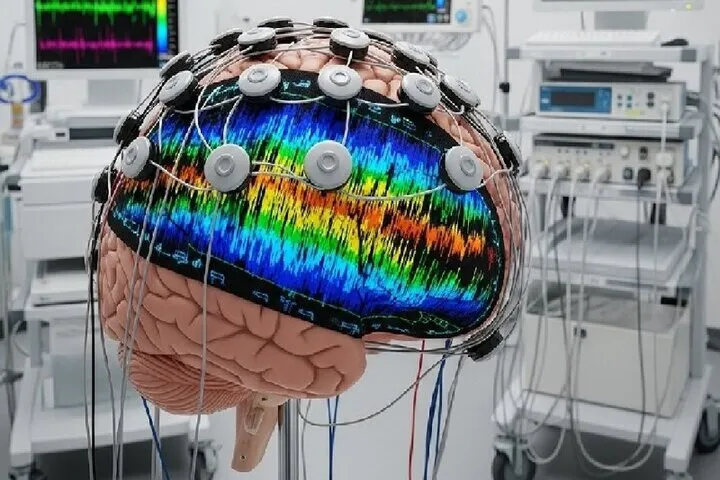
An Iranian knowledge-based company has developed eWave to record and analyze brain and biological signals. In addition to electroencephalography (EEG) and quantitative electroencephalography (QEEG), the system can record other biological signals, including electrocardiography (ECG), electromyography (EMG) and electrooculography (EOG). Its wireless connectivity also enables portable use.
The device is designed for patient monitoring in hospitals and healthcare facilities. It is compatible with specialized brain-signal analysis software, including NeuroGuide, allowing it to be used for QEEG recording and neurofeedback applications.
eWave also supports neurofeedback systems and, through a biosensor module, can provide biofeedback services. The product has obtained the required approvals from Iran's Ministry of Health and complies with the relevant standards, making it available as a system for recording brain and biological signals.
Quantitative electroencephalography, or QEEG, is a method for comprehensively analyzing brain waves recorded through conventional EEG. In this process, raw brain signals are processed and analyzed using specialized software. The resulting data can be used to generate topographic brain maps that display electrical activity in different brain regions using color-coded representations.
The method examines brain electrical activity across different frequency bands. The resulting data can be compared with standardized datasets and reference-population databases, enabling specialists to examine activity patterns across different brain regions and assess variations.
Brain-signal processing aims to convert the brain's electrical activity into analyzable data. One approach involves decomposing electrical activity into different frequencies and examining each frequency band according to its characteristic features and activity patterns.
Alongside the eWave hardware, the company has developed eLife, specialized software for displaying and analyzing biological signals. One of its key features is a modular architecture that allows users to customize pages and workspaces according to their specific applications.
The software also offers a user-friendly interface and supports online synchronization with other specialized analysis programs. Designed for use with the company's devices, eLife can also support hospital EEG recording and QEEG applications.