Google launches first satellite to test AI computing in space
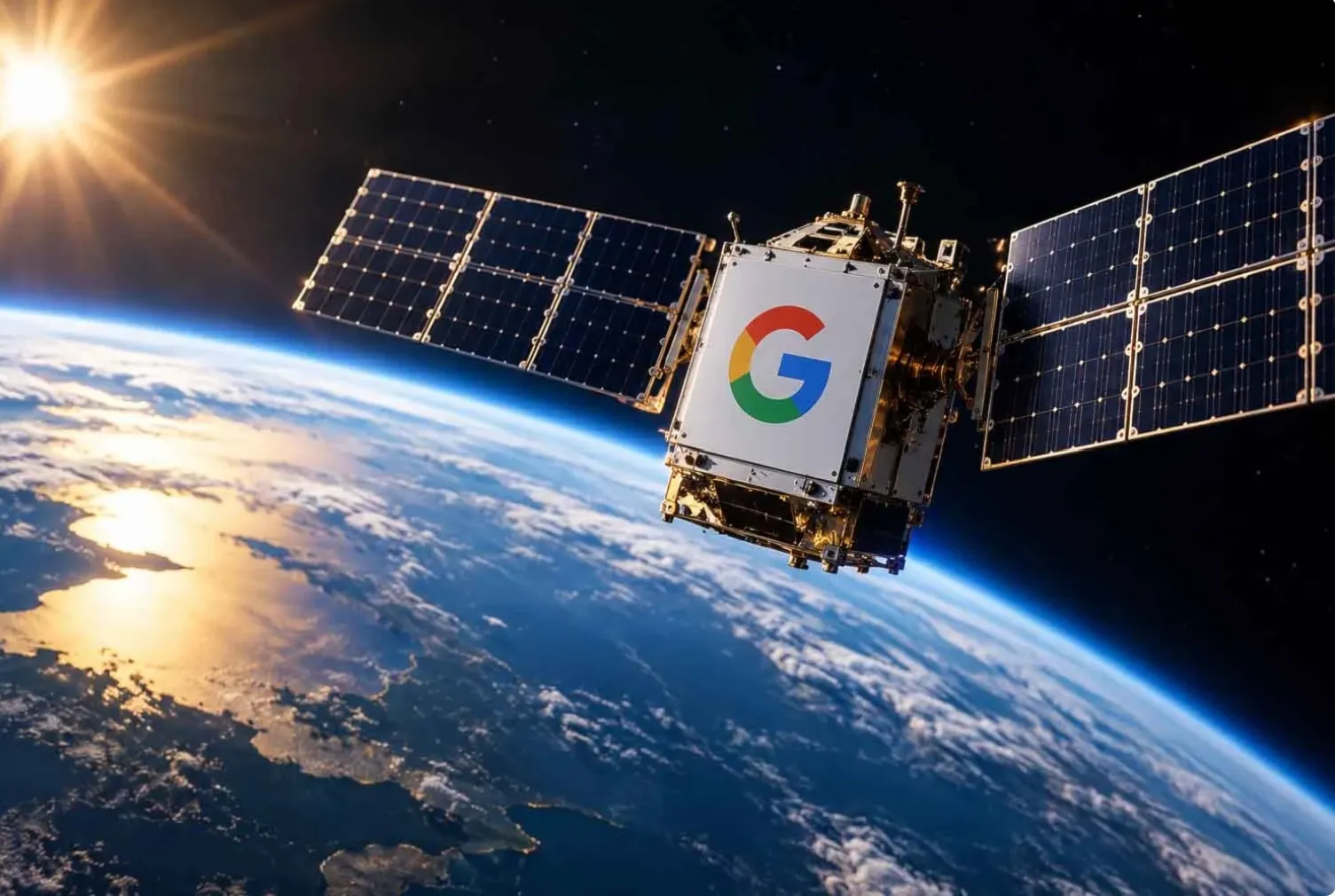
The technology giant launched the experimental satellite as the first phase of a project exploring whether space could provide an optimal location for operating large-scale AI infrastructure.
Built by Planet Labs and launched aboard SpaceX’s Transporter-18 mission, the satellite is equipped with Google’s Tensor Processing Units (TPUs), specialized processors designed to accelerate artificial intelligence and machine-learning workloads. The mission will test the chips’ performance in space and their ability to withstand the physical stresses of launch and spaceflight, including radiation and extreme temperatures.
TPUs are electronic chips and computing accelerators developed by Google specifically to speed up AI and machine-learning tasks.
The “Project Suncatcher”
The initiative, known as Project Suncatcher, envisions placing satellites in low Earth orbit where they could take advantage of near-continuous sunlight and capture up to eight times more solar energy than solar panels on Earth.
Through the project, Google aims to determine whether large-scale machine-learning infrastructure can operate reliably in space while taking advantage of the abundance of solar energy.
Energy consumption by data centers is rising rapidly, driven largely by the surge in AI-related workloads. Globally, data centers consumed an estimated 415 to 485 terawatt-hours of electricity last year.
According to the European Commission, this represented between 1.5% and 2.5% of global electricity generation, a share that is expected to double by 2030.
Similar efforts
Google is not the only company exploring the possibility of deploying AI computing capabilities in space. Starcloud, a startup backed by Nvidia, trained an AI model in space for the first time last December.
In June, Elon Musk unveiled SpaceX’s AI1 satellite, also known as Starmind, a new class of satellites designed to operate as a flying cluster of graphics processing units (GPUs) rather than primarily serving as communications relay stations.
In September, Mistral announced a partnership with Marlan Space and Loft Orbital to develop AI-enabled satellite infrastructure, with the first satellite planned for launch in October.
What is Google testing?
The launch marked the first phase of Google’s testing program and involved a 10-minute ascent into low Earth orbit. The spacecraft endured intense vibrations and sustained acceleration of up to 10 times the force of gravity, while the onboard TPU chips experienced brief shocks ranging from 50 to 100 times Earth’s gravitational force (g).