Molecule linked to aggressive breast cancer identified
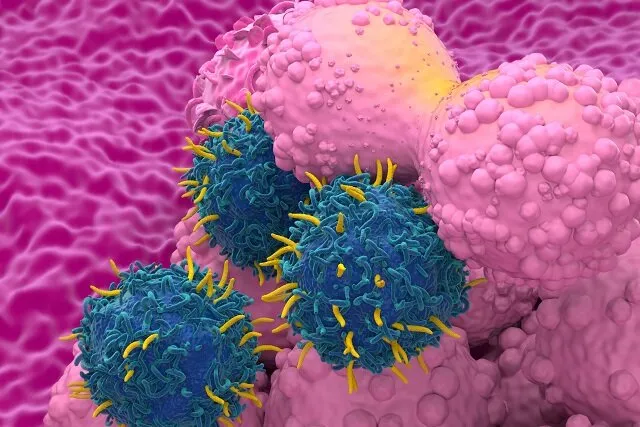
Triple-negative breast cancer, or TNBC, is one of the most difficult forms of breast cancer to treat. Because its cells lack hormone receptors and the HER2 protein—targets used by several breast cancer therapies—many drugs effective against other breast cancer subtypes have limited benefits for patients with TNBC. The disease is also highly aggressive and more likely to spread rapidly to distant organs, contributing disproportionately to breast cancer deaths.
One of the main challenges in TNBC is metastasis, a process in which cancer cells break away from the primary tumor, travel to other parts of the body and form new tumors. While the original tumor can often be controlled through surgery or localized treatments, the disease becomes considerably more difficult to manage once it spreads. TNBC cells can metastasize to organs such as the lungs and bones and may remain dormant before becoming active again. Identifying markers that can predict metastatic spread and finding ways to prevent these cells from growing are therefore key priorities.
Researchers from the University of Adelaide and the Olivia Newton-John Cancer Research Institute have investigated the role of a molecular regulator in the spread of TNBC. The study focused on the relationship between a naturally occurring molecule called miR-342 and the E2F molecular pathway, which can contribute to the growth and progression of cancer cells.
The researchers assessed miR-342 levels and E2F activity in relation to the likelihood of metastatic disease. miR-342 is a small natural molecule capable of regulating the activity of multiple genes. The team also used preclinical models to examine whether restoring miR-342 levels could affect cancer spread. In addition, they tested palbociclib in models with low levels of miR-342. Palbociclib is a CDK4/6 inhibitor currently used to treat certain patients with advanced hormone receptor-positive breast cancer.
The findings showed that patients with lower levels of miR-342 and higher E2F activity in their tumors were more likely to develop metastatic disease. In simple terms, a reduction in this natural molecule may remove an important barrier to the activity of genes involved in cancer progression. As a result, the E2F pathway can become overactive, allowing dormant cancer cells that have already spread through the body to resume growth and develop into dangerous secondary tumors.
In preclinical models, restoring miR-342 significantly reduced the spread of breast cancer to other organs, including the lungs and bones. Palbociclib also substantially reduced the growth of metastatic tumors in models with low miR-342 levels. The drug appeared to be particularly effective when administered after cancer cells had already disseminated—at a stage when tiny cancer deposits were present but had not yet developed into large, life-threatening secondary tumors.
The findings raise the possibility that measuring miR-342 levels could help identify a specific group of women with TNBC who may be more likely to benefit from CDK4/6 inhibitors. Such an approach could bring treatment closer to personalized medicine, in which therapies are selected according to the biological characteristics of an individual patient's tumor rather than applying the same treatment strategy to all patients.
Published in the scientific journal EMBO Molecular Medicine, the study also highlights the potential for repurposing an existing drug for a form of breast cancer with limited treatment options. However, the researchers stressed that the next steps involve validating the findings in patient-derived preclinical models and eventually moving toward clinical trials.
The results therefore do not yet establish that this treatment strategy is effective for all patients with TNBC, but they could provide a foundation for developing more precise approaches to predicting and treating metastatic disease.