Scientists Find Opioid-Free Path to Relief
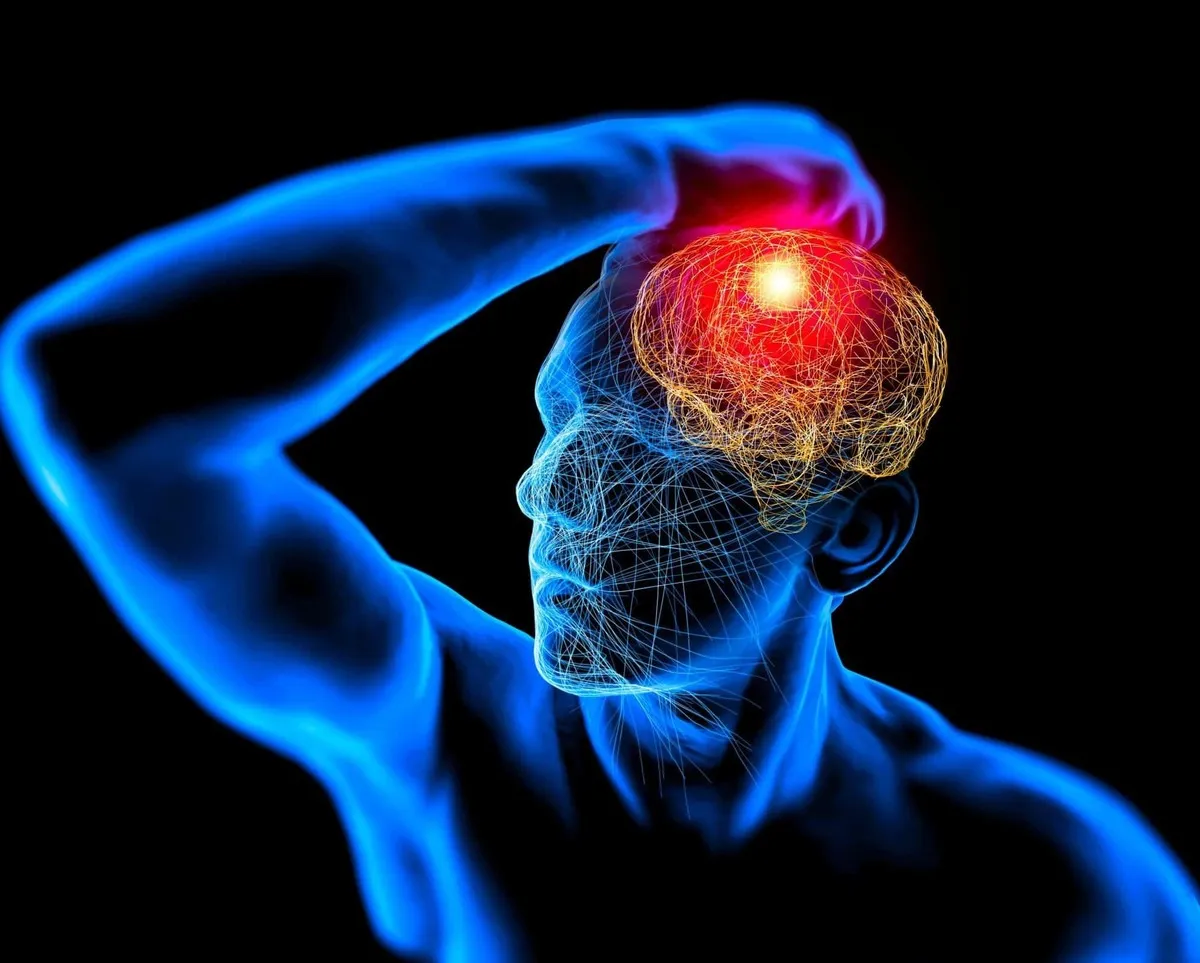
Researchers at the University of Sydney have revealed a detailed map-like system within the brainstem that regulates pain differently depending on where it occurs in the body. Their discovery could help develop safer and more precise treatments for chronic pain that do not depend on opioids, the journal Science reported.
The brainstem functions as a vital communication link between the brain and spinal cord, directing every signal that travels to and from the brain. It also produces most of the neurochemicals essential for thought, sensory processing, and survival.
The study, published in Science, used 7-Tesla functional magnetic resonance imaging (fMRI), one of the world’s most advanced brain scanning technologies, with only two currently available in Australia, to identify how two key regions of the brainstem regulate pain through the placebo effect.
Dr. Lewis Crawford, lead author and research fellow at the School of Medical Sciences and the Brain and Mind Centre, said: “This is the first time we’ve seen such a precise and detailed pain map in the human brainstem, showing us that it tailors pain relief to the specific part of the body that’s experiencing it.”
The study builds on decades of work by one of the authors, Professor Kevin Keay, Deputy Head of the School of Medical Sciences and a mentor to Dr. Crawford.
In the experiment, 93 healthy volunteers were exposed to heat on various parts of their bodies. A placebo pain relief cream was then applied while researchers secretly reduced the temperature, training participants to believe the cream was effectively easing their discomfort.
Each person’s pain threshold was individually calibrated to produce a moderate level of pain. Using a self-reported pain scale from 0 (no pain) to 100 (the most severe pain imaginable), researchers determined a heat level between 40 and 50 degrees that matched each participant’s perception of moderate pain.
Later, the same pain stimulus was applied to the placebo-treated area as well as a separate untreated area for comparison. Up to 61 percent of participants still reported less pain in the area where the placebo cream was originally applied, typical of a true placebo response.
“We found that upper parts of the brainstem were more active when relieving facial pain, while lower regions were engaged for arm or leg pain,” said Dr. Crawford.
Two key brainstem regions are involved in this process: the periaqueductal grey (PAG) and the rostral ventromedial medulla (RVM). These areas showed distinct patterns of activity depending on where pain relief was directed, with the upper parts of the PAG and RVM more active for facial pain, while the lower parts were more active for arm or leg pain.
“The brain’s natural pain relief system is more nuanced than we thought,” said Dr. Crawford. “Essentially, it has a built-in system to control pain in specific areas. It’s not just turning pain off everywhere; but working in a highly coordinated, anatomically precise system.”
Understanding which brainstem areas are linked to different parts of the body may open new avenues for developing non-invasive therapies that reduce pain without widespread side effects.
“We now have a blueprint for how the brain controls pain in a spatially organized way,” said Professor Luke Henderson, senior author and Professor in the School of Medical Sciences and the Brain and Mind Centre. “This could help us design more effective and personalized treatments, especially for people with chronic pain in a specific area of their body.”
The study also challenges long-held assumptions about how placebo pain relief works. Instead of relying on the brain’s opioid system, experts say a different part of the brainstem – the lateral PAG – is not only responsible but works without using opioids and could instead be linked to cannabinoid activity.
“Opioid-based pain relief typically activates central areas of the brain and can affect the whole body, whereas the cannabinoid circuit that we identified appears to operate in more targeted regions of the brainstem,” said Dr. Crawford. “This supports the idea that cannabinoids may play a role in localized, non-opioid pain control.”
“Knowing exactly where pain relief is happening in the brain means we can target that area or assess whether a drug is working in the right place,” said Dr. Crawford. “This could lead to more precise treatments for chronic pain that don’t rely on opioids and work exactly where the brain expects pain relief to occur – a huge step forward for pain management.”
4155/v