Iranian Researchers Present 6 New Pearl Millet Varieties
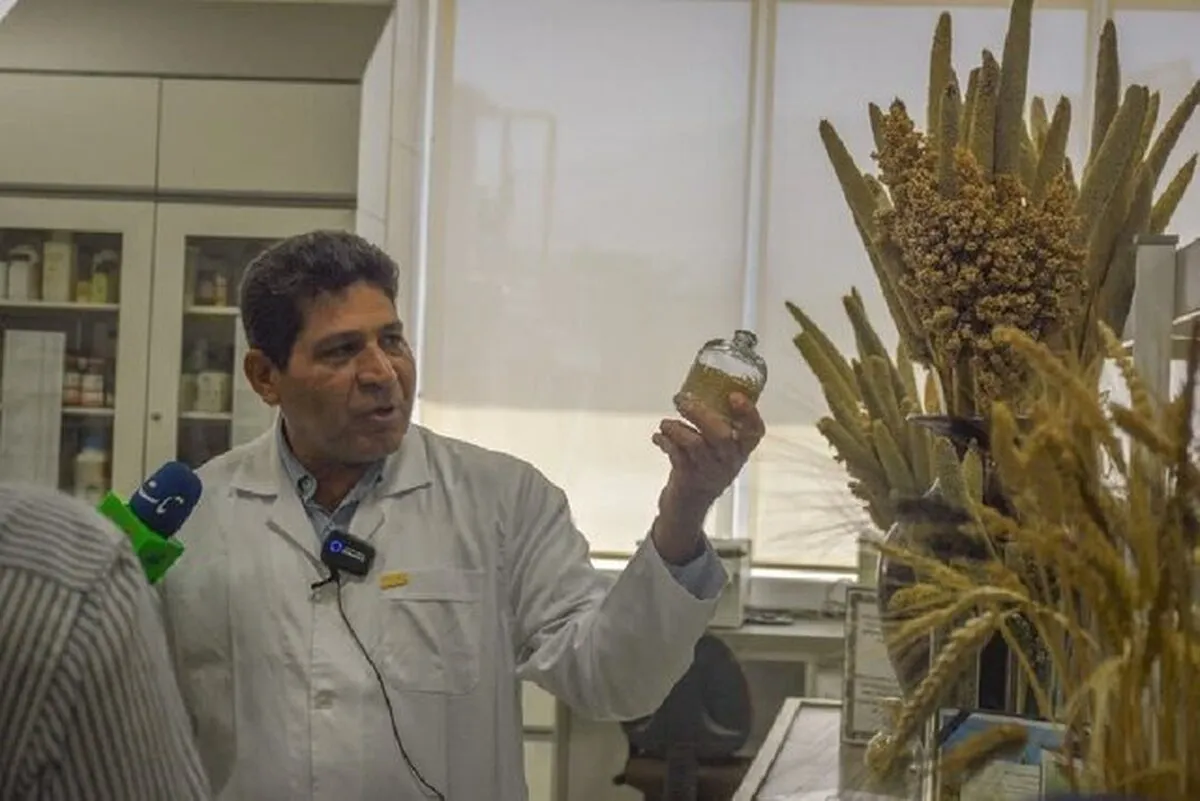
The scientists introduced 6 new hybrid pearl millet varieties for grain and fodder, including Aria, Sephehr, Mahour, Haamin, Sadra and Mana.
The effective cooperation between Babak Nakhoda and researchers from the Institute for Seed and Seedling Breeding and Production Research led to the introduction of six new pearl millet varieties, and soon new high-yielding grain and fodder sorghum varieties will also be introduced using this germplasm collection.
Considering climate change and the country's dire need for woody and grain fodder for livestock feed, the introduction of low-water-consuming, climate-adapted fodder plants can play a vital role in ensuring the country's food security and protecting the health of citizens and the country's environment.
Pearl millet varieties include numerous hybrids and open-pollinated varieties (OPVs) developed for various regions and purposes. Some notable examples include XMT 1497, KBH 3940, Bio 8145, Nandi-75, and HHB 234. Specific varieties like Dhanshakti are known for high iron and zinc content in their grains. Hybrids like MPMH 21, HHB 272, and GHB-905 are also popular choices.
In a relevant development in June, an Iranian knowledge-based firm had also succeeded in producing 67 varieties of hybrid seeds which helps food security in agricultural industry.
“So far, seven of the 11 varieties under research have entered the market, and 67 different varieties of these products have been registered and received seed certificate,” said Maryam Golabadi, the chairwoman of the board of directors and deputy director of Research and Development of the knowledge-based company and a faculty member of Islamic Azad University’s Isfahan branch.
“Our products include greenhouse cucumbers, greenhouse tomatoes, outdoor tomatoes, greenhouse peppers, watermelons, and melons,” she added.
Noting that the yield of these seeds is much higher than traditional seeds in terms of quality, product uniformity, and harvest rate, Golabadi said, “Of course, the exact amount of yield increase depends on several factors like the type of greenhouse, the ability of the farmer, and farm management.”
“Farmers are fully aware of the superiority of these seeds, and in Iranian greenhouses, there is practically no cultivation of non-hybrid seeds,” she added.
4155/v