Changing One Molecule Transforms Future of Vaccines
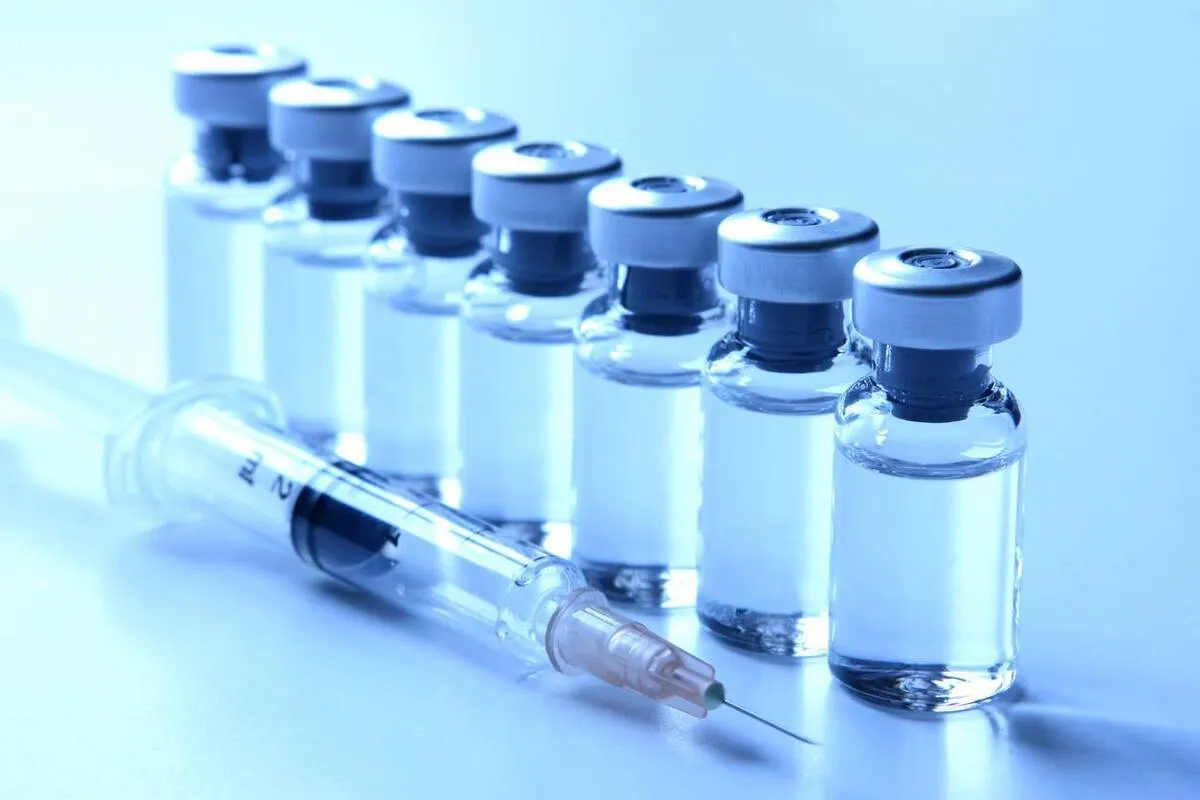
By modifying a single component in the tiny fat bubbles that carry mRNA, they created a version that reduces side effects and supercharges effectiveness—not just for COVID-19, but for cancer treatment and gene therapy too. This molecular makeover makes vaccines smarter, safer, and more powerful, all thanks to a tiny tweak inspired by olive oil chemistry, the journal Nature Biomedical Engineering reported.
Many people are familiar with the typical side effects of mRNA vaccines, such as the COVID-19 shot: soreness, redness, and feeling under the weather for a day or two. These reactions are caused by inflammation. But what if that response could be avoided entirely?
In a recent study, scientists from the University of Pennsylvania revealed that by altering the structure of a specific molecule called the ionizable lipid—an essential part of the lipid nanoparticles (LNPs) that transport mRNA—they were able to both reduce inflammation and increase the effectiveness of vaccines. This enhancement could improve how vaccines perform against various diseases, including COVID-19 and certain types of cancer.
The breakthrough centers on adding phenol groups, naturally occurring chemical compounds known for their anti-inflammatory effects and found in ingredients like olive oil. “By essentially changing the recipe for these lipids, we were able to make them work better with fewer side effects,” says Michael J. Mitchell, Associate Professor in Bioengineering (BE) and the paper’s senior author. “It’s a win-win.”
Traditionally, ionizable lipids—one of the four main lipids used in LNPs, and often considered the most critical—have been created through reactions that link two molecular components, similar to putting two pieces of a sandwich together.
“Because these processes have been so successful, there hasn’t been much effort to look for alternatives,” says Ninqiang Gong, a former postdoctoral fellow in the Mitchell Lab and co-first author of the paper.
Looking back at the history of chemistry, the team found an alternative approach: the Mannich reaction, named after the German chemist who discovered it more than a century ago.
Rather than two components, the Mannich reaction combines three precursors, allowing for a greater variety of molecular outcomes. “We were able to create hundreds of new lipids,” says Gong.
Exploring that “library” of lipids led the team to discover that adding a phenol group — a combination of hydrogen and oxygen connected to a ring of carbon molecules — substantially reduced inflammation.
“It’s kind of like the secret sauce,” says Gong. “The phenol group not only reduces the side effects associated with LNPs, but improves their efficacy.”
Previous studies have found that phenol-containing compounds reduce inflammation by negating the harmful effects of free radicals, molecules with unpaired electrons that can disrupt the body’s chemistry.
Too many free radicals and too few antioxidants result in “oxidative stress,” which degrades proteins, damages genetic material, and can even kill cells.
By checking various markers associated with oxidative stress, the researchers compared the inflammatory effects of LNPs formulated using different lipids.
“The best-performing LNP, which we built using a phenol-containing ionizable lipid produced by the Mannich reaction, actually caused less inflammation,” says Emily Han, a doctoral student in BE and co-author of the paper.
With these encouraging signs of reduced inflammation, the researchers next tested whether the new lipids also improved vaccine performance.
Across multiple experiments, C-a16 LNPs, which incorporated the most anti-inflammatory lipid, outperformed LNPs used in on-the-market mRNA technologies.
“Lowering oxidative stress makes it easier for LNPs to do their job,” says Dongyoon Kim, a postdoctoral fellow in the Mitchell Lab and co-first author of the paper.
C-a16 LNPs not only produced longer-lasting effects, but also improved the efficacy of gene-editing tools like CRISPR and the potency of vaccines for treating cancer.
To test how well the new C-a16 lipids worked in an animal model, the researchers first used them to deliver into cells the gene that makes fireflies glow — a classic experiment for checking the strength of genetic instructions.
The glow in mice was about 15 times brighter compared to the LNPs used in Onpattro, an FDA-approved treatment for hereditary transthyretin amyloidosis (hATTR), a rare genetic liver disease.
The C-a16 lipids also helped gene-editing tools like CRISPR do a better job fixing the faulty gene that causes hATTR. In fact, they more than doubled the treatment’s effectiveness in a mouse model compared to current delivery methods.
In cancer treatments, the results were just as striking. In an animal model of melanoma, an mRNA cancer treatment delivered with C-a16 lipids shrank tumors three times more effectively than the same treatment delivered with the LNPs used in the COVID-19 vaccines. The new lipids also gave cancer-fighting T cells a boost, helping them recognize and destroy tumor cells more efficiently — and with less oxidative stress.
Finally, when the team used the C-a16 lipids for preparing COVID-19 mRNA vaccines, the immune response in animal models was five times stronger than with standard formulations.
“By causing less disruption to cellular machinery, the new, phenol-containing lipids can enhance a wide range of LNP applications,” says Kim.
Besides investigating the immediate potential of the new lipids to reduce side effects in mRNA vaccines, the researchers look forward to exploring how overlooked chemical processes like the Mannich reaction can unlock new LNP-enhancing recipes.
“We tried applying one reaction discovered a century ago, and found it could drastically improve cutting-edge medical treatments,” says Mitchell. “It’s exciting to imagine what else remains to be rediscovered.”
4155/v


















