Iran’s New Leader Faces Media Scrutiny After Historic Selection
Mehdi Eshteri, a strategic affairs analyst, wrote in a commentary for ANA News Agency that a review of the political school and practical conduct of the late leader of the revolution, Ayatollah Seyyed Ali Khamenei, demonstrates his deep commitment to the country’s laws and to the foundations of Iran’s system of religious democracy.
According to the analyst, throughout decades of leadership, Ayatollah Ali Khamenei consistently regarded the Iranian Constitution as a national covenant, the embodiment of the revolution, and the backbone of the Islamic Republic. He maintained that laws within an Islamic system must simultaneously derive legitimacy from divine authority and acceptance from the people.
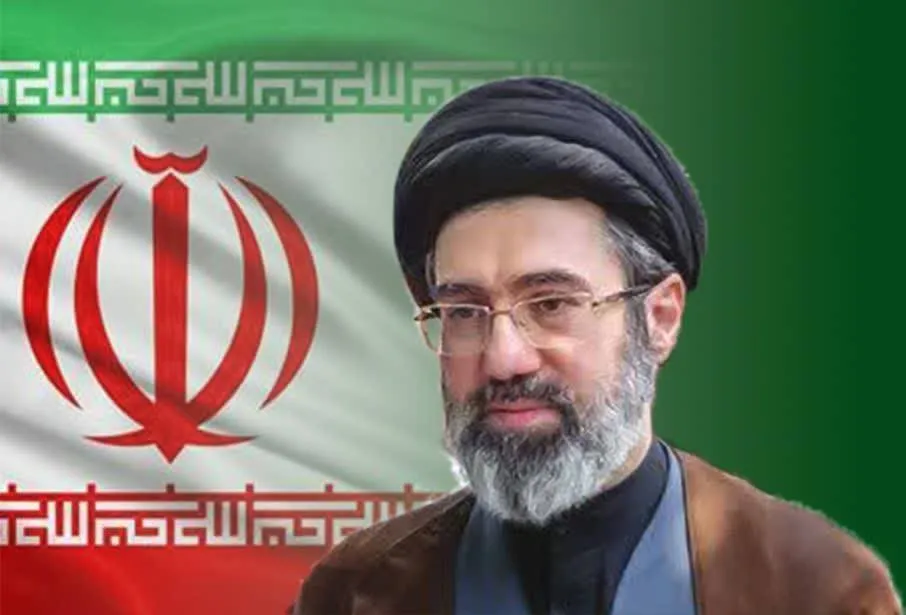
Eshteri argues that after the Assembly of Experts made the historic decision to select Grand Ayatollah Seyyed Mojtaba Hosseini Khamenei as the third leader of the Islamic Revolution, media outlets critical of Iran—shocked, as he describes it, by the country’s national cohesion and institutional resilience under wartime conditions—began efforts to undermine the new leadership. These efforts, he says, revolve around two main narratives: suggesting that the leadership has become hereditary and questioning the competence of the new leader.
An examination of these claims, the commentary argues, shows that the concept of hereditary succession has no place within the political structure of the Islamic Republic. In hereditary monarchies, power is transferred automatically through bloodline without an evaluation of qualifications.
In contrast, within Iran’s system of religious democracy, leadership is determined by the Assembly of Experts—an independent body elected directly by the people—which assesses candidates based on specific religious and political criteria.
The article also states that during his lifetime the late leader never publicly designated a successor and did not attempt to influence the future structure of power. Several figures have reportedly testified to this point. Therefore, the recent decision is presented as the result of the independent, lawful, and courageous judgment of the Assembly’s clerical members, made amid external threats and military pressure.
Reducing such a decision—derived from constitutional mechanisms—to a form of family inheritance, the author argues, disregards the independence of the country’s highest legal institution and underestimates the political awareness of audiences.
The commentary further contends that excluding a qualified religious scholar from assuming major responsibilities solely because he is the son of a former leader would itself constitute a form of injustice and reverse discrimination. The Constitution of the Islamic Republic emphasizes meritocracy, identifying scholarship, piety, political insight, and courage as the key criteria for leadership rather than family lineage.
Addressing claims that the new leader lacks superior scholarly standing, the analyst attributes such accusations to a lack of awareness regarding his academic and professional background. Ayatollah Seyyed Mojtaba Khamenei has for years taught advanced courses in Islamic jurisprudence and principles of law at the highest levels of the seminary system, and his scholarly competence, the article claims, has been recognized by prominent clerics and scholars.
Beyond academic credentials, the commentary highlights his familiarity with the complexities of domestic and international politics. Through years of advisory roles to the late leader and close involvement in major national developments over the past three decades, he is described as having gained deep knowledge of state institutions and security challenges.
According to the analysis, this combination of scholarly experience, political understanding, and personal modesty has shaped a mature leadership profile. Having long been present in key decision-making circles while avoiding media attention and political ambition, the author concludes, he is presented as well-positioned to lead the country through what he characterizes as a turbulent period.


















