Scientists develop motor-free robot that runs at an astonishing speed
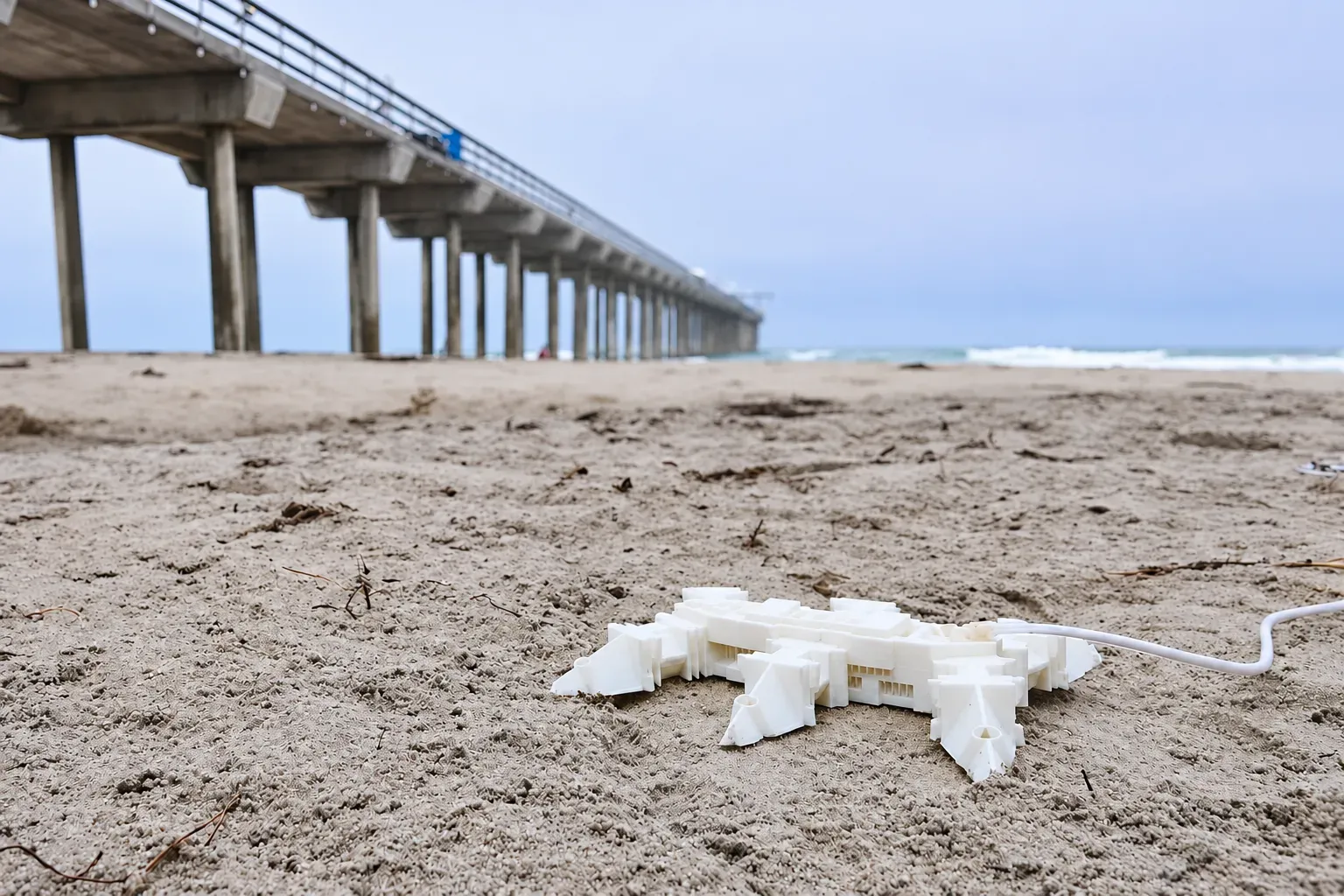
Soft robots, which are made from flexible materials and deformable structures, generally face limitations in movement speed compared with robots equipped with rigid components. A team of engineers at the University of California San Diego has overcome much of this limitation by developing a new pneumatic mechanism, enabling the creation of a robot that moves faster than many previous designs in this field.
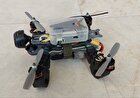
The six-legged robot operates without a processor, electronic control circuits, or an onboard battery. Its mechanical structure is manufactured as a single integrated unit using 3D printing technology. Pressure chambers, valves, and air channels are embedded within the robot's flexible body and work together to generate and coordinate leg movements without electronic components. The researchers believe this design could pave the way for lighter, less expensive robots suitable for operating in challenging environments.
The previous version of this technology could move at only four centimeters per second. Its limited internal structure, which restricted its ability to withstand pressure and airflow, prevented it from reaching higher speeds. In the new design, the researchers modified the pressure channels and improved air distribution among different sections of the body, increasing the robot's speed to 4.72 meters per second—more than 100 times faster than its predecessor.
This remarkable improvement has been achieved while retaining a completely soft and flexible structure, without relying on electric motors or digital control systems. Every stage of movement, from generating propulsion to coordinating the legs, is driven by pressure changes inside the body. This feature distinguishes the robot from many conventional robotic systems.
Two-stage pneumatic mechanism replaces electronic control systems
The robot's main innovation is a system known as a "dual-expansion oscillator," which converts a continuous flow of compressed air into a series of successive pressure pulses. These pulses are distributed in a coordinated manner among internal chambers, deforming flexible sections of the body and enabling the robot's six legs to move in a regular pattern.
In the first stage, high-pressure air enters smaller chambers and activates valves that regulate the airflow. The air is then transferred to larger chambers, where continued expansion generates the force required to move the legs. Rapid repetition of this cycle enables the robot to maintain continuous, coordinated movement without receiving electronic commands, allowing it to travel at considerable speeds across different surfaces.
In addition to producing rapid movement cycles, this design improves the efficiency with which compressed-air energy is used. In conventional pneumatic systems, some of the exhaust air retains considerable pressure, meaning that part of its available energy is released without being fully utilized.
By using air pressure in two successive stages, the dual-expansion mechanism allows more effective use of the energy stored in the compressed airflow. This enables the robot to achieve higher speeds without increasing the complexity of its control equipment.
Meanwhile, the internal oscillator automatically generates the timing sequence required for leg movements, eliminating the need for a processor or electronic control circuits. These combined features demonstrate that some functions traditionally performed by electronic equipment can instead be achieved through carefully engineered mechanical structures and fluid-flow control.
Movement across sand and through water expands the robot's capabilities
Practical tests have shown that the robot can move across surfaces with different physical characteristics, including concrete, grass, soil, and soft sand, while maintaining its performance under various environmental conditions.
The body's flexibility and six-legged locomotion mechanism allow it to adapt its shape when encountering uneven surfaces and continue moving without requiring electronic adjustments to its movement patterns.
Its performance on soft sand is particularly significant because the shifting particles beneath the robot's feet make movement difficult for many robotic systems. However, the flexible leg structure and the way forces are distributed throughout the body have enabled the new robot to move across this type of terrain as well. The researchers have also tested its movement in water, demonstrating the technology's potential to operate in environments beyond dry, solid surfaces.
In addition to compressed air, the robot can also operate using direct water pressure, although differences in the physical properties of these two fluids affect its movement. Unlike air, water is virtually incompressible under normal conditions, which influences how pressure is transmitted and how the flexible chambers respond.
The test results indicate that compressed air is more suitable for achieving high speeds, while using pressurized tap water as a source of propulsion could make the system useful in environments where access to a water supply is easier than access to compressed-air generation equipment.
The researchers have explored potential applications of this capability in irrigation networks, agricultural activities, and water-based cleaning operations. The absence of electronic components in the robot's body could also reduce some of the challenges associated with exposing sensitive equipment to moisture and water, making it possible to design simpler robots for such conditions.
Dependence on an external pressure source remains the robot's main limitation
Despite eliminating electronic equipment from its structure, the current prototype still depends on an external compressed-air source to move and cannot operate entirely independently.
The tube attached to the robot in the experimental images supplies air from the external pressure source. Disconnecting this tube stops the system from functioning. Although this dependence simplifies the robot's internal structure, it limits its range of movement to the length of the tube and the location of the pressure-supply equipment.
To address this limitation, the researchers are working to reduce air consumption and optimize the pneumatic system, with the aim of using small, portable air tanks in future generations. Achieving this capability could enable independent movement and expand the technology's practical applications in environments where external equipment is not continuously available.
Developing additional capabilities, such as changing direction and moving objects, is another objective of the project. The current prototype was primarily designed to demonstrate the potential for high-speed movement through mechanical mechanisms and still lacks many of the capabilities required to perform complex tasks.
Its integrated structure, which does not rely on electronic circuits, could make this type of robot suitable for environments where conventional robotic equipment faces limitations. Potential applications include areas with strong magnetic fields or high levels of radiation, emergency rescue operations, and certain space exploration missions.
However, practical deployment in such environments will require the development of navigation systems, greater operational autonomy, and further assessment of the durability of flexible materials under extreme conditions.