Why Chronic Back Pain Changes Our Sense of Self
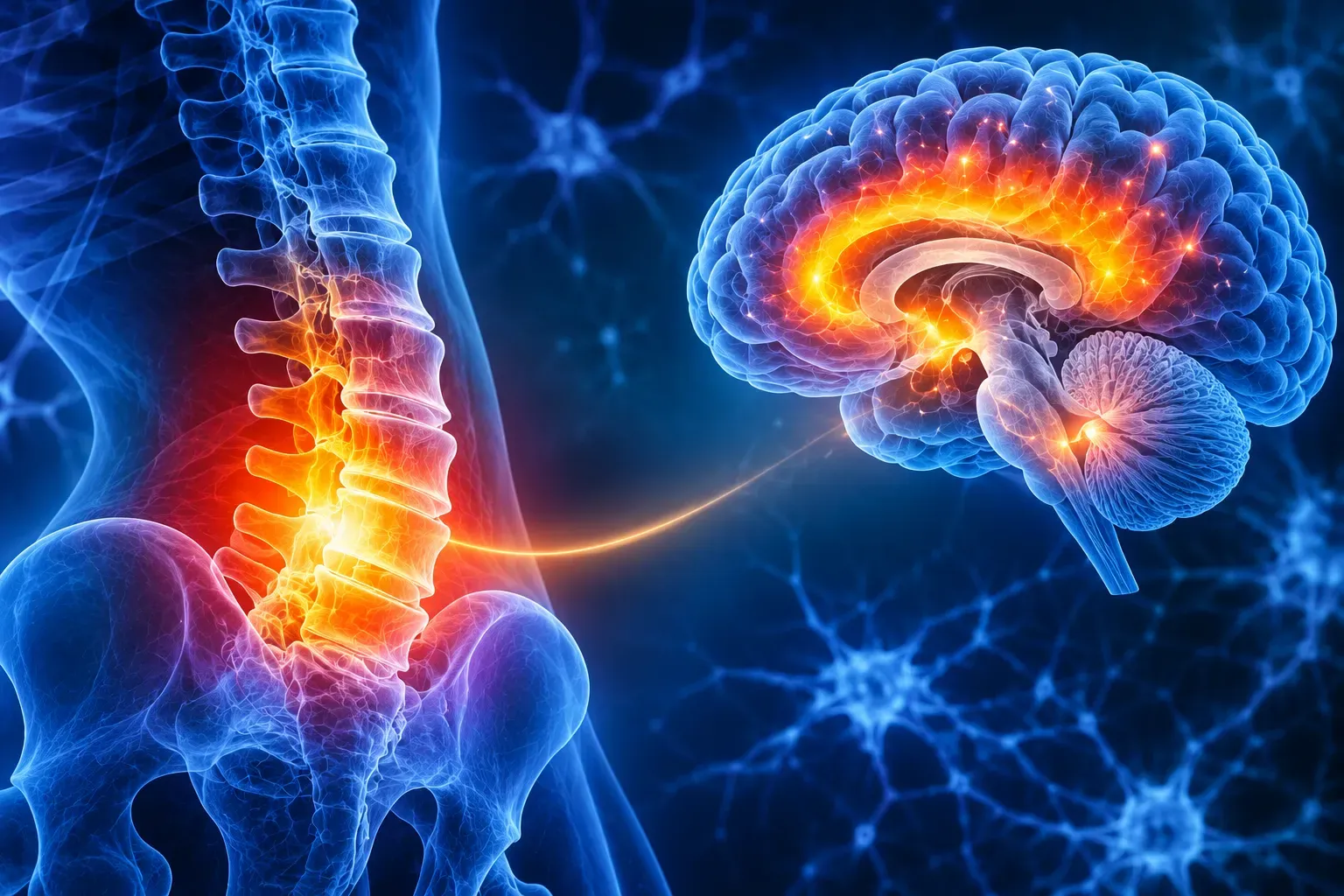
For people living with chronic back pain, even a simple movement can trigger a sudden and intense wave of pain. Scientists have now discovered that these painful episodes activate a surprising region of the brain, one closely linked to a person's sense of identity and self-perception.
Researchers at the University of California, San Diego School of Medicine found that movement-induced pain in people with chronic back pain activates a brain network that typically becomes less active during ordinary pain experiences. The discovery suggests that persistent back pain may become deeply intertwined with a person's sense of self, potentially helping explain why conventional pain treatments often provide only limited relief.
According to the World Health Organization, low back pain is the leading cause of disability worldwide. Pain is generally classified as chronic when it persists for more than 12 weeks. For many patients, everyday movements can trigger sudden pain flare-ups, making an already challenging condition even more difficult to manage.
Although the brain plays a central role in how pain is experienced, researchers have faced challenges in identifying the specific neural circuits responsible for movement-related pain.
Chronic Back Pain Activates the Brain's Sense-of-Self Network
The new study, published on October 5, 2026, in the British Journal of Anaesthesia, has identified an unexpected response involving the brain's Default Mode Network (DMN).
Sometimes referred to as the brain's “self-network,” the DMN consists of interconnected regions in the frontal, parietal and temporal lobes. These areas are particularly active when attention turns inward, such as when people reflect on personal experiences, consider their identity or examine their thoughts and feelings. By contrast, activity in this network typically decreases when attention shifts toward events in the external environment.
Researchers found that sudden, movement-triggered back pain activated this network rather than suppressing it. This unusual response suggests that chronic pain involves more than the processing of physical sensations and may also engage the brain systems responsible for shaping a person's sense of self.
The findings could help explain why treatments focused primarily on suppressing pain symptoms are not always effective for chronic back pain. They also raise the possibility that targeting the Default Mode Network could offer a different therapeutic approach.
Brain Scans Reveal a Surprising Difference Between Chronic and Acute Pain
To investigate what happens in the brain during pain flare-ups, the researchers recruited 114 people with chronic low back pain.
Each participant underwent a leg-raising test, a standard clinical examination used to provoke back pain. During the procedure, researchers monitored changes in cerebral blood flow using a specialized functional magnetic resonance imaging technique known as arterial spin labeling (ASL). This method allows scientists to track patterns of brain activity by measuring blood flow without requiring an injected contrast agent.
The research team also examined participants' responses to a separate painful stimulus. They applied a harmless but unpleasant heat sensation to the lower leg, similar to the brief pain someone might experience after accidentally touching a hot stove.
Comparing the two conditions revealed a striking difference.
When movement aggravated chronic back pain, activity in the Default Mode Network increased. However, when participants experienced the painful heat stimulus, activity in the same network decreased, following the typical pattern of the brain's response to acute pain.
The researchers also identified several other important patterns:
Patients with more severe chronic back pain showed stronger connectivity between the Default Mode Network and the primary somatosensory cortex, a brain region responsible for processing physical sensations, including sensory signals from the lower back.
Greater pain intensity during the leg-raising test was associated with increased activity in brain regions involved in sensation and movement.
Increases in heart rate during the test reliably reflected the severity of pain flare-ups.
Taken together, these findings provide further evidence that chronic pain flare-ups engage brain processes associated with personal identity, rather than being limited to the physical experience of pain.
Why Does the Brain Respond Differently to Chronic Pain?
During ordinary acute pain, the brain generally reduces activity in the Default Mode Network, allowing it to focus on the immediate source of potential danger. This response helps shift attention away from internal thoughts and toward an external threat.
However, researchers at the University of California, San Diego, found that movement-induced chronic back pain produces almost the opposite response.
Fadel Zeidan, the study's corresponding author, a professor in the Department of Anesthesiology, an endowed professor at the Sanford Institute for Empathy and Compassion, and director of the Pain and Mindfulness Research Laboratory at UC San Diego School of Medicine, explained:
“In every pain study, when you experience pain, the default mode network is deactivated. What we show for the first time is that during a pain flare-up, this network becomes activated rather than deactivated. You start to identify with this experience as part of who you are.”
The findings suggest that chronic back pain can become closely linked to the brain's internal representation of the self. Rather than processing pain solely as a physical warning signal, the brain may also associate it with personal memories, expectations and emotional experiences.
For someone living with chronic pain, this means that the experience can extend well beyond the moments when physical pain is actually felt. Worrying about another flare-up, remembering previous episodes and fearing movements that might trigger pain can all become part of everyday life.
“The moment-to-moment experience of an individual is influenced not only by the sensation of pain, but also by the anticipation of its onset and recovery afterward. Past experiences, such as feeling ashamed about being unable to participate in ordinary activities and fearing movement when trying to avoid pain, also shape this experience.”
This connection between pain and personal identity may help explain why chronic back pain can be particularly difficult to treat.
A New Direction for Chronic Back Pain Treatment
Because movement-induced chronic back pain engages different brain networks from ordinary acute pain, researchers believe that traditional treatments may fail to address some of the underlying processes that sustain the chronic pain experience.
Medications such as opioids primarily target pain signaling, but they may not adequately influence the brain networks involved in the emotional and personal dimensions of persistent pain.
“Current pain medicine focuses on freeing patients from pain symptoms, but these symptoms are not the source of chronic pain. These data suggest that a chronic pain flare-up also involves a person's sense of self.”
The discovery points toward potential treatments that address not only the sensation of pain itself, but also the way the brain relates to and processes that experience.