Sea Cucumber-Inspired Gel Shows Promise for Tissue Repair
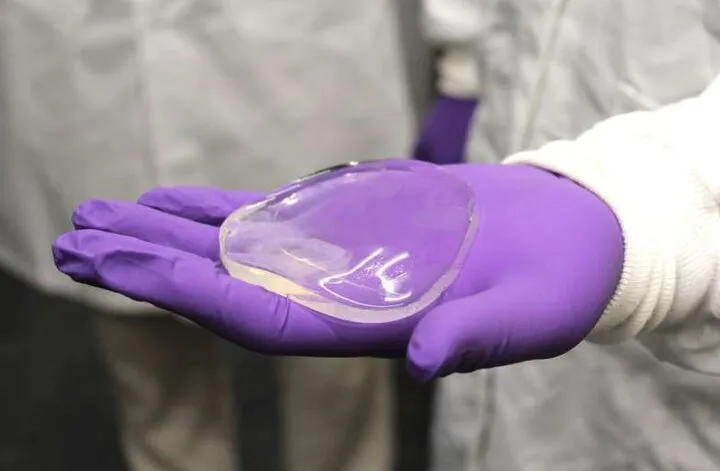
Researchers at the University of Waterloo (UWaterloo) have developed a gel inspired by sea cucumbers' ability to change the stiffness of their bodies. The material could potentially be used to repair damaged tendons and other soft tissues without leaving permanent foreign material behind.
According to Phys.org, the water-rich material, known as a hydrogel, acts as a temporary supportive scaffold that allows new tissue to grow as it gradually breaks down. Inspired by sea cucumbers, the gel can be engineered to be either softer or stiffer, potentially making it suitable for repairing different types of tissue throughout the body.
Dr. Yimin Wu, a professor of mechanical engineering at the University of Waterloo and lead researcher on the study, explained that different soft tissues require different types of support.
"Not all soft tissues need the same scaffold. A material placed next to soft brain tissue needs to behave differently from one used to repair a stiff tendon," he said.
After nearly four years of research, the team evaluated the hydrogel in a preclinical study involving mice, obtaining promising results. Mice with injured tendons treated with the gel showed better recovery than those whose tendons were repaired using stitches alone. The findings indicated that the hydrogel promoted the formation of new, more organized tissue. As the tendons healed, the material gradually degraded and was absorbed by the body over approximately eight weeks.
The researchers observed improvements in the repaired tendons compared with those treated exclusively with sutures, suggesting that the material could support a more effective healing process.
Youchao Teng, who led the research under Wu's supervision, described the results as highly encouraging. He said the material performed beyond expectations, enabling tendons to regenerate with better-organized tissue and achieve functionality comparable to that of healthy tendons.
To produce the hydrogel, the researchers first freeze the material to establish its internal structure. They then place it in specially formulated salt solutions that allow its stiffness to be adjusted. This process makes it possible to tailor the material's mechanical properties to the specific tissue requiring support.
This customizable feature could eventually make the hydrogel useful for repairing a wide range of tissues, including muscles, cartilage, skin and even delicate brain tissue and other organs. However, further research is needed to determine whether the material can safely and effectively support healing across these different parts of the body.