MicroRNAs show potential for early detection of coronary artery disease
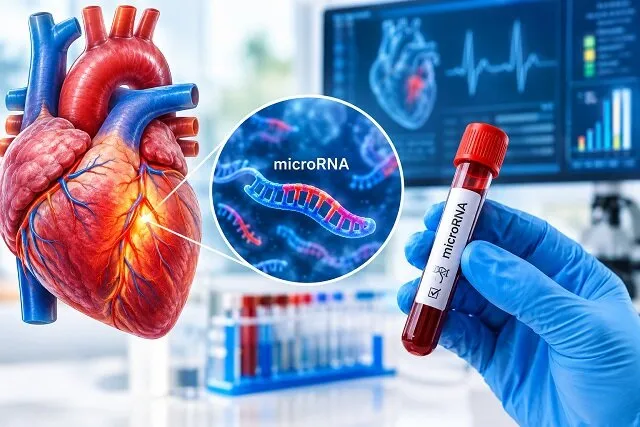
Coronary artery disease is one of the most common cardiovascular conditions and a major cause of death worldwide. It develops when fatty deposits and other substances gradually build up in the walls of the arteries supplying blood and oxygen to the heart muscle. As these arteries narrow, blood flow can become restricted.
In its early stages, however, the disease often causes few noticeable symptoms, meaning it may remain undetected until a serious complication, such as a heart attack or unstable angina, occurs.
Cardiovascular diseases cause more than 17.9 million deaths annually worldwide. Many sudden cardiac deaths also occur in people who had no previously recognized signs of coronary artery disease.
Detecting the disease before severe symptoms emerge is important for saving lives and reducing healthcare costs. Early identification can provide an opportunity to improve diet, increase physical activity and begin preventive treatments, including statins.
These measures may slow disease progression and reduce the likelihood of hospitalization, emergency angioplasty or coronary artery bypass surgery. Studies reviewed by the researchers suggest that screening high-risk individuals and providing preventive interventions can reduce direct healthcare costs by up to 30%.
Early diagnosis, however, requires sensitive and accurate tools capable of detecting changes before clinical symptoms appear. Molecular biomarkers, particularly microRNAs, are among the approaches being investigated.
Shadan Navid, from the Department of Anatomy at the School of Medicine and the Research Center for Social Determinants of Health at Gonabad University of Medical Sciences, conducted the study with a colleague from the same university.
They examined the potential of microRNAs for early detection of coronary artery disease, focusing on their role in disease development, their ability to reveal early changes, and the opportunities and barriers to their use in clinical settings.
MicroRNAs are small molecules that regulate gene activity. They can bind to messenger RNA, which carries instructions from genes for protein production, and prevent certain proteins from being made or promote the breakdown of messenger RNA.
The study was a review rather than a new clinical trial. The researchers collected and assessed findings from previous studies published between 2019 and 2025 in PubMed and Web of Science. They searched for terms including “microRNA,” “coronary artery disease,” “early diagnosis” and “biomarker.” A biomarker is a measurable biological feature that can indicate a normal process or the presence of disease.
The review aimed to identify promising microRNAs, compare diagnostic approaches and assess the challenges limiting their practical use.
The analysis found that miR-21, miR-208a and miR-133a were among the most extensively studied microRNAs. MiR-21 is associated with vascular inflammation, while miR-208a is linked to heart muscle injury. Other molecules, including miR-499 and miR-126, have also shown diagnostic potential.
Because microRNAs can remain stable in biological fluids and have distinct expression patterns, they may reflect changes associated with inflammation, lipid metabolism, dysfunction of the blood vessel lining and oxidative stress.
The findings also suggested that combining several microRNAs may provide more accurate diagnostic information than relying on a single marker. For example, one panel comprising miR-21, miR-499 and miR-223 achieved a reported diagnostic accuracy measure of 0.93, while a panel comprising miR-21, miR-208a and miR-133a recorded a value of 0.88. Integrating these panels with machine-learning algorithms could further improve diagnostic performance and support prediction tools tailored to individual patients.
The potential advantage of multi-marker panels lies in the fact that coronary artery disease develops through several interacting processes. Chronic inflammation, fatty deposits in artery walls, oxidative stress and dysfunction of the vessel lining all contribute to disease progression. Different microRNAs may reflect different aspects of these processes. For example, miR-155 has been associated with inflammation, miR-126 with blood vessel lining function, and miR-499 with oxidative stress.
Combining several markers may therefore provide a more comprehensive picture of vascular health. Using microRNAs alongside established biomarkers, such as troponins, may also contribute to a more comprehensive screening approach.
Emerging technologies could expand the diagnostic potential of microRNAs. Next-generation sequencing has enabled the identification of additional candidates, including miR-200c and miR-146b-5p.
Nanosensors may also enable rapid, sensitive and minimally invasive detection. Artificial intelligence and machine learning could help analyze complex patterns across multiple markers and estimate the likelihood of disease more accurately. In the future, these approaches may support individualized risk prediction and potentially contribute to personalized treatment strategies.
Despite this promise, microRNAs require further evaluation before they can be widely used in clinical practice. Differences in measurement methods, the possibility that studies with positive results are more likely to be published, high technology costs and the need for advanced infrastructure remain key limitations.
The results must also be validated in larger and more diverse populations to determine whether proposed marker panels perform consistently across different groups. Developing affordable diagnostic kits, standardizing sample collection and measurement methods, and conducting clinical trials are essential steps toward introducing these tools into healthcare settings.
Overall, the review, whose findings were published in the Quarterly Journal of Paramedical Sciences and Military Health, affiliated with AJA University of Medical Sciences, suggests that microRNAs could help shift coronary artery disease management toward prevention.
Rather than identifying the disease only after a heart attack or the onset of severe chest pain, clinicians may eventually be able to detect relevant changes earlier. Achieving this goal will require standardized methods, lower costs and confirmation of diagnostic accuracy in larger studies.