Study reveals two distinct pathways in brain development
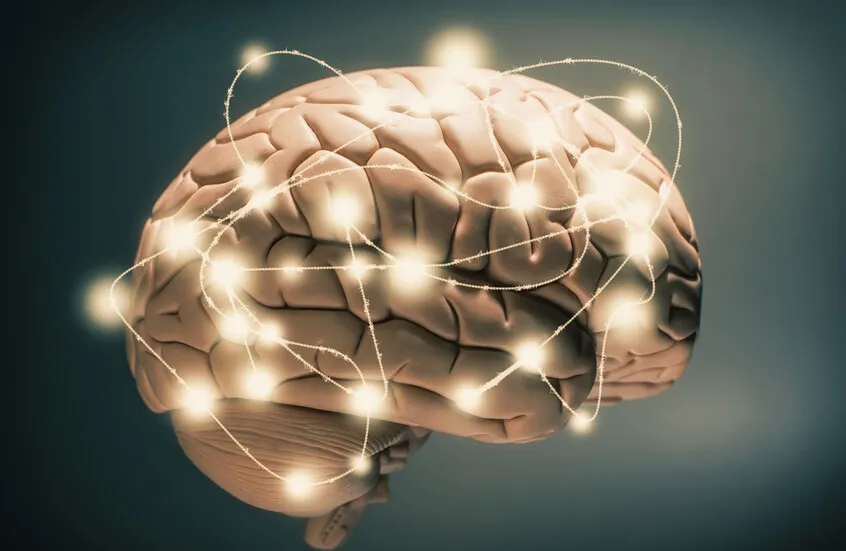
The study, published in Nature Neuroscience, suggests that the brain does not originate entirely from a single group of precursor cells during early embryonic development, as previously thought. Instead, it develops through two separate evolutionary pathways that later converge.
The brain consists of three main regions: the forebrain, midbrain and hindbrain. The forebrain is involved in functions such as language, consciousness and thinking, while the hindbrain controls essential functions including breathing, heartbeat, sleep and appetite. It also controls the facial, tongue and throat muscles involved in speech and swallowing.
Two distinct developmental pathways
The researchers reached their findings by studying the early stages of mouse embryo development, where they identified two distinct groups of precursor cells.
One group carries a gene known as Otx2 and develops into the forebrain and midbrain, while the other carries Gbx2 and develops into the hindbrain.
The two groups remained separate from the earliest stages of development. The researchers also identified clear differences in chromatin, the structure that regulates gene activity within cells. These findings suggest that the fate of each cell group is determined very early in embryonic development.
Kyle Loh, an associate professor of developmental biology, said the researchers had shown for the first time that the front part of the brain develops from precursor cells that are fundamentally different from those that give rise to the rear part.
Producing neurons in the laboratory
The discovery also helped researchers understand why producing hindbrain neurons in the laboratory has been difficult. After identifying the correct developmental pathway, the team was able to direct human pluripotent stem cells to develop into functional motor neurons belonging to the hindbrain.
The cells displayed electrical activity and characteristics similar to those of natural neurons, including the production of proteins associated with regions that control the muscles involved in facial movement and swallowing.
The researchers believe this capability could help in studying diseases affecting the brainstem, including spinal muscular atrophy and amyotrophic lateral sclerosis (ALS), which damage important neurons and can lead to loss of the ability to swallow and breathe.
An ancient evolutionary origin
The research was not limited to mice and human cells. The researchers found a similar pattern in chickens, zebrafish and acorn worms, organisms that share a distant evolutionary ancestor with humans.
They also noted that jellyfish have two separate nervous systems, even though their evolutionary lineage diverged from the lineage leading to humans around 600 to 700 million years ago.
Loh said the findings suggest that evolution may have brought together two nervous systems that once existed separately, allowing them to function later as a single system.
The researchers hope to expand their studies to investigate the evolutionary origin of the spinal cord and examine how hindbrain cells are affected by diseases such as spinal muscular atrophy and ALS, potentially contributing to the development of new treatments in the future.


















