Fecal-sludge biochar boosts concrete strength by up to 42%
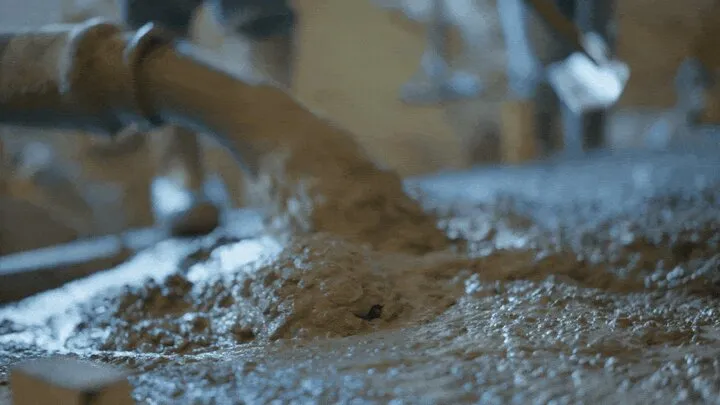
Concrete is, quite literally, the foundation of the modern world. Nearly every construction project around the globe relies on it in some form. But there is a major environmental problem: cement, one of concrete’s key ingredients, has a substantial carbon footprint.
The heating and processing of limestone to produce cement is a major source of global carbon dioxide emissions. As a result, scientists are increasingly looking for ways to reduce the amount of cement required in concrete while maintaining its strength and durability.
A research team led by civil engineer Raghuvesh Tiwari of Manipal University Jaipur in India has now developed an unconventional approach that could potentially address two environmental challenges at once.
In their study, the researchers reported that mixing biochar produced from human fecal sludge processed at treatment facilities could significantly improve several properties of concrete.
Concrete derives its remarkable usefulness from a combination of properties. In its wet state, it is workable and can be poured into almost any shape. Once hardened, however, it becomes strong enough to withstand enormous loads and durable enough to last for decades or even millennia.
Conventional concrete is typically made from carefully proportioned amounts of aggregates such as gravel and sand, along with water and cement.
The balance between these components is critical. Altering the mixture or replacing too much cement with another material can result in concrete that lacks sufficient strength or durability. If concrete cracks or fails under stress, its usefulness as a construction material can be severely compromised.
One increasingly promising alternative to cement is biochar, a carbon-rich material produced by heating organic matter in a low-oxygen environment.
Biochar is particularly attractive because it can be produced from a wide range of organic materials, while humans generate enormous quantities of organic waste. A single person can produce up to approximately 400 grams of fecal matter per day, meaning that human waste could represent a substantial and continuously available source of raw material when viewed on a population scale.
Human waste must be treated and managed safely, and this is where the researchers saw an opportunity. In India, fecal sludge treatment plants have been established to safely process human waste, which can then undergo pyrolysis to produce biochar.
The researchers therefore asked whether, just as biochar made from sawdust, wood, rice husks and other organic materials can be incorporated into concrete, biochar derived from human waste could also be used for the same purpose.
To investigate the possibility, Tiwari and his colleagues obtained fecal-sludge biochar from a treatment facility in Warangal, India.
To produce the biochar, the fecal sludge was first dried and then heated at temperatures ranging from 350 to 450 degrees Celsius in a low-oxygen environment. The resulting biochar was subsequently ground and sieved into a fine powder.
The researchers used this powder to replace different proportions of cement in conventional concrete—5%, 10% and 15%—and subjected the resulting mixtures to a series of tests to evaluate their performance and durability.
The results were striking. The researchers measured properties including shrinkage, compressive strength, flexural strength, water absorption and porosity, revealing significant differences between the various mixtures.
Overall, the strongest performance was generally observed when 5% of the cement was replaced with fecal-sludge biochar. The material also demonstrated an interesting characteristic: its strength continued to increase as the concrete cured.
After 91 days, concrete containing 5% fecal-sludge biochar showed an average 20% increase in compressive strength and a 36% increase in flexural strength.
The 10% mixture produced even greater gains in some measurements, with increases of 21% in compressive strength and 42% in flexural strength.
The new concrete did not appear to sacrifice performance in several of the other properties examined by the researchers.
The 5% mixture generally absorbed less water and had lower porosity than conventional concrete, while also exhibiting less drying shrinkage. At the 10% replacement level, however, its overall performance remained broadly comparable with that of conventional concrete.
At the 15% replacement level, the concrete continued to gain strength during curing, but its overall strength fell behind that of the 5% and 10% mixtures.
The question, then, is why adding a small amount of human-waste-derived material could make concrete stronger.
The researchers believe that several mechanisms may be working together. First, fecal-sludge biochar is highly porous, containing numerous microscopic cavities capable of absorbing water and gradually releasing it as the concrete cures.
This effectively turns the biochar particles into tiny internal reservoirs, keeping water available for the chemical reactions responsible for cement hydration and hardening.
The biochar also does more than simply retain water. It is rich in silica, which can react with compounds generated during cement hydration and promote the formation of additional calcium silicate compounds that contribute to concrete strength.
In other words, the material exhibits pozzolanic activity—a broad class of chemical reactions that also played a role in some forms of ancient Roman concrete. The difference is that instead of relying on volcanic materials used by the Romans, the researchers are using a very different organic waste-derived material.
Finally, the fine biochar particles can fill microscopic voids within the concrete, potentially improving the way its constituent materials pack together and bond.
The researchers were able to observe these structural differences under a microscope. Concrete containing 5% biochar exhibited a denser structure with stronger bonding than conventional concrete. At the 15% level, however, the structure began to deteriorate, with more pores, cracks and weakly bonded regions becoming visible.
The researchers stress that the findings do not mean skyscrapers will be built from fecal-sludge concrete tomorrow. Further studies are needed to determine how the material performs under real-world conditions, including freeze-thaw cycles, salinity and extreme temperatures.
Another concern is the potential accumulation of heavy metals, a known issue associated with sewage sludge. Immobilizing potentially harmful heavy metals within concrete could be beneficial, but it remains unclear how effectively they would be contained or whether they could eventually leach out over time.
The study also did not assess the impact of this approach on overall carbon emissions.
Nevertheless, replacing even a fraction of the cement in concrete with a material derived from a waste stream that humans produce continuously could potentially address two environmental challenges simultaneously: reducing reliance on cement while giving a useful application to human waste.
And if there is one material that humans can reliably produce in large quantities and on a continuous basis, human waste is certainly one of them.