MIT’s Radical New Method Lets Scientists See inside Atoms
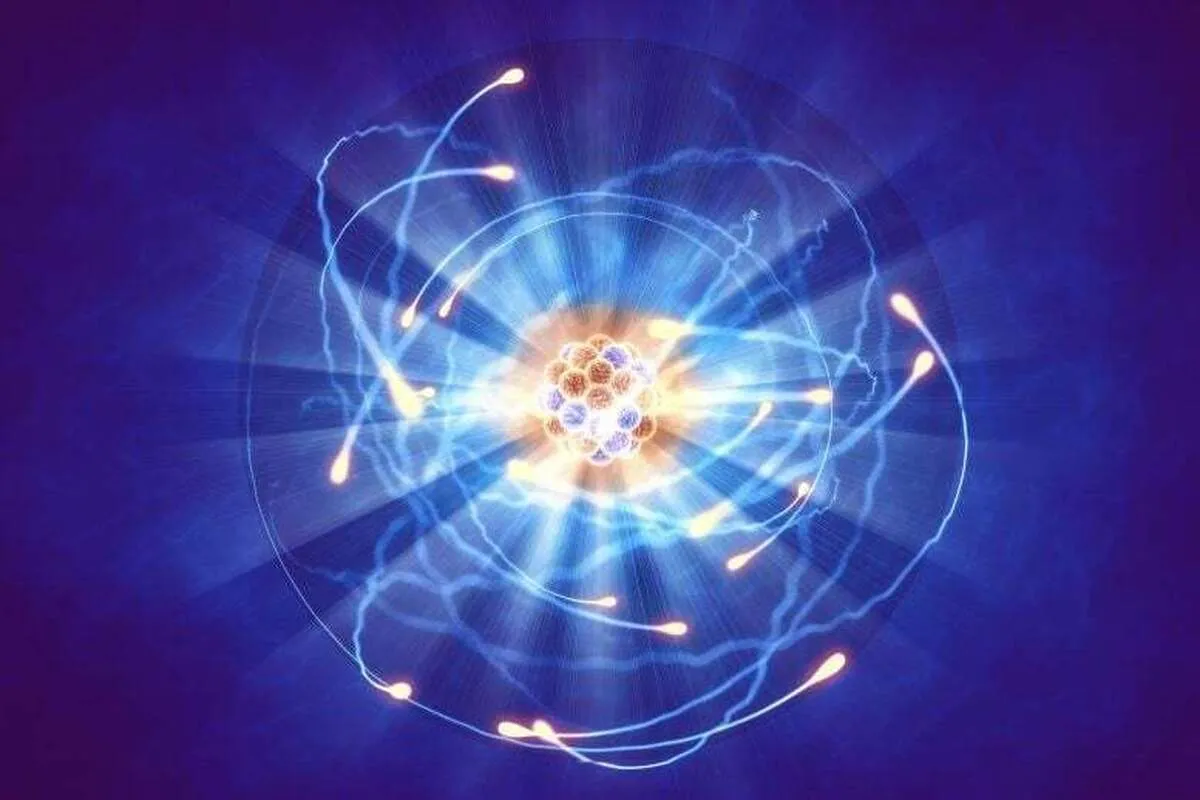
By binding radium atoms with fluoride to form radium monofluoride molecules, they used the atom’s own electrons as probes to momentarily enter the nucleus and carry back subtle “messages” about its structure. In research published in Science, a team of MIT physicists achieved exceptionally precise measurements of the energy of electrons orbiting a radium atom that had been chemically bonded with a fluoride atom to form radium monofluoride. By studying these molecules, the researchers created a kind of miniature particle collider. Within this environment, the electrons surrounding the radium atom were confined closely enough to occasionally slip into the nucleus before returning to their usual orbits.
Traditionally, exploring the interior of atomic nuclei requires enormous particle accelerators that stretch for kilometers and propel beams of electrons at extremely high speeds to smash into nuclei. In contrast, this new molecule-based technique provides a compact, table-top alternative that allows scientists to investigate nuclear interiors with far greater convenience.
Inside the radium monofluoride molecules, the team carefully tracked the energy levels of electrons as they moved within the atomic structure. They discovered a minute but significant energy shift, indicating that some electrons had briefly entered the radium nucleus and interacted with the protons and neutrons inside. When those electrons returned to their outer paths, they retained the altered energy, effectively carrying a “message” from within the nucleus that could be decoded to reveal its internal arrangement.
This approach offers a new means of mapping what physicists call the nuclear “magnetic distribution.” Each proton and neutron behaves like a tiny magnet, and the way they align depends on how they are arranged within the nucleus. The researchers now plan to apply their method to create the first detailed map of this magnetic pattern inside the radium nucleus. Their findings could shed light on one of cosmology’s deepest puzzles: why the universe contains far more matter than antimatter.
“Our results lay the groundwork for subsequent studies aiming to measure violations of fundamental symmetries at the nuclear level,” says study co-author Ronald Fernando Garcia Ruiz, who is the Thomas A. Franck Associate Professor of Physics at MIT. “This could provide answers to some of the most pressing questions in modern physics.”
The MIT team also included Shane Wilkins, Silviu-Marian Udrescu, and Alex Brinson, along with collaborators from several institutions, including the Collinear Resonance Ionization Spectroscopy Experiment (CRIS) at CERN in Switzerland, where the experiments were conducted.
According to scientists’ best understanding, there must have been almost equal amounts of matter and antimatter when the universe first came into existence. However, the overwhelming majority of what scientists can measure and observe in the universe is made from matter, whose building blocks are the protons and neutrons within atomic nuclei.
This observation is in stark contrast to what our best theory of nature, the Standard Model, predicts, and it is thought that additional sources of fundamental symmetry violation are required to explain the almost complete absence of antimatter in our universe. Such violations could be seen within the nuclei of certain atoms such as radium.
Unlike most atomic nuclei, which are spherical in shape, the radium atom’s nucleus has a more asymmetrical configuration, similar to a pear. Scientists predict that this pear shape could significantly enhance their ability to sense the violation of fundamental symmetries, to the extent that they may be potentially observable.
“The radium nucleus is predicted to be an amplifier of this symmetry breaking, because its nucleus is asymmetric in charge and mass, which is quite unusual,” says Garcia Ruiz, whose group has focused on developing methods to probe radium nuclei for signs of fundamental symmetry violation.
Peering inside the nucleus of a radium atom to investigate fundamental symmetries is an incredibly tricky exercise.
“Radium is naturally radioactive, with a short lifetime and we can currently only produce radium monofluoride molecules in tiny quantities,” says study lead author Shane Wilkins, a former postdoc at MIT. “We therefore need incredibly sensitive techniques to be able measure them.”
The team realized that by placing a radium atom in a molecule, they could contain and amplify the behavior of its electrons.
“When you put this radioactive atom inside of a molecule, the internal electric field that its electrons experience is orders of magnitude larger compared to the fields we can produce and apply in a lab,” explains Silviu-Marian Udrescu PhD ’24, a study co-author. “In a way, the molecule acts like a giant particle collider and gives us a better chance to probe the radium’s nucleus.”
In their new study, the team first paired radium atoms with fluoride atoms to create molecules of radium monofluoride. They found that in this molecule, the radium atom’s electrons were effectively squeezed, increasing the chance for electrons to interact with and briefly penetrate the radium nucleus.
The team then trapped and cooled the molecules and sent them through a system of vacuum chambers, into which they also sent lasers, which interacted with the molecules. In this way, the researchers were able to precisely measure the energies of electrons inside each molecule.
When the researchers analyzed their measurements, they noticed that the electrons carried slightly different energies than expected if they had remained outside the nucleus. The difference was incredibly small, only about one millionth of the energy of the laser photon used to excite the molecules, but it was clear evidence that the electrons had entered the radium nucleus and interacted with its protons and neutrons.
“There are many experiments measuring interactions between nuclei and electrons outside the nucleus, and we know what those interactions look like,” Wilkins explains. “When we went to measure these electron energies very precisely, it didn’t quite add up to what we expected, assuming they interacted only outside of the nucleus. That told us the difference must be due to electron interactions inside the nucleus.”
“We now have proof that we can sample inside the nucleus,” Garcia Ruiz says. “It’s like being able to measure a battery’s electric field. People can measure its field outside, but to measure inside the battery is far more challenging. And that’s what we can do now.”
The researchers plan to use this new technique to create a detailed map of how forces are distributed inside the nucleus. So far, their experiments have examined radium nuclei that are randomly oriented at high temperatures within the molecules. The next step is to cool the molecules and control the alignment of their pear-shaped nuclei. Doing so would allow the team to chart the nucleus with greater precision and search for possible violations of fundamental symmetries in nature.
“Radium-containing molecules are predicted to be exceptionally sensitive systems in which to search for violations of the fundamental symmetries of nature,” Garcia Ruiz says. “We now have a way to carry out that search.”
4155/v