27 Million Tons of Nanoplastics Discovered in North Atlantic
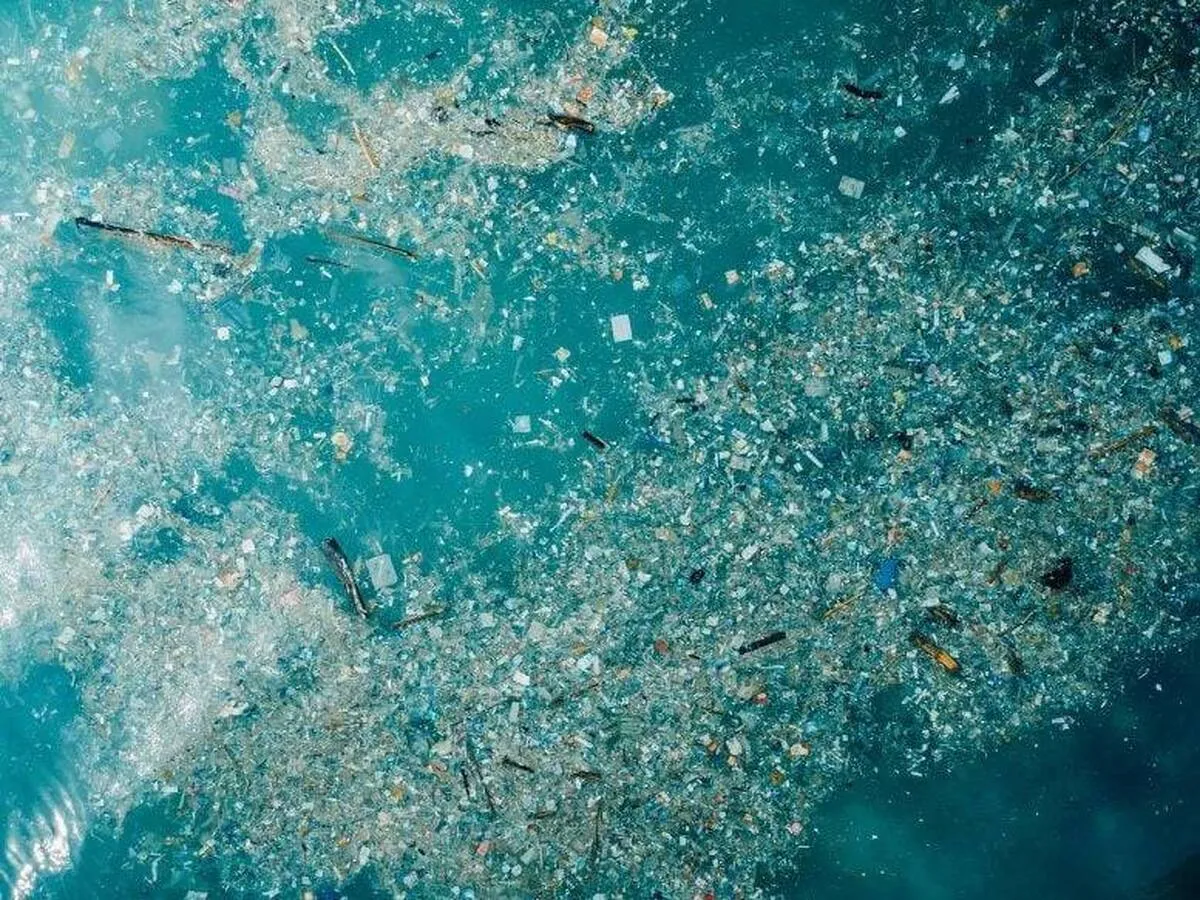
A major new study by the Royal Netherlands Institute for Sea Research (NIOZ) and Utrecht University has revealed that approximately 27 million tons of plastic, in the form of ultra-fine particles smaller than 1 micrometer, are currently floating in the North Atlantic Ocean. These findings, which provide a deeper understanding of the scale of microplastic pollution, were published in the journal Nature.
“There is more plastic in the form of nanoparticles floating in this part of the ocean than there is in larger microplastics or macroplastics floating in the Atlantic—or even across all the world’s oceans,” said Helge Niemann, a researcher at NIOZ and professor of geochemistry at Utrecht University. In mid-June, he was awarded a 3.5 million euro grant to expand his investigations into nanoplastics in marine environments and their long-term impacts.
As part of this research effort, Utrecht University master’s student Sophie ten Hietbrink spent four weeks aboard the research vessel RV Pelagia. During the expedition, which traveled from the Azores to the European continental shelf, she collected water samples from 12 different locations, filtering out particles larger than one micrometer.
“By drying and heating the remaining material, we were able to measure the characteristic molecules of different types of plastics in the Utrecht laboratory, using mass spectrometry,” Ten Hietbrink explains.
Researchers from NIOZ and Utrecht University have produced the first quantitative estimate of nanoplastics present in the world’s oceans. “There were a few publications that showed that there were nanoplastics in the ocean water, but until now, no estimate of the amount could ever be made,” said Helge Niemann.
He credits this breakthrough to the collaboration between marine researchers and the expertise of atmospheric scientist Dusân Materic from Utrecht University.
By scaling up data collected from multiple sampling sites, the team estimated that the North Atlantic alone contains approximately 27 million tons of nanoplastics.
“A shocking amount,” remarked Sophie ten Hietbrink. “But with this, we do have an important answer to the paradox of the missing plastic.” For years, scientists have been unable to account for all the plastic ever produced. The findings suggest that a significant portion now exists in the ocean in the form of microscopic particles.
Nanoplastics can enter the ocean through multiple pathways. In some cases, they result from the breakdown of larger plastic fragments exposed to sunlight. Other particles are likely carried into marine environments by river systems. Additionally, evidence suggests that nanoplastics are transported through the atmosphere, reaching the ocean either by falling with rain or settling directly onto the water’s surface in a process known as ‘dry deposition.’
According to Niemann, the presence of these particles could have far-reaching biological effects. “It is already known that nanoplastics can penetrate deep into our bodies. They are even found in brain tissue. Now that we know they are so ubiquitous in the oceans, it’s also obvious that they penetrate the entire ecosystem; from bacteria and other microorganisms to fish and top predators like humans. How that pollution affects the ecosystem needs further investigation.”
In the future, Niemann and colleagues also want to do further research on, for example, the different types of plastics that have not yet been found in the fraction of 1 micrometer or smaller. “For example, we have not found polyethylene or polypropylene among the nanoplastics. It may well be that those were masked by other molecules in the study. We also want to know if nanoplastics are as abundant in the other oceans. It is to be feared that they do, but that remains to be proven.”
Niemann emphasizes that the amount of nanoplastics in ocean water was an important missing piece of the puzzle, but now there is nothing to do about it. “The nanoplastics that are there, can never be cleaned up. So an important message from this research is that we should at least prevent the further pollution of our environment with plastics.”
4155/v