Iran, Cuba Ink Cooperation Documents in Scientific Field
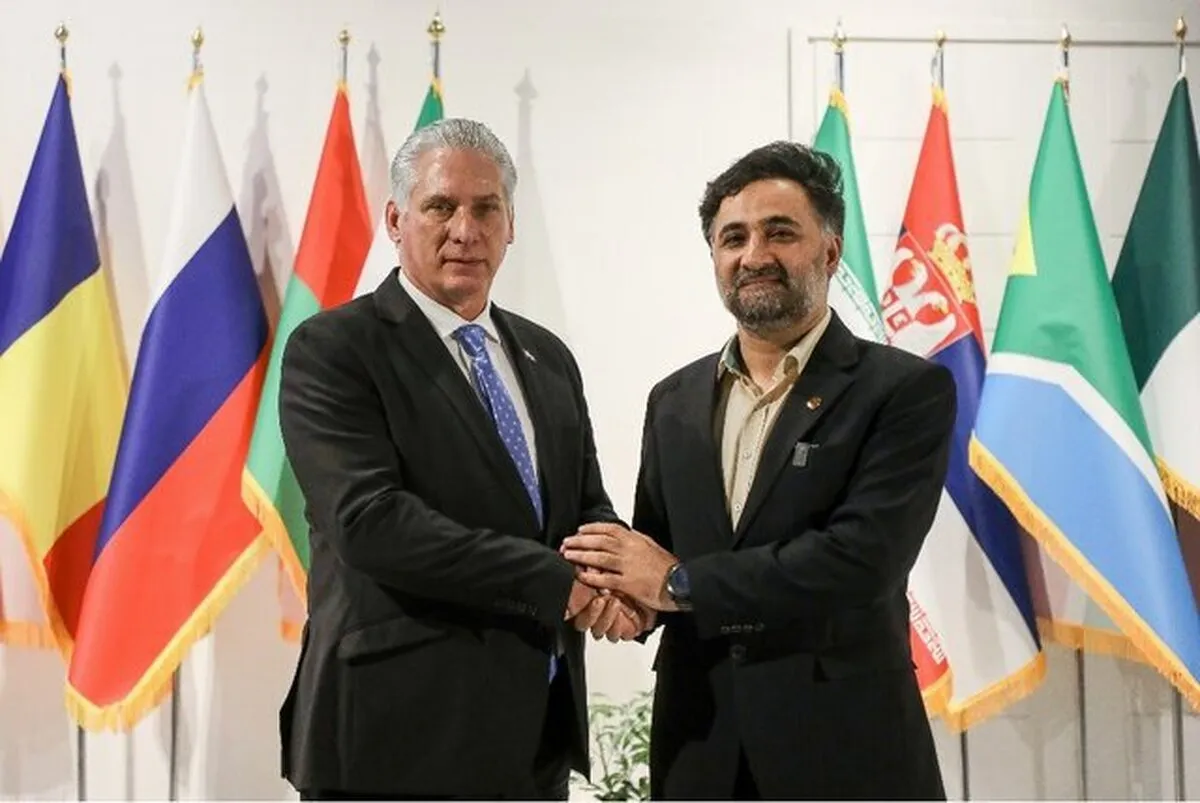
Iran's Vice-President for Science, Technology and Knowledge-Based Economy Rouhollah Dehghani Firouzabadi and Minister of Health, Treatment and Medical Education Bahram Einollahi accompanied Cuba President Miguel Díaz-Canel and his entourage during a visit to Iran House of Innovation and Technology (iHiT) in Tehran.
After the visit, Dehghani Firouzabadi told reporters that the Cuban authorities, including the president of that country, are interested in the development of science and technology and the use of Iran's innovative capacities, saying, “In this regard, very good multilateral meetings were held among government and private sector officials, business managers and the businesses and investors of the two countries. We are currently in the phase of concluding contracts and implementing joint technological projects in the operational phase.”
The Iranian Vice President for Science, Technology and Knowledge-Based Economy further said that Cubans have come to conclude that Iran is a leading country in advanced technologies such as nanotechnology and biotechnology, adding, "Admitting to these Iranian capabilities, Cuba offered its favorite topics to use Iran's achievements, experiences and capabilities and this interaction is realized in the form of joint projects, supply of knowledge-based products and services, and technology transfer.”
“Cooperation fields have been suggested in various fields, including human vaccines, livestock, poultry and aquatics, smart farms and greenhouses, medical equipment, medicine and pharmaceutical raw materials,” Firouzabadi added.
According to a report by the Iranian Vice Presidency’s website, Dehghani Firouzabadi referred to the signing of the scientific, technological and industrial cooperation document between the Vice Presidency of Science, Technology and Knowledge-Based Economy and the Ministry of Science, Technology and Environment of Cuba, noting, “This cooperation agreement will contribute to advancing and accelerating of the defined axes of cooperation and will result in promotion and development of scientific and technological cooperation between the two countries.”
"Development of joint cooperation projects in the fields of science and nanotechnology, biotechnology, climate change, exchange or designation of scientists and researchers to carry out joint projects or share experiences, transfer or exchange technology in the fields of science, technology and innovation, participating in the scientific and technological events in the two countries and the creating a joint committee to advance the topics of mutual interest between the two countries, including the issues raised in the talks and a cooperation document, are the contents of the signed agreement,” he added.
4155/v