Top News of Last Week with ANA

Azad News Agency (ANA) published a number of scientific and technological news during the past week whose top ones are as follows:
Iranian Researchers’ Innovative Method Empowers Elbows of Patients with Spinal Cord Injury
Iranian researchers at Amirkabir University of Technology succeeded in estimating the kinematics of the elbow joint with the aim of enabling patients with 6C5/C level spinal cord injury to perform ADL movements (doing daily tasks) by using the simultaneous processing of EEG and EMG signals.
“This research was carried out with the aim of empowering patients with spinal cord injuries of level 6/C5C. By recording and processing the brain signals (EEG) and the electrical activity of healthy muscles (EMG), the voluntary movement information of the person is estimated. By using this information and artificial intelligence, voluntary movements are known and by stimulating the defective muscle, movements like drinking water, answering the phone, moving objects and pouring water from a pitcher can be done,” said Mahdiyeh Khaliq Fard, a student of Amirkabir University of Technology.
Elaborating on the results of this project, she noted, “Reconstruction of three-dimensional paths in daily life activities using vital EEG and EMG signals improves the practical development of mobility aids for patients.”
Khaliq Fard stated that the basic limitations like atrophy or early fatigue of muscles, using only the EMG signal of people with mobility disabilities has been a challenge, adding, “Low accuracy, low data transfer rate and the need for high individual attention are among the limitations of using only the EEG signal.”
“Therefore, with the proper use of a combination of these vital signals with the aim of reducing the limitations, it is a new approach that requires a selection of a combined structure,” Khaliq Fard said.
Iran-Made AI-Based System Reduces Energy Consumption in Buildings
Researchers of a knowledge-based company in Iran stationed at the Science and Technology Park of the Incubator Center of Mazandaran province developed an AI-based system for monitoring and controlling electronic equipment in buildings which can reduce energy consumption.
“BMS or Building Management System is one of our achievements which can be used to continuously monitor various parts of buildings by applying commands,” said Sadeq Ebrahimzadeh, the managing director of the knowledge-based company.
He stated that the system is different from traditional devices, adding, “Protection of users and equipment connected to the system and suitable user interface are among the features and advantages of this system and users can access the system remotely and connect and control their equipment through the Internet of Things (IoT).”
Emphasizing that the BMS system can cover all the electrical, mechanical and protection services of the building, Ebrahimzadeh said, “These services include heating, cooling, air conditioning, elevator, emergency power plant, escalator, lighting control, CCTV, announcement and fire extinguishing, traffic control, etc.”
He noted that normally these systems are used in most buildings to control heating and cooling facilities, lighting and traffic control, and stressed, “But these systems which are based on the standard protocols make it possible to link with all the systems listed above and form an integrated control model for all controllable components in the building.”
Iranian Scientists Produce Hydrogel for Cartilage Repair by Using Biodegradable Ketira Polymer
Academic researchers in Iran have produced a multi-layered hydrogel to repair damaged cartilage by using ketira as a biodegradable polymer.
Maryam Dehqan Nayyeri, one of the researchers of the plan, explained that the title of this project is ‘preparation of a multi-structure scaffold based on ketira for cartilage-bone tissue engineering’, and said, "Cartilage tissue is a type of connective tissue that has been developed to bear weight and resist pressure, and has flexibility properties to some extent."
“In cartilage, the extracellular network is the most abundant component, but sudden strong blows to the joint surface or continuous pressures cause destruction in the cartilage,” she added.
“For this reason, in this research, we made efforts to evaluate the possibility of preparing a multi-structural hydrogel system from ketira by irradiation method,” Dehqan Nayyeri said.
Noting that in recent years, due to the very desirable properties of hydrogels prepared based on polysaccharides and natural polymers, including non-toxicity, biodegradability, and proper biocompatibility, they have widely been used in cartilage tissue engineering, she said, “On the other hand, synthetic polymers have been used to develop the mechanical properties of these hydrogels. The polymer used in this research was ketira, which due to the structure of the cartilage tissue and its low repair capacity, the use of cartilage tissue engineering is necessary and important.”
Iranian Researcher’s Invention to Remove Fine Dust Receives IFIA Award
An Iranian researcher received the silver medal in the invention competition of the International Federation of Inventors' Associations (IFIA) by making new filters to remove fine dust in cars.
“This filter is designed in such a way that the particles in the air can be removed by using a series of fluids. For instance, installing this filter in water coolers makes it purify the air using the water in the water coolers,” said Morteza Bakhshi, the winner of the prize.
He described another use of the filter in cars, and said, “This filter is a mechanical part that absorbs fine dust by creating a thin layer of fluids, like oil or antifreeze."
Noting that the existing filters block the passage of air because they become saturated with pollutants after a while, he said, “The filters we designed can be washed and reused and are able to absorb particles as little as 20 microns like fine dust and dust.”
Bakhshi called the absence of pressure drop in the flow of passing air, the absence of paper in the production of innovative filters and as a result the preservation of trees and the ecosystem among other advantages of this filter, and said, “Reducing air pollution is another advantage of this product.”
Iranian Researcher Produces Nanofibers to Fight Infection-Causing Microorganisms
An Iranian researcher succeeded in production of peptide-containing nanofibers to inhibit microorganisms causing infection and food poisoning.
“I used to make research on living microbial compounds and I realized that frogs do not get sick even though they live in a polluted environment. Also, toads always have contents in their stomachs that defend them against diseases; therefore, I started study on this research topic,” said Sahar Roshanak, a PhD graduate of Ferdowsi University of Mashhad in food science, industry, and microbiology.
“The purpose of this project was to provide a new method to optimize the production of recombinant buforin antimicrobial peptide and reduce the production costs of this peptide and other similar peptides which can increase its use as an active and effective antimicrobial compound in the food industry and can be a big step towards facilitating its use in the treatment of various diseases related to antibiotic-resistant microorganisms,” he added.
Roshanak termed production of nanofibers containing peptides, studying its properties and introducing nanofibers as an alternative to chemical preservatives or physical methods of food preservation to control microorganisms that cause infection and food poisoning other goals of this project.
Knowledge-Based Firm in Iran Produces Modern Industrial Equipment
Specialists at a knowledge-based company in Iran produced several laboratory and industrial equipment to supply needs of Iranian industries.
Mohammad Reza Fazeli, the managing director of the knowledge-based company, referred to the production of under-pressure reactors with stirrer, and said, “The most important application of this type of reactor is to create a suitable platform for chemical reactions based on a predetermined plan to create the desired product.”
He elaborated on designing and production of magnetic couplings, and said, “Coupling equipment is used to transfer torque from a shaft or electric motor and has wide applications in transferring liquids.”
Noting that other equipment and devices are also produced in the knowledge-based company, Fazeli said, “The most important equipment is industrial autoclaves, bioreactors and planetary mixers, which are mainly used in different laboratory, pharmaceutical and chemical industries.”
He described the most important areas of application of the produced equipment as oil, petrochemical, chemical, paint, resin, adhesive, cement, steel, medical, glass, composite, rubber, polymer and laboratory industries.
RIPI Researchers Successfully Carry Out Phytoremediation of Oil-Contaminated Soil
Iranian researchers at the Research Institute of Petroleum Industry (RIPI) have successfully cleaned oil-contaminated soil using natural Phytoremediation method.
An area in the Tangeh Gandommkar District located in Chaharmahal and Bakhtiari province in the Southwestern part of Iran, which was previously contaminated with oil, was cleaned up with the technical knowhow of researchers at Research Institute of Petroleum Industry (RIPI).
The RIPI is affiliated with National Iranian Oil Company (NIOC).
According to a report by the RIPI public relations department, the operation to clean the oil-contaminated area in Tangeh Gandommkar District started last year with local technical know-how during which the phytoremediation was carried out by adding elements required for contaminated soils in that area.
The RIPI report added that phytoremediation was used to clean the area, while the research institute received help from the other companies and institutes in neighboring Isfahan province as well as Chaharmahal and Bakhtiari province.
Biodegradable Plates Made by Plant-Based Polymer in Iran
Researchers at an Iranian knowledge-based company have produced tableware (plates) from plant-based plastic which is environmentally-friendly and biodegradable.
According to a report by the Iranian Vice-Presidency for Science and Technology and Knowledge-Based Economy, Saeed Hashemizadeh, the managing director of a knowledge-based company, said that a team of researchers at his company has focused on producing the plant-based data-x-items that are eco-friendly and lay the ground for a plastic-free life.
“This company was founded with focusing on producing biodegradable polymers, and after going through the process of obtaining the license from relevant authorities, it was established in Isfahan Scientific and Research Town, and after conducting research and studies with the efforts of its experts, it succeeded in obtaining patent for this product,” he said.
He added that the most important product of this knowledge-based company is single-used tableware made of polymer from plants with the same properties and quality as polymer products.
He added that those biodegradable plates are made from cornflour.
Iran-Made System Helps Smart Control of Farm’s Environmental Conditions, Irrigation Equipment
Iranian researchers designed a system which helps smart agriculture by omitting the need for round-the-clock monitoring of manpower and controlling the environmental conditions and irrigation equipment.
“We have succeeded in finding a comprehensive solution for making agriculture smarter which can be used in the field of smart city and smart home; the initial steps have been taken in a specialized way in agriculture and we intend to develop it further,” Behzad Khanjarian, the managing director of the knowledge-based company, told ANA.
“In this system, a set of hardware and software is provided to the customer which is always managed by the service provider. In other words, to control greenhouses, we install a number of sensors in that place which transmits information to the server with specific measurements; then the information is sent back to the greenhouse hardware devices and the controller controls the environmental conditions and irrigation automatically,” he added.
Noting that the customer has no involvement in the service, Khanjarian said, “The smart agriculture system of our company is wireless, and we use artificial intelligence and fuzzy logic (one of the advanced digital control methods) to manage the software of the farm which are the distinguishing features of this product.”
Iranian Researchers Use Plants to Clean Up Soil Contaminated with Heavy Metals
Iranian researchers have used seven different plants such as "white mustard" and "Descurainia sophia” in phytoremediation of soil contaminated with heavy metals.
Ahmed Abdolzadeh, has lead a team of Iranian researchers that have achieved significant results in removing environmental pollutants using the phytoremediation after implementing a research project titled "Cleaning Up Soil Pollution Using Brassicaceae".
The gradual increase in the accumulation of heavy metals such as "cadmium", "zinc", "lead" and "arsenic" in the soil due to industrial activities such as mining, metal treatment, industrial wastewater, exhaust fumes, energy and fuel production, urban waste recycling, continuous use of chemical fertilizers and poisons is one of the biggest challenges in the field of environment and removing these contaminators matters a lot to preserve the environment.
Cultivating plants in soil contaminated with the heavy metals causes a decrease in the yield of agricultural products, the entry of the pollutants into the crops, and as a result, a decrease in food quality and safety, which, in turn, endangers the health of humans and animals.
An Iranian knowledge-based company has produced stationery with antibacterial properties, and these antibacterial additives have been also employed in the automobile industry.
According to a report by the website of Iran Nanotechnology Initiative Council (INIC), about the knowledge-based firm's products, Mehran Mehrzad, the company's research and development manager, said, “Our antibacterial nano pens and erasers and antibacterial hydrophobic sand are produced with a focus on health standards. We also have nano glues, whose strength has been improved because of using nano technology in producing them.”
“Some companies, such as polymer chair (seat) manufacturers, receive antibacterial additives from us. These additives are added to raw materials during the production process and make their products antibacterial. In addition, some car manufacturing companies are interested in making the parts they use in their vehicles antibacterial, and they also use these materials,” he added.
The researcher added that they have sent their products to Institute of Standards and Industrial Research of Iran to test the quality of their products while the institute also send them other similar products to assist them increase the quality of their product to recieve standard sign.
Mehrzad further said that their products will come to the market under the trademark of 'Panter' which has for long time been warmly welcomed by the domestic market, adding, "We are planning to get their products to international markets too."
Iranian Researchers Produce Nanographene from Waste Materials
A group of researchers at an Iranian technological company have produced "nanographene" from waste materials for use in industrial and medical fields.
“In this project, we are looking for the production of nano graphene from dry waste. We are trying to produce nanographene from any waste that can be turned into ash,” Monira Moalem, the director of the technologicial company said in an interview with Iranian media.
“Nanographenes are used in many industries. These materials are used in tooth enamels in addition to the production of rubber and detergents; because they will increase the stability of the implant.”
Moalem pointed to the synthesis of various types of nanoparticles as one of the other research fields of their company, saying, “In this regard, our focus is on formulating detergents based on nanotechnology, and for this purpose, we have brought a series of nano materials required for detergents to the production stage.”
“Using nanoparticles in detergents increase their efficiency. An example of these products is the anti-odor spray, which is produced based on nano, and spraying it on the equipment and the air causes the removal of unpleasant odors from the house, such as the smell of fish and garlic,” she explained more.
Iranian Knowledge-Based Company Exports Nano Heat, Acoustic Insulation Products
An Iranian knowledge-based company has produced a variety of roll elastomeric insulation containing nanomaterials and has been able to export its products to Iraq and the Persian Gulf countries.
According to a report by the website of the Iran Nanotechnology Innovation Council (INIC), Sepahvand, the production manager of the Iranian knowledge-based company referred to the application of nano technology in the insulations produced in their company, saying, “Due to the nano structure, these insulations can prevent the transmission of heat, cold and sound.”
Mohammad Javad Azizli, the director of research, development and innovation of the company emphasized that, “When it comes to heat and sound transmission, these nano insulators come to mind. Using these insulators can help save energy.”
“This product used to be previously imported, but now it is produced by this knowledge-based company and is currently being exported to Iraq and the Persian Gulf countries, and the researchers of this company are consulting to export this product to Armenia in the next step,” the manager said.
These insulators can be used in various fields such as construction industry and can reduce the transmission of sound and heat in structures to a large extent. Elastomeric rubber foam is resistant to high heat, water and steam. Meanwhile, it is resistant to ultraviolet rays. Also, the combination of acrylonitrile butadiene rubber with polyvinyl chloride has made PVC flexible and increase resistance against acrylonitrile-butadiene rubber (NBR) ozone in this product,” Azizli added.
New Iran-Made Multi-Rotor System Able to Carry Heavy Cargo Up to 25 KG
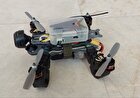
Iranian experts have succeeded in developing various classes of the multi-rotor system with the capability to fly automatically and carry heavy cargo weighing up to 25 kg.
“The heavy class multi-rotor (D25 model) with 6 engines and a maximum take-off weight of 68 kg and a maximum speed of 14.4 m/s was designed and built at the Iran Space Research Center,” Ahmad Soleimani, a commercialization expert at Iran Space Research Center which works under the supervision of Iran Space Agency (ISA), told ANA.
He added that the system can be used in all types of monitoring, surveillance and imaging missions, saying, “It enjoys the capability to fly automatically and carry heavy cargo weighing up to 25 kg with a range of more than 10 km and has successfully passed all types of quality, performance and flight tests.”
“Using clean fuel and energy, saving time in traffic, monitoring targets from above with high imaging power, job creation and the possibility of providing services to neighboring countries are among the important advantages of this system,” Soleimani said.
4155/v