Two New Compounds Show Potent Activity Against Alzheimer's-Related Enzymes
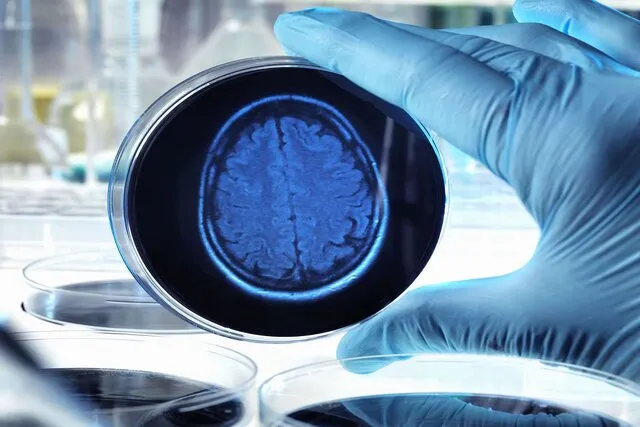
Alzheimer's disease is one of the most common causes of dementia, characterized by a gradual decline in memory and other cognitive abilities. In the brains of people with the disease, the activity of certain neural pathways associated with acetylcholine, a chemical messenger involved in communication between nerve cells, learning and memory, is reduced.
Two enzymes, acetylcholinesterase (AChE) and butyrylcholinesterase (BChE), break down acetylcholine. Inhibiting these enzymes can help increase and maintain acetylcholine levels in the spaces between nerve cells. Some medications used to manage Alzheimer's symptoms, including donepezil and galantamine, work through this mechanism.
Building on this approach, researchers at Tehran University of Medical Sciences, in collaboration with Iranian and international scientists, designed and synthesized a series of new compounds intended to inhibit both enzymes. The findings were published in the journal RSC Medicinal Chemistry.
The team used three chemical components — carbazole, acrylamide and pyridinium — to design the compounds, combining their structural features to produce 17 new molecules, designated 12a to 12q.
The researchers then tested the compounds against AChE and BChE in laboratory experiments and compared their performance with two reference substances, tacrine and galantamine.
The compounds' inhibitory strength was measured using the IC50 value, which indicates the concentration required to reduce an enzyme's activity by 50% under specific experimental conditions. A lower IC50 value indicates stronger inhibition in that assay.
The results showed that the compounds had IC50 values ranging from 6.41 to 74.93 nanomolar against AChE and from 38.05 to 191.96 nanomolar against BChE. According to the study, all 17 compounds showed stronger inhibitory activity than galantamine in the tests, while most also outperformed tacrine.
Two compounds stood out. Compound 12i was the most potent AChE inhibitor, with an IC50 value of 6.41 nanomolar. Its inhibitory activity in the assay was reported to be about 9.1 times stronger than tacrine and 19.5 times stronger than galantamine.
Compound 12g showed the strongest inhibition of BChE, with an IC50 value of 38.05 nanomolar. It was approximately 4.2 times more potent than tacrine and 5.7 times more potent than galantamine in the test.
An analysis of the relationship between chemical structure and activity also indicated that the type and position of chemical groups attached to the molecules' phenyl rings influenced their inhibitory effects. In particular, the presence of groups such as fluorine, chlorine and nitro was associated with increased activity.
To investigate how the leading compounds worked, the researchers conducted enzyme-kinetics experiments. The results indicated that the compounds were competitive inhibitors, meaning they compete with the enzyme's natural substrate for access to its active site, thereby preventing the enzyme from carrying out its function.
The team also used computational methods, including molecular docking and molecular dynamics simulations, to examine how the compounds fit into the enzymes' active sites and how stable their interactions were. The computational findings were consistent with the laboratory results, supporting the proposed binding interactions.
In another stage, the researchers tested the compounds on two cell lines: SH-SY5Y cells, derived from a neuroblastoma tumor, and HEK293 cells, derived from human embryonic kidney tissue. These experiments were designed to provide an initial assessment of toxicity and compare the compounds' effects on the two cell types.
Compounds 12i and 12g showed more favorable selectivity patterns than the other compounds, with greater toxic effects on SH-SY5Y cells than on HEK293 cells. For compound 12i, the IC50 value in SH-SY5Y cells was 7.11 micromolar, with a selectivity index of 7. The corresponding values for compound 12g were 8.60 micromolar and 5.8.
However, these findings do not demonstrate that the compounds protect nerve cells or are safe. SH-SY5Y is a tumor-derived neuroblastoma cell line, so reducing its viability cannot be equated with a therapeutic effect on healthy neurons. HEK293 cells are also not normal neural cells, meaning that comparisons between these two cell lines alone cannot establish safety in the brain.
The findings suggest that the chemical structures developed in this study could provide a basis for designing compounds that inhibit both AChE and BChE. However, strong enzyme inhibition in laboratory conditions does not establish therapeutic effectiveness in the human brain.
One important unanswered question is whether the compounds can cross the blood-brain barrier, a natural protective structure that limits the passage of many substances from the bloodstream into brain tissue. Further research is also needed to assess toxicity in more suitable models, absorption and elimination, compound stability, and potential effects on healthy nerve cells.
The researchers therefore say that animal studies and investigations into the compounds' ability to cross the blood-brain barrier are necessary to evaluate their potential further.
Overall, the study has produced 17 new compounds and identified two with particularly strong inhibitory activity against enzymes that break down acetylcholine. The findings could inform the development of new compounds for Alzheimer's research, but the substances cannot yet be considered proven safe or effective treatments for the disease.