Robot Builds Structure in Space Autonomously for the First Time
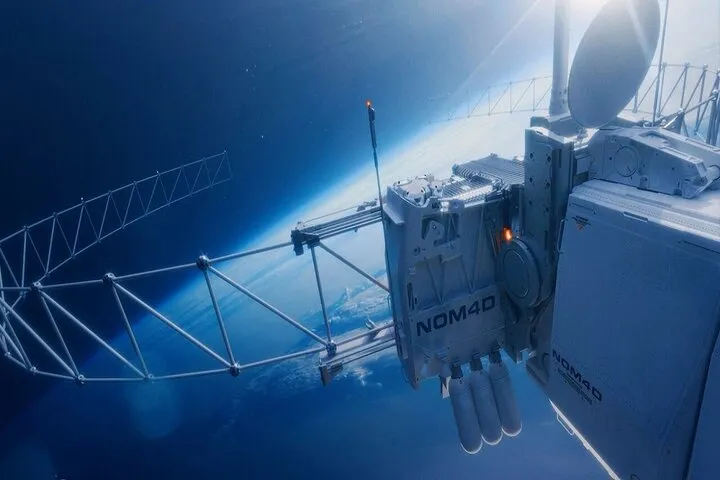
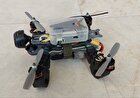
A truss-building robot conceived, designed and developed by researchers at the California Institute of Technology (Caltech) has autonomously assembled a structure in space for the first time, without assistance from astronauts.
The robot is part of the NOM4D program run by the US Defense Advanced Research Projects Agency (DARPA). It features an automated mechanical arm that picks up struts and connectors from nearby dispensers and repeatedly assembles identical sections, or bays, of a truss structure.
“This is the first time a structure has been built autonomously in space,” said Sergio Pellegrino, the project’s principal investigator.
The robotic builder has spent the past six months in space working to assemble a 1.4-meter-diameter reflector antenna. The antenna is made of composite-fiber tubes, aluminum connectors and a reflective surface of Kapton.
DARPA has compared the automated assembly process to putting together pieces of an advanced Lego structure, while emphasizing that automating construction in space is far more complex than a child's building game.
Although the research team faced time constraints and managed to complete only the antenna’s initial section, the demonstration showed that the proposed assembly approach is feasible. The technology could be scaled up to build much larger truss structures capable of supporting expansive reflective surfaces.
The in-space demonstration marked the third phase of DARPA’s project. In the first two phases, the ASTRA team developed the design concept and methodology, then demonstrated that the approach worked in laboratory conditions on Earth. The space payload was completed and tested in less than 12 months before being delivered to Momentus, the company hosting the payload.
Pellegrino said developing a payload of such complexity within such a short timeframe had been a major challenge for the small team. As the mission approaches its conclusion, he added, the researchers can begin considering new research opportunities made possible by the demonstration.
Scientists are particularly interested in deploying large structures, including reflector surfaces, in space. Such structures could serve as giant mirrors for powerful space telescopes, enabling astronomers to observe much more distant celestial objects. They could also form the large apertures of radio antennas.