MIT Researchers Develop New Approach to Nanoparticle Assembly
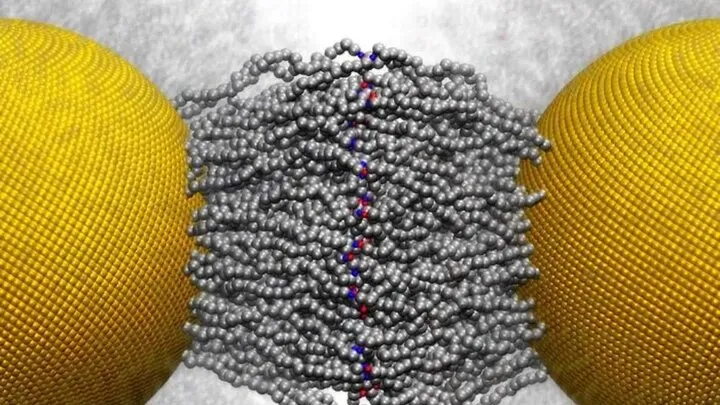
Scientists at the Massachusetts Institute of Technology (MIT) and the University of Delaware have challenged a long-standing principle in nanotechnology by demonstrating that nanoparticle assembly does not require rigid molecular connections.
Previously, researchers believed that flexible connections would cause nanoparticle structures to become disordered. However, the new study shows that highly flexible, electrically charged polymer linkers can allow nanoparticles to reorganize spontaneously, forming tunable and open material structures.
This approach could simplify the development and large-scale production of engineered materials for applications ranging from biomedical technologies to energy systems and photonics.
Rob Macfarlane, a professor of metallurgy in MIT's Department of Materials Science and Engineering, said nanoparticle superlattices have attracted considerable interest because they offer opportunities to create engineered materials with greater control over their internal structures.
He described the technique as an entirely new approach to nanoparticle assembly, challenging nearly two decades of conventional thinking that rigid molecular linkers are essential for successful assembly.
Flexible Ligands Challenge Conventional Nanotechnology
Nanoparticles are structures engineered at the scale of one billionth of a meter, making them valuable building blocks for modern materials science. Their highly tunable shapes and properties enable applications ranging from drug delivery systems to energy storage devices.
However, assembling these tiny components into larger, functional superlattices has remained a significant challenge. Conventional assembly techniques rely on rigid connecting molecules known as ligands. These molecular linkers act as stiff arms that hold nanoparticles together in tightly packed arrangements.
Although dense structures are useful for certain applications, they can significantly restrict the physical properties of nanoparticles. Moreover, designing customized rigid connections for each new material can be expensive, fragile and difficult to scale.
Macfarlane explained that the research team took the opposite approach by making the connections sufficiently flexible to eliminate the need for predefined orientations.
As nanoparticles move closer together, the flexible ligands can reorganize themselves, limiting the number of neighboring particles each nanoparticle can connect to.
Scalable Customization Through Flexible Connections
Rather than using complex chemistry to establish rigid bonding angles, the researchers designed flexible polymer chains with electrically charged ends.
These polymer chains can bend and stretch to reach nearby particles, while electrostatic attraction between oppositely charged groups helps bring them together.
As nanoparticles approach one another, the flexible connections spontaneously reorganize to maximize bonding stability.
Researchers can control the resulting network structure by regulating the number of neighboring particles connected to each nanoparticle.
Changing nanoparticle size, ligand chain length and overall electrical charge also provides additional control over the properties of the resulting material.
Using this approach, the team successfully produced previously unexplored crystal networks through natural molecular rearrangement.
Potential Applications in Medicine, Energy and Photonics
Reducing the density of nanoparticle networks could unlock several important technological opportunities. These include more precise light control for photonic applications, open frameworks for chemical catalysis and smart hydrogels for targeted drug delivery.
The researchers' findings also help bridge the gap between theoretical control over nanoparticle structures and their practical application.
By demonstrating that flexibility, rather than rigidity, can enable effective nanoparticle assembly, the study offers materials scientists a potentially scalable strategy for designing customized materials from the molecular level upward.