Russian Scientists Develop AI Tools to Predict Early Cancer Biomarkers
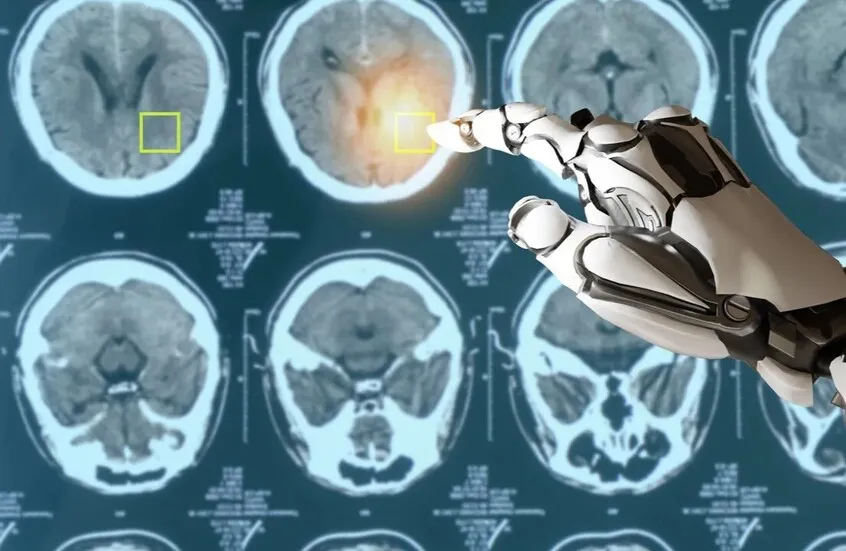
Denis Logunov, Director of the Gamaleya National Research Center for Epidemiology and Microbiology, announced that researchers are working on a suite of software tools capable of predicting the precursors of cancerous tumors and identifying their early molecular markers.
Speaking at the National Healthcare Conference, Logunov said the initiative includes developing computational models to predict neoantigens — novel antigens associated with tumors that can serve as potential biomarkers of cancer.
"We are developing a suite of predictive software tools to identify the emergence of cancer markers in tumors, while also working on the design of genetic constructs," Logunov said.
He noted that training artificial intelligence and neural-network-based systems has become increasingly challenging without access to large-scale datasets.
The Russian Association for the Development of mRNA Technologies and the Institute for System Programming are assisting the Gamaleya Center in building the necessary data infrastructure.
In a related development, researchers from Lomonosov Moscow State University, the Gamaleya Center, and the Center for Strategic Planning and Management of Biomedical Health Risks under the Federal Medical-Biological Agency (FMBA) have developed a computational tool called scParadise.
The software can distinguish between different cell types with an accuracy of up to 99.9% based on ribonucleic acid (RNA) sequencing data, while also assessing their protein composition.
scParadise is powered by an artificial intelligence algorithm that integrates two models, scAdam and scEve, alongside a quality-control module known as scNoah.
The scAdam model analyzes RNA sequencing data to classify cells, distinguishing among stem cells, immune cells, and other cell types. This capability has contributed significantly to the development of computational approaches for identifying early cancer biomarkers.