Study links heart health to early Alzheimer’s risk
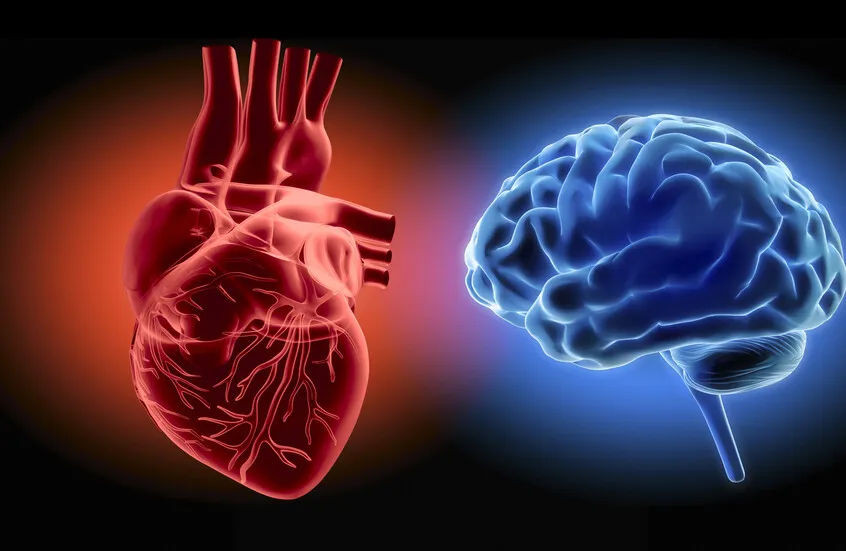
A recent study has found a strong connection between heart health and brain health, indicating that even subtle impairments in cardiac function may leave detectable signs of damage in brain regions involved in memory and Alzheimer’s disease.
The research, conducted in Germany, showed that individuals with mildly reduced cardiac pumping efficiency were more likely to develop microscopic structural changes in the brain’s gray matter, even in the absence of overt heart failure.
Researchers followed 168 participants over a period of 3.5 years, including 73 patients with cardiovascular conditions such as coronary artery disease or heart failure and 95 healthy individuals who served as a control group.
At the beginning of the study, investigators assessed cardiac performance by measuring left ventricular ejection fraction (LVEF)—a standard indicator of the heart’s pumping ability. They also measured N-terminal pro-B-type natriuretic peptide (NT-proBNP), a biomarker released by the heart in response to stress and commonly elevated in patients with heart failure.
The findings revealed that lower cardiac pumping efficiency at baseline was associated with greater microscopic damage to brain tissue years later, even among participants who had not developed symptoms of heart failure.
The findings revealed that lower cardiac pumping efficiency at baseline was associated with greater microscopic damage to brain tissue years later, even among participants who had not developed symptoms of heart failure.
Researchers explained that the brain depends on a continuous supply of oxygen-rich blood. Although it accounts for only about 2% of body weight, it consumes roughly 20% of the body's oxygen. A decline in cardiac output may therefore reduce the delivery of oxygen and nutrients to brain cells, potentially triggering gradual tissue damage.
Over time, reduced blood flow may impair the brain’s small blood vessels, weaken the blood-brain barrier that protects neural tissue, and promote neuroinflammation. These processes can lead to microscopic damage in memory-related regions, including the cingulate gyrus and lingual gyrus, years before noticeable cognitive symptoms emerge.
Participants underwent advanced magnetic resonance imaging (MRI) scans to detect subtle structural changes in the brain. Patients with cardiovascular disease also completed cognitive assessments evaluating attention, executive function, learning, and memory.
The analysis showed that poorer heart function at the start of the study predicted more extensive brain damage during follow-up. Among patients with cardiovascular disease, greater injury in Alzheimer’s-related brain regions was also associated with poorer memory performance.
Higher levels of NT-proBNP were likewise linked to increased brain damage, although this relationship was observed primarily in participants with heart failure.
Dr. Xia Zhang, a co-author of the study from the Max Planck Institute for Human Cognitive and Brain Sciences in Germany, said the findings suggest that subtle brain tissue changes associated with impaired heart function may appear before visible brain shrinkage or clinically diagnosed dementia.
He emphasized that the study does not establish that these brain changes represent the onset of Alzheimer’s disease. However, the findings provide compelling evidence that early cardiac dysfunction may produce measurable effects on the brain, potentially offering new opportunities for identifying individuals at risk and intervening before dementia develops.
The researchers also suggested that inflammation may play an important role in the heart-brain connection. When the heart is under stress, it can release inflammatory proteins known as cytokines, which circulate through the bloodstream and may contribute to inflammation within the brain, potentially accelerating neurodegenerative changes.