Robot dogs could soon replace security guards
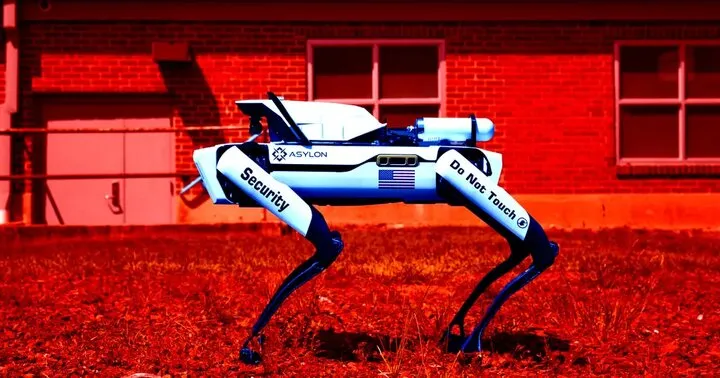
Human security guards are a significant expense for large businesses, while robotic dogs are agile, intimidating and increasingly capable of performing tasks that have traditionally required human workers.
Robotic dogs equipped with AI-powered cameras have become one of the latest—and somewhat unsettling—technologies attracting attention in the security industry. In the United States, they are already being used to patrol data centers, protect high-value agricultural products and provide security at stadiums.
Although these robots remain expensive, they are gradually becoming a more attractive option compared with hiring human security personnel. According to Business Insider, replacing human guards with robotic dogs to cover a 24-hour security shift could save businesses an estimated $80,000 to $130,000 per year.
That could be bad news for U.S. security guards, a workforce that represents one of the more accessible occupations for people with limited formal education. Security guards are often hired to help property owners reduce insurance premiums, and the occupation provides an important source of income for around 1.3 million people.
According to a report from the University of California, Berkeley Labor Center, about 60.8% of these workers are people of color, while 27.8% are aged 55 or older.
Yet making a living from the job can be difficult. In 2024, the median annual wage for security guards was just $38,390. The industry also faces high rates of employee turnover, a trend that technology companies are increasingly looking to capitalize on.
Damon Henry, CEO of Asylon, a U.S. company specializing in robotic security systems and autonomous drones, said the company has so far deployed around 50 robots for 25 customers across the United States.
Compared with a human workforce of 1.3 million, that number remains small. But if robotic production becomes more efficient and the cost of manufacturing and deploying these systems falls, it may become increasingly difficult to imagine businesses continuing to employ low-paid human guards simply out of goodwill.
Still, the era of the last human security guard may not be here yet.
The director of the Low-Wage Work Program at UC Berkeley's Labor Center and a co-author of the cited report said the occupation is likely to face pressures similar to those affecting other jobs exposed to automation. Security jobs are unlikely to disappear entirely, but performing them could become considerably more difficult.
In the short term, the most realistic outcome is not the complete replacement of security guards. Instead, human workers are likely to be pushed toward the most difficult and dangerous parts of the job, while robotic systems take over routine surveillance and patrol duties.