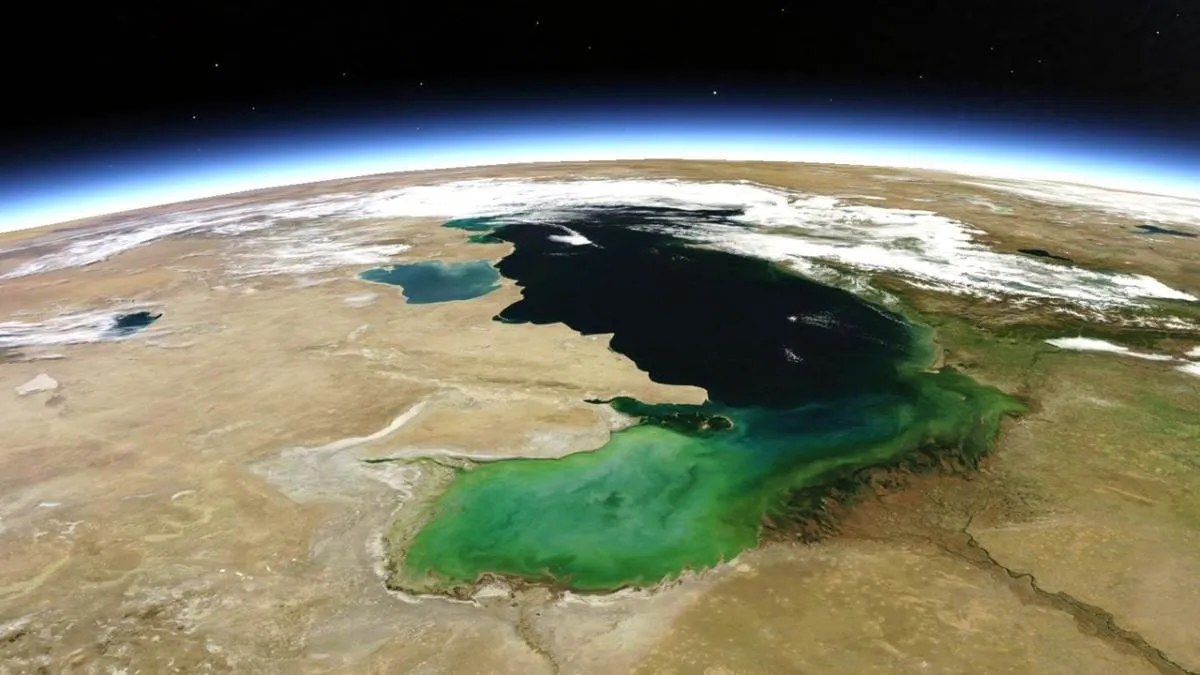
Iran Launches Marine Geological Studies, Research Center in Mazandaran Province
“Our two key missions include the exploration of minerals from the seabed and the production of basic data for specialized institutions, and aerial geophysics, which has a function similar to medical ultrasound, will be our main tool for analyzing the subsurface structures of the earth,” Esmayeeli said.
“This organization has started its work under the new government by changing and amending serious procedures, and the use of the private sector in geological and exploration studies is one of the most important issues. Accordingly, from now on, we will outsource exploration services and the Geology and Mineral Exploration Organization of the country will have a supervisory role, and at present, most of the activities in the Jiroft and Tabriz zones and in marine geological studies are being carried out by the private sector,” he added.
"In this regard, preparation of over 120 geological maps has been entrusted to the private sector, and the Minister of Industry and Mines is also seriously pursuing funding in this area, and mining sector management meetings are held every week,” Esmayeeli said.
In relevant remarks in July, Deputy Head of the Geological and Mineral Exploration Organization of Iran Reza Shahbazi had also announced plans to use artificial intelligence (AI) to improve the development of geological maps.
“The main mission of the Geological and Mineral Exploration Organization Iran is to prepare geological maps of the country, and this task continues to be pursued as a constant and central mission,” Shahbazi said.
“The most important difference that is being pursued in this period compared to previous periods is the quantitative increase in the production of geological maps on a scale of one fifty thousandth,” he added.
“The annual production rate is supposed to increase by five times, while at the same time the quality of the maps is also maintained and even improved,” Shahbazi said.
“One of our strategies to achieve this goal is to use modern technologies, specially artificial intelligence algorithms, in preparing maps, which is currently one of the organization's focus areas,” he underlined.
4155/v


















