Scientists Find ‘Backdoor’ to 60-Year-Old Superconducting Mystery
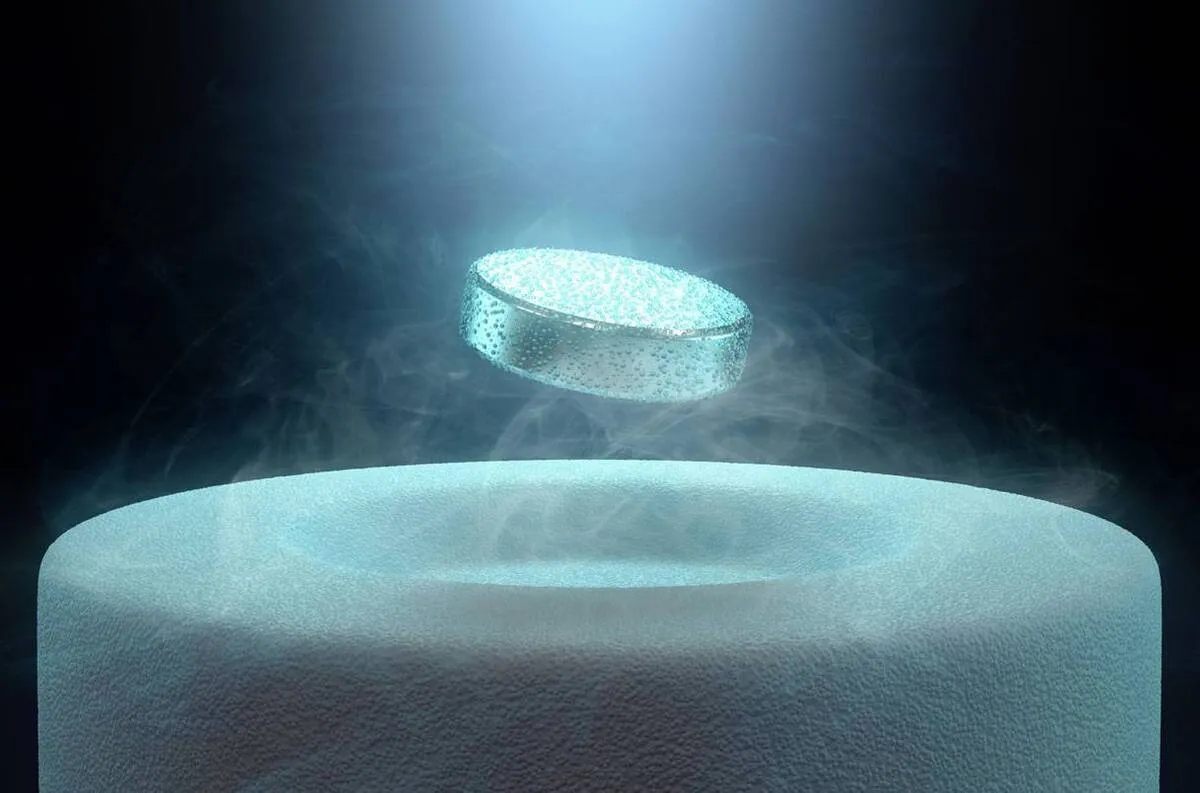
Scientists at the Niels Bohr Institute, University of Copenhagen, have discovered a new approach for investigating rare quantum states that occur within superconducting vortices. These states were first proposed in the 1960s, but confirming their existence has proven extremely challenging because they occur at energy levels too small for most experiments to detect directly. The research findings have been published in Physical Review Letters.
This breakthrough was achieved through a mix of creative problem-solving and the advanced development of custom-made materials in the Niels Bohr Institute’s laboratories.
Instead of trying to observe the elusive states in their original setting, the researchers, led by a professor at the Niels Bohr Institute, Saulius Vaitiekėnas, built a completely new material system that mimics the conditions.
Like using a clever backdoor, they bypassed the original limitations by designing a tiny superconducting cylinder and applying magnetic flux to recreate the essential physics.
“This setup allows us to study the same quantum states, but on our own terms,” says Saulius. “By designing the platform ourselves, we dictate the rules.”
In a growing and very competitive research landscape in quantum, this work demonstrates the versatility of the semiconductor–superconductor platform to realize and study new types of quantum states.
And the semiconductor-superconductor platform in itself is actually also a Copenhagen innovation from about a decade ago.
“We actually came across these states serendipitously—like many scientific discoveries. But once we understood what we were looking at, we realized it was more than a curiosity. It turns out that they could be useful for building hybrid quantum simulators, which are needed to study and understand complex future materials,” Saulius explains.
4155/v