Iranian Company’s Aerogel Saves 10 Million Cubic Meters of Energy
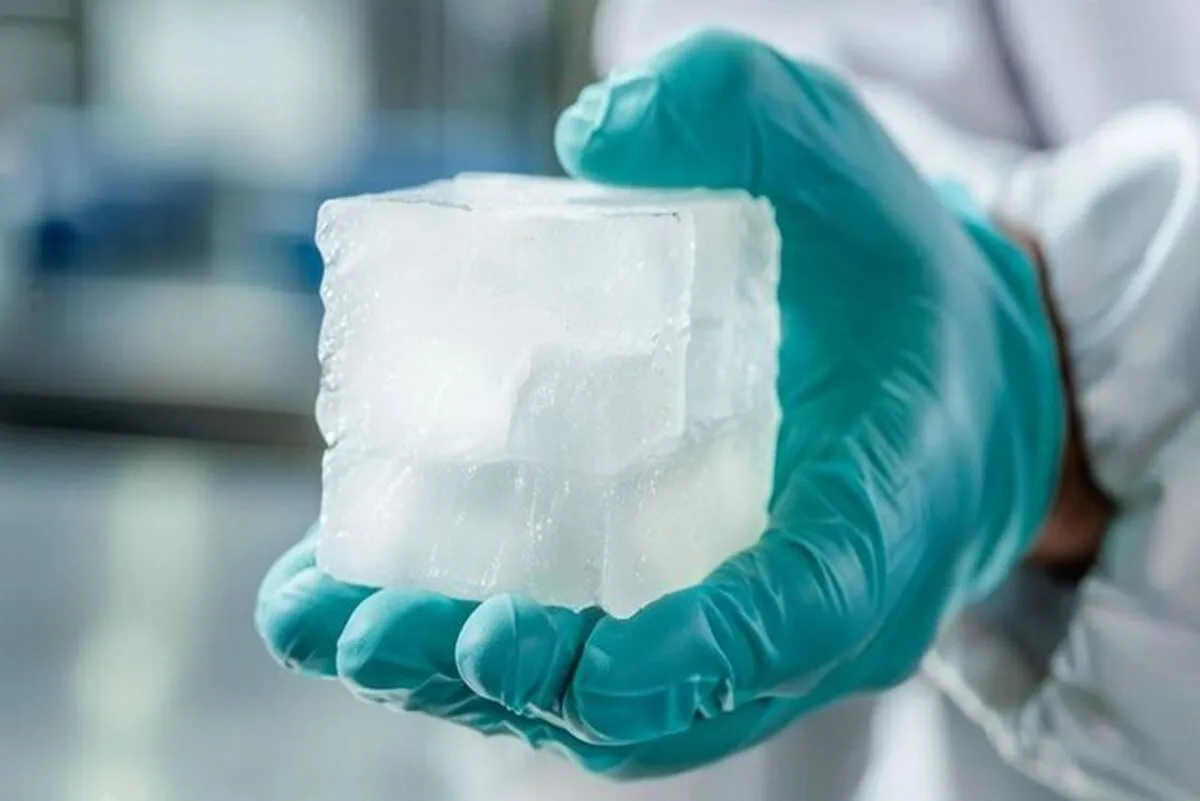
Aerogel is known as the best solution to combat global warming in industrial, construction and warehousing applications and in Iran, a knowledge-based company active in nanotechnology field indigenized this technology after 12 years of research and development.
“These insulations enjoy advantages, including permanent and lasting benefits with a useful life of over 20 years, easy implementation, cost-effective compared to the high price of imported aerogel, unique structure and unparalleled thermal performance,” said Bargozin, the managing director and founder of the knowledge-based company.
“Our product is an aerogel that the liquid in its pores is replaced with air and has maintained its solid structure. This feature has made it the world's best-selling and most voluminous nano product and the lightest commercial solid. Also, our aerogels trap air in pores of 20 to 30 nanometers and reduce heat transfer remarkably,” he added.
“The efficiency of this product in a wide temperature range from -200 to 650 degrees Celsius, hydrophobicity and anti-corrosion, and resistance to fire and cold are other advantages of the aerogel,” Bargozin said.
In a relevant development in May, an Iranian nanotechnology company had also managed to make special aerogel blankets made of silica which can be used as thermal insulator in the aerospace industry.
The product made by ‘Pakan Atieh Nanodanesh’ company is an aerogel blanket made of a silica matrix on a flexible substrate through which the mechanical shortcoming of the mesoporous structure is alleviated.
Application of nanostructures in the aerogel blanket leads to satisfactory dimensional stability, high specific surface area and porosity, comparatively low relative density and thermal conductivity, high transparency, and extremely low dielectric constant.
The silica aerogel blankets can be utilized as thermal insulator in semi-transparent glass and ceilings, catalysts owing to their high specific surface area, hydrophobic characteristic, thermal insulator in the aerospace industry, transportation, industrial equipment and power generation, and fire-resistant components.
4155/v