Weak grip strength and abdominal fat tied to higher mortality risk
Body mass index (BMI) is widely used by doctors to assess healthy weight, but recent evidence has raised questions about how reliably BMI alone can predict a person’s relative risk of death.
Researchers in China have now identified another combination of body size and physical strength that was associated with nearly twice the risk of death.
The study followed the health of 5,674 adults in the United States for nearly seven years. During the follow-up period, 373 deaths were recorded.
Two simple measures of mortality risk
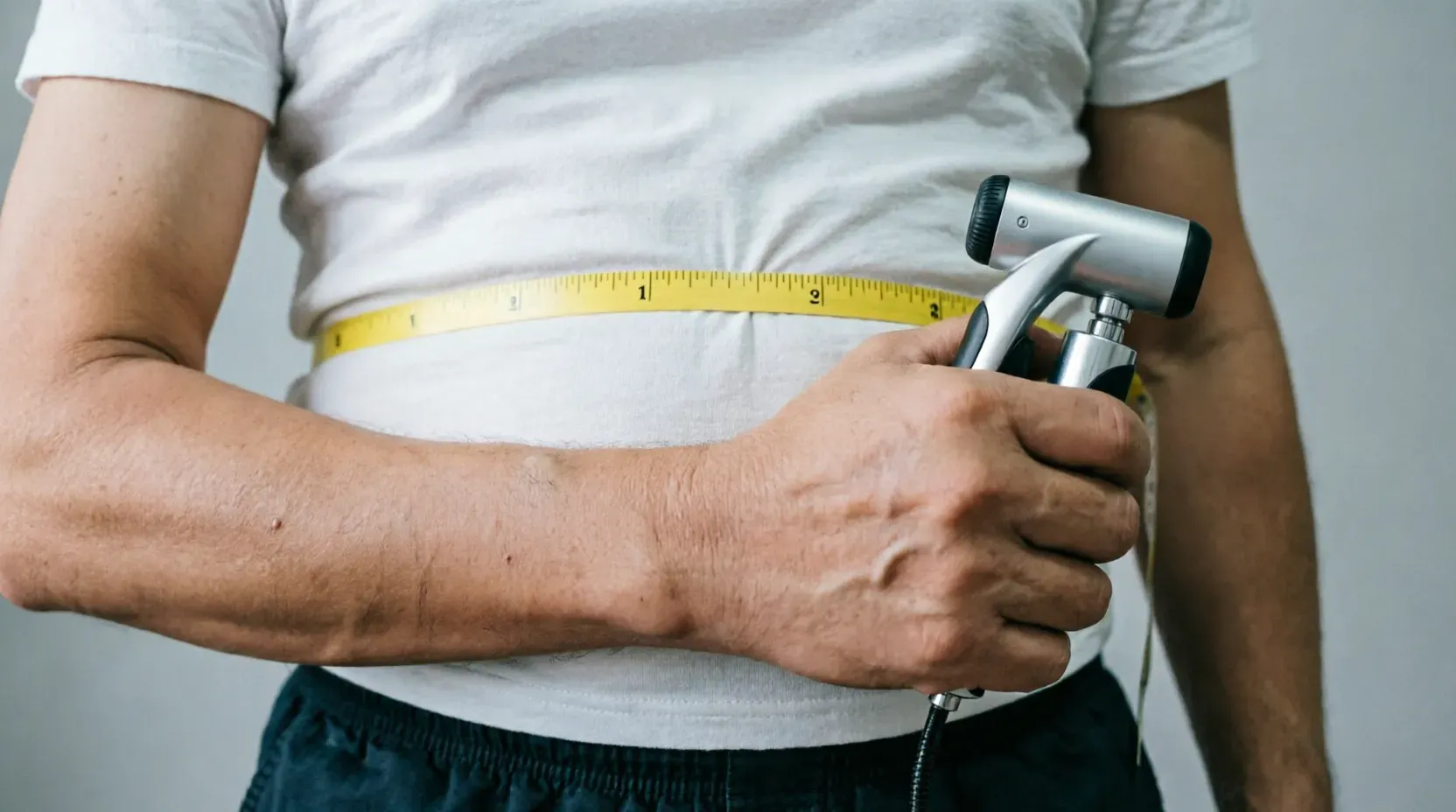
Participants who had both excess abdominal fat and relatively weak grip strength were particularly at risk of death during the study period.
Their risk of death was 97% higher than that of participants who did not have excess abdominal fat or low relative grip strength.
Abdominal fat was not measured directly in the study but was estimated based on participants’ abdominal diameter. On its own, this measurement was not significantly associated with mortality.
However, low relative grip strength was significantly associated with mortality.
Previous studies have examined the relationship between absolute grip strength and mortality risk, but the current study considered participants’ grip strength relative to their body size.
Those with the weakest grip strength relative to their body size had a significant increase in mortality risk of about 60%.
Overall, excess abdominal fat and low relative grip strength were associated with nearly twice the risk of all-cause mortality. This association remained independent of age, socioeconomic status, lifestyle factors and comorbidities.
The researchers argue that abdominal diameter “may better reflect visceral fat,” while relative grip strength “may better identify weakness in individuals with greater body mass.”
Both measurements can be performed safely and easily in clinical settings, although calculating relative grip strength also requires BMI.
According to the authors, although comparing these findings with previous research is difficult, the observed association between these measurements and mortality was “somewhat stronger than the pooled estimates” from studies using BMI, waist circumference or absolute grip strength.
However, more evidence is needed before either test can become a routine part of medical examinations.
Why BMI alone may not be enough
No single number can definitively predict a person’s future health. However, certain body measurements can help doctors and patients identify potential risk factors. A more comprehensive picture of overall health may come from combining several different measurements.
When excess body fat and muscle weakness occur together, the condition is broadly referred to as dynapenic obesity.
A previous meta-analysis found that dynapenic obesity, with obesity defined based on waist circumference, was associated with a 73% higher risk of mortality. Other studies have used BMI alongside mainly absolute measures of grip strength.
Emerging evidence suggests that measurements of body fat may be better predictors of health problems than BMI alone.
Brian Blismer, a kinesiology specialist at the University of Rhode Island, said BMI can still be useful but should be interpreted alongside waist circumference, weight changes, physical strength, physical function and overall health.
In a recent study published in the Archives of Gerontology and Geriatrics, Blismer and his colleagues found that a BMI in the overweight range was actually associated with lower mortality in both men and women.
In a recent interview, Blismer explained that for older adults, maintaining muscle mass, mobility and adequate nutrition alongside body weight deserves attention, and unexplained weight loss should not automatically be considered a positive outcome.