DOBOT unveils humanoid robot designed for life beyond the factory
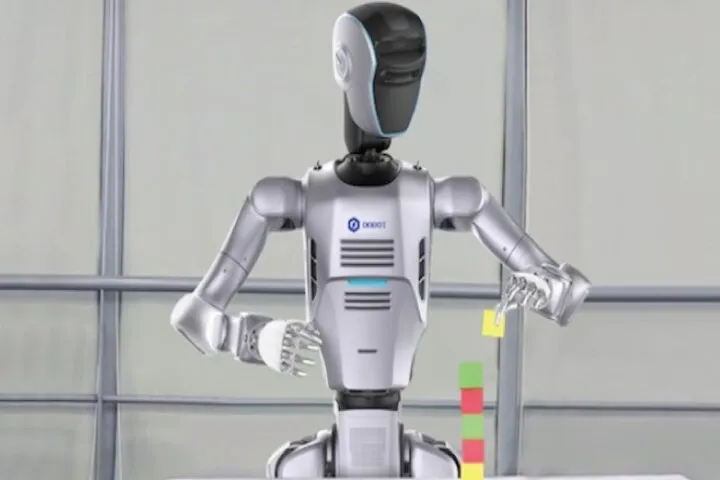
Chinese robotics company DOBOT has introduced LUMO, describing it as the world’s first humanoid robot designed to operate across a broad range of environments and roles beyond traditional industrial settings.
According to Interesting Engineering, LUMO is designed to navigate homes, shopping centers, schools and other indoor spaces while adapting its behavior to different users and tasks.
The robot combines computer vision, voice and AI-driven motion capabilities to actively perceive its surroundings and respond without relying solely on direct commands. Its developers say LUMO is designed to continuously learn from user interactions, improve its performance over time and explore the potential of humanoid robots as long-term companions for everyday life, education and interactive applications.
DOBOT recently demonstrated another of its humanoid robots, ATOM, being remotely controlled from 1,800 kilometers away using virtual reality. During the demonstration, the robot showed human-like precision while cooking a steak.
In its latest demonstrations, DOBOT showed LUMO walking across grass, sand and paved surfaces with smooth, human-like steps, highlighting its ability to transition between outdoor areas, homes and workplaces.
The humanoid robot also demonstrated boxing, dancing and backflipping, along with emotion recognition and active companionship. In one scenario, LUMO adjusted its movements by switching to a slower walking mode and turning off the lights after detecting that its owner had fallen asleep.
According to Eu.36kr, the demonstration was filmed without special effects and highlighted LUMO’s capabilities in intelligent interaction, mobility and consumer-focused design.
Standing at approximately 1.3 meters tall, LUMO features a friendly, user-oriented design intended to support natural and intuitive interactions with a wide range of users.
Unlike conventional robots designed for a specific task or fixed environment, LUMO is intended to move between different indoor settings and take on multiple roles depending on users’ needs.
DOBOT engineers say the robot can switch between functions such as a home companion, educational assistant, sports partner and science-learning companion. The company argues that this versatility could make humanoid robots suitable for both personal and educational applications.
The approach reflects a broader shift in humanoid robotics, from machines designed primarily for industrial automation toward systems intended to interact directly with people and adapt to everyday environments.