New technique enables precise growth of tiny blood vessels in the lab
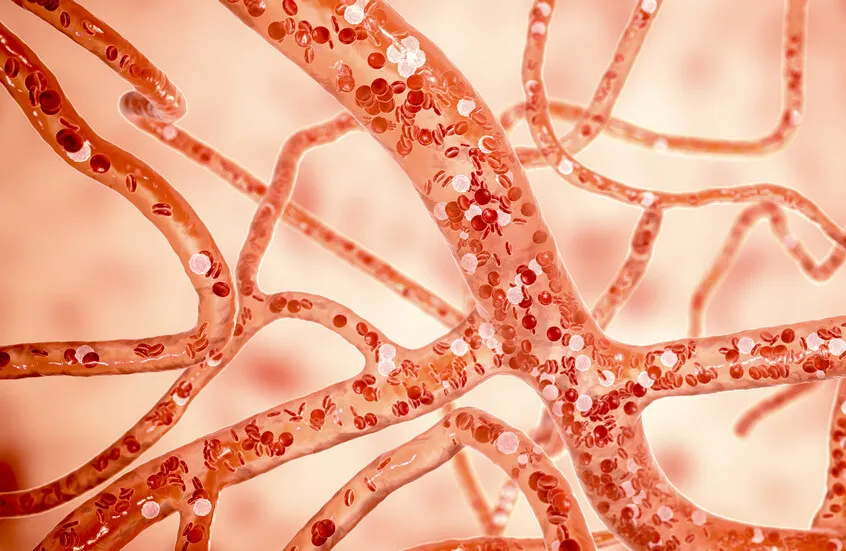
Blood vessels remain one of the most complex challenges in tissue engineering, particularly the tiny capillaries that are no more than 0.005 millimeters thick—around 34 times thinner than a human hair—and are narrow enough to allow blood cells to pass through one at a time.
Functional vascular networks are essential for the success of any organ grown in the laboratory, as they deliver oxygen and nutrients to the surrounding tissue.
The new technology, developed by a team at the Massachusetts Institute of Technology, uses magnetic forces to stretch blood vessel cells and gently pull them toward specific locations.
The researchers designed a small chip containing lab-grown vascular endothelial cells suspended in collagen gel, a key protein in the structure of body tissues.
A tiny magnet was placed inside the chip and controlled in three dimensions using multiple external magnets, allowing the researchers to precisely direct the growth of new blood vessels.
“Healthy tissues depend on organized vascular networks, but current state-of-the-art protocols do not allow us to fabricate such networks within engineered tissues,” said mechanical engineer and MIT researcher Ritu Raman.
“The ability to program blood vessel growth using physical cues could enable us to manufacture engineered tissues in a reproducible manner that could be implanted in the body to restore function after debilitating diseases or injuries,” she added.
By varying the strength of the external magnetic pull, the researchers were able to control both the number and length of the newly formed blood vessels.
“The main takeaway is that stretching blood vessels back and forth promotes the growth of more new capillaries,” Raman said. “Mechanical forces play an important role in our bodies, which means we now know how to grow more or fewer vessels, make them shorter or longer, or direct them in specific directions.”
Although blood vessels can already be produced using 3D printing or grown in laboratory Petri dishes, existing methods lack the level of precision needed to accurately reproduce complex vascular networks.
To better understand the biological mechanisms involved, the researchers repeated their experiments using genetically modified cells lacking the PIEZO1 gene. This gene regulates ion channels that respond to mechanical pressure.
When the gene was disabled, the number of blood vessels formed declined, confirming that activation of these ion channels plays a crucial role in blood vessel formation.
The new technique is an advanced version of an approach previously used by the same team to create artificial muscle and nerve tissues. Although the research remains at the prototype stage, the initial findings are promising.
The next steps will involve testing how effectively blood flows through the vessels formed inside the chip, followed by growing real tissue around the vascular structure. The researchers plan to begin with muscle tissue.