Scientists create first artificial cell that grows and divides
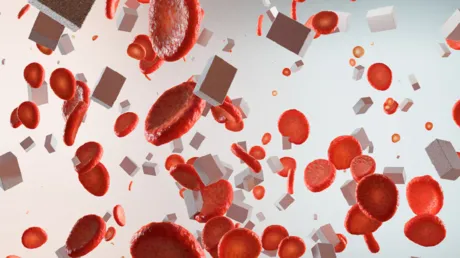
A research team led by Dr. Kate Adamala at the University of Minnesota has engineered an artificial cell that can mimic the fundamental stages of the cellular life cycle. The achievement represents a significant advance toward building living systems entirely from non-living chemical components.
The researchers constructed the cells using microscopic water-filled vesicles known as liposomes, each measuring only a few thousandths of a millimeter in diameter. These liposomes were equipped with a minimal synthetic DNA genome that provides the essential genetic instructions required for basic cellular functions.
The artificial cells, named SpudCells, were inspired by Sputnik, the Soviet satellite that inaugurated the space age in the 1950s. According to Dr. Adamala, the name symbolizes the beginning of a new era in biology. It also carries a humorous reference to her Polish heritage, as "spud" is an informal English term for potato.
How SpudCells Work
SpudCells operate in a nutrient-rich liquid environment containing essential biochemical compounds, including adenosine triphosphate (ATP), the molecule responsible for cellular energy transfer. As they grow, the cells fuse with nutrient-filled liposomes that supply enzymes, ribosomes, and additional genetic instructions necessary for protein synthesis, genome replication, and cell division.
The experiments also demonstrated that cells carrying advantageous genetic traits were able to outcompete their counterparts during growth, reflecting a process similar to natural selection.
Scientific Significance
Researchers believe the breakthrough brings science closer to designing customized synthetic organisms capable of producing pharmaceuticals, food, fuels, and advanced materials. It may also help answer one of biology's oldest questions: how non-living matter can organize into living systems.
Dr. Adamala emphasized that although SpudCells do not yet match the complexity or efficiency of natural cells, they demonstrate that biological behaviors once considered unique to living organisms can be reconstructed from well-defined chemical components. She noted that understanding the function of every cellular component is essential for advancing synthetic biology.
Unlike earlier efforts, including Craig Venter's landmark 2010 work that relied on modifying existing bacterial cells, the Minnesota team's approach builds the system from the ground up. This bottom-up strategy allows researchers to understand the role of every component rather than adapting pre-existing living cells.
Challenges Ahead
Despite the achievement, SpudCells are not yet fully autonomous living cells. They remain entirely dependent on their surrounding nutrient solution and cannot independently produce all of their proteins, regulate metabolism, or remove waste products. They also experience errors in chromosome distribution during division, limiting their survival to only a few generations.
To accelerate progress, Dr. Adamala and her colleagues are launching a new research initiative called Biotic, aimed at coordinating international efforts to develop increasingly sophisticated synthetic cells. Stanford University professor Drew Endy has described the long-term vision as creating an "operating system for life" based on genes and biochemistry.
The achievement marks a pivotal step for synthetic biology by demonstrating, for the first time, that an artificial system assembled entirely from chemical components can reproduce the essential stages of a cellular life cycle. While major technical challenges remain before fully autonomous synthetic cells become a reality, the work provides a powerful platform for exploring both the origins and the engineering of life.