Sea Levels Rising Faster than at Any Time in 4,000 Years
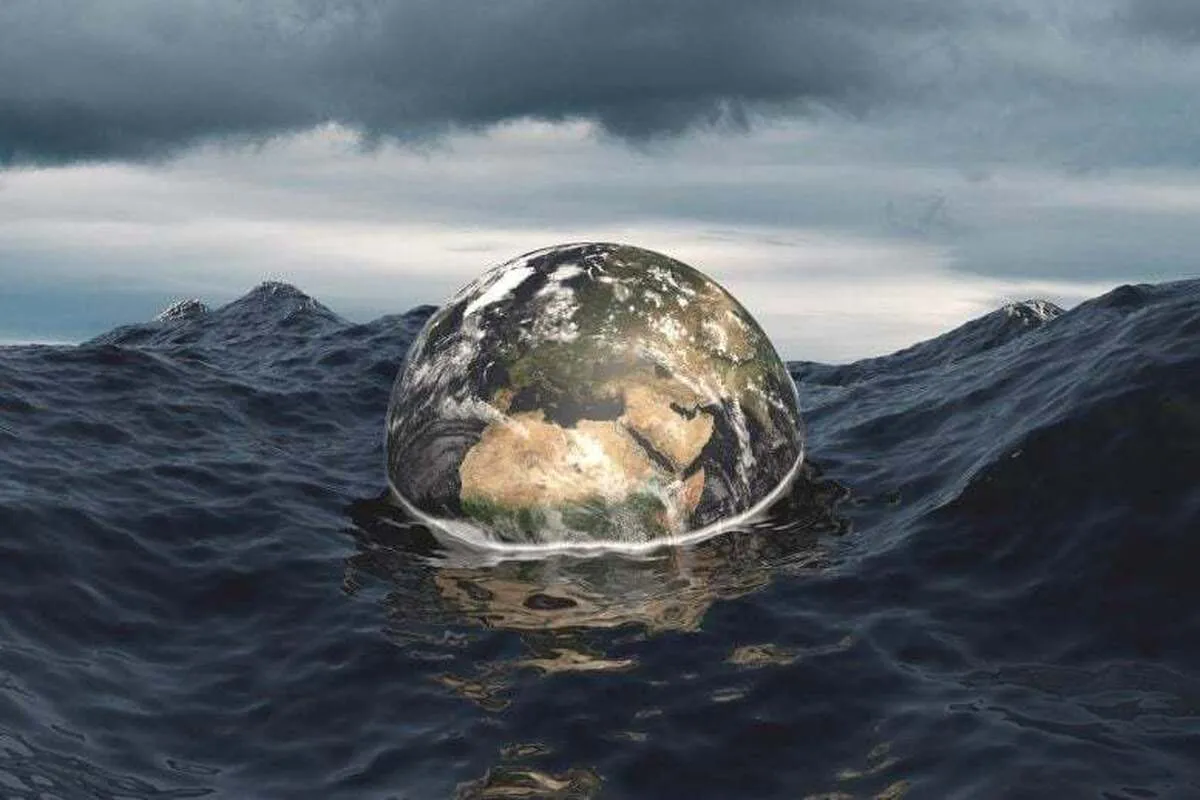
A Rutgers-led team of scientists has found that today’s sea levels are climbing faster than at any point in the past 4,000 years, putting China’s coastal cities among the most threatened areas, the journal Nature reported.
To uncover this trend, researchers analyzed thousands of geological records from sources such as ancient coral reefs and mangroves, which naturally preserve evidence of past sea levels. Using these records, they traced sea level fluctuations across nearly 12,000 years, beginning with the Holocene epoch that started after the last major ice age.
According to their study published in Nature, global sea levels have been rising since 1900 at an average of 1.5 millimeters (about one-sixteenth of an inch) per year. This rate surpasses that of any century-long period during the previous four millennia.
“The global mean sea level rise rate since 1900 is the fastest rate over at least the last four millennia,” said Yucheng Lin, who conducted the research as a postdoctoral associate at Rutgers and is a scientist at Australia’s national research agency, the Commonwealth Scientific and Industrial Research Organization in Hobart.
Lin studied with Robert Kopp, a Distinguished Professor with the Department of Earth and Planetary Sciences in the School of Arts and Sciences. “Dr. Lin’s work illustrates how geological data can help us better understand the hazards that coastal cities face today,” said Kopp, who also authored the study.
Two major forces, thermal expansion and melting glaciers, are driving this acceleration, Lin said. As the planet warms because of climate change, oceans absorb heat and expand. At the same time, ice sheets in Greenland and Antarctica are melting, adding more water to the oceans.
“Getting warmer makes your ocean take up more volume,” Lin said. “And the glaciers respond faster because they are smaller than the ice sheets, which are often the size of continents. We are seeing more and more acceleration in Greenland now.”
While rising seas are a global issue, China faces a unique double threat, he said. Many of its largest and most economically important cities, including Shanghai, Shenzhen, and Hong Kong, are in delta regions, which are naturally prone to sinking because they were built above thick and soft sediments.
But human activities are making things worse.
“We’ve been able to quantify the natural rate of sea level rise for this area,” Lin said. “But human intervention, mostly groundwater extraction, makes it happen much faster.”
Subsidence refers to the gradual sinking or settling of the Earth’s surface. It can happen naturally because of geological processes, or it can be caused by human activities, such as groundwater extraction.
To determine how sea level rise will adversely affect China’s deltas, the team examined a combination of geological records, subsidence data, and human activity impacts across coastal regions, especially in the Yangtze River Delta and Pearl River Delta. These areas are home to several megacities.
In Shanghai, parts of the city sank more than one meter (about three feet) during the 20th century because of excessive groundwater use, Lin said. That is orders of magnitude faster than the current global sea level rise rate.
Delta regions are flat, fertile, and close to water, making them ideal for farming, transportation, and urban development. But their geography also makes them extremely vulnerable to flooding.
“Centimeters of sea level rise will greatly increase the risk of flooding in deltas,” Lin said. “These areas are not only important domestically, they’re also international manufacturing hubs. If coastal risks happen there, the global supply chain will be vulnerable.”
Despite the findings, Lin’s research offers hope, he said. Cities such as Shanghai have already taken steps to reduce subsidence by regulating groundwater use and even reinjecting freshwater into underground aquifers.
“Shanghai now is not sinking that fast anymore,” Lin said. “They recognized the problem and started regulating their groundwater usage.”
The study also provides vulnerability maps to help governments and city planners identify subsidence hotspots and prepare for future sea level rise.
Although the researchers focused on China, lessons from the study apply globally, Lin said. Many major cities, such as New York, Jakarta, and Manila, are built on low-lying coastal plains and face similar risks.
“Deltas are great places, good for farming, fishing, urban development, and naturally draw civilizations to them,” Lin said. “But they are really flat yet prone to human-caused subsidence, so sustained sea level rise could submerge them really fast.”
4155/v


















