Top News of Last Week with ANA

Azad News Agency (ANA) published a number of scientific and technological news during the past week whose top ones are as follows:
Iran to Build New Railroads to Neighboring Countries
Iran will soon launch two large railway projects which will connect the capital city of Tehran to Turkiye and Afghanistan, a ranking relevant Iranian official said.
Jabbar-Ali Zakeri, the managing director of the Islamic Republic of Iran Railways, said that new train routes connecting Tehran with Ankara, the capital of Turkiye, and Herat in Northwestern Afghanistan will be launched in the coming weeks.
The railways chief said the Tehran-Ankara train is set to launch within two months, while the route to Herat will begin within a month.
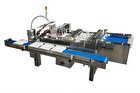
Kneader Machine Manufactured in Iran for Mixing Materials in Pharmaceutical Industry
The kneader machine produced by the Iranian technologists has made it possible to make high-quality nanocomposites and pharmaceutical compounds.
The machine, with its wide applications in various industries from the production of nanocomposites to the pharmaceutical and animal feed industries, and with the ability to mix viscous materials quickly and uniformly, is a suitable alternative to similar foreign machines.
With superior performance compared to similar models like extruders, the company's kneader machine is able to combine polymeric materials, nanoparticles, and organic and inorganic powders with the lowest stress and highest efficiency. This feature prevents the destruction of the material structure and provides a completely uniform output.
This technology can be used in the production of nanocomposites, polymer masterbatches, biodegradable compounds, nanostructured animal feed, and pharmaceutical compounds. A number of Iranian companies are at present using this device in their production lines.
The Iranian technologists designed this device in two types of symmetrical and asymmetrical which can be adjusted depending on the needs of different industries. This product was developed based on the knowledge of domestic experts and is considered as an important step towards reducing dependence on foreign technologies.
Iranian Company Uses Home-Made Nanobubble Generator to Produce Hydroponic Strawberry
An Iranian company managed to use nanobubble technology in hydroponic strawberry cultivation by installing the home-made NANOX-GH-05 nanobubble generator device in his irrigation system.
“The use of nanobubble water has significantly increased the dissolved oxygen in the irrigation system, and this increase has not only improved plant growth but also reduced the need for many additives and chemical inputs,” said Valid Ettehadi, an activist in the field of greenhouse agriculture.
He noted that based on the data recorded in the greenhouse, the amount of dissolved oxygen in the water in normal conditions and without the use of nanobubbles was about 5 ppm, adding that after installing the NANOX device, this amount increased to the range of 14 to 16 ppm, which shows an increase of more than 200 percent and has greatly improved the root environment and balanced and enhanced its biological activities.
“One of the most important effects observed in the greenhouse cultivation system has been the complete elimination of the need for fungicides, Ettehadi said, adding that in conventional hydroponic cultivation methods, after the first harvest, the environment around the roots becomes susceptible to fungal growth, and farmers are forced to use chemical fungicides.
“After the use of nanobubble water, fungicides have no longer been needed and the health of the root bed has been maintained naturally,” he stated.
Noting that another result recorded is a significant increase in production efficiency, Ettehadi said, “The total amount of products produced in the strawberry greenhouse has increased by 13% over these years, and the proportion of premium products has also shown a growth of 25%.”
Largest IVF Bovine Embryo Production Center Inaugurated in Iran
Iranian Agriculture Minister Gholamreza Nouri inaugurated the country’s largest bovine embryo production center via IVF method developed by a knowledge-based company.
“The knowledge-based Sina Fanavaran Mandager company plays an important role in improving the productivity of Iran's livestock industry by utilizing the latest technologies,” Nouri said, addressing the inauguration ceremony.
He described the center as one of the key complexes to ensure the country's food security, and said, “The knowledge-based company is the largest IVF bovine embryo production center in West Asia and, by utilizing the latest technologies, plays an effective role in improving the productivity of Iran's livestock industry.”
The minister visited different parts of the complex, including the egg collection hall, clean rooms for laboratory embryo production, breeding stock holding pens, and the hall for calves produced through IVF, lauding the center's advanced equipment and infrastructure.
Iranian Knowledge-Based Company Produces Rapid Diagnosis Kits for Heart Attack, Colon Cancer
The technological team of an Iranian knowledge-based company has managed to produce various rapid diagnosis kits in the health sector, specially for heart attack and colon cancer.
“So far, we have succeeded in producing more than 9 knowledge-based products, and 7 of our products have received the necessary licenses from the Food and Drug Administration of Iran. In addition, we have obtained five nano-scale certificates from the Nanotechnology Development Headquarters and an ISO 13485 certificate (requirements for the production of medical equipment) from the Italian company IMQ,” Hadi Baqeri, the managing director of the knowledge-based company.
He described heart attack diagnosis kit as another product of the company, and said, “We import 2.5 million euros of this kit annually, which is used in emergencies for rapid diagnosis of heart attacks. So far, over one million pieces of this kit have been supplied to the country's heart hospitals.”
“We have also produced colon cancer screening kits in line with the Ministry of Health's program to screen for this disease, which is the third most common cancer and the second leading cause of cancer-related deaths. So far, over one and a half million tests of this product have been supplied to the Ministry of Health, resulting in the screening of one and a half million people in Iran,” Baqeri said.
This Forbidden Particle Could Break String Theory
Physicists from the University of Pennsylvania, working with colleagues at Arizona State University, are examining the limitations of a framework that aims to unify the laws of physics throughout the universe.
There are two great pillars of thought that don’t quite fit together in physics. The Standard Model of particle physics accounts for all known fundamental particles and three of the four fundamental forces: electromagnetism, the strong nuclear force, and the weak nuclear force. In contrast, Einstein’s general relativity explains gravity as a feature of the geometry of spacetime, the journal Physical Review Research reported.
These two models, however, do not work well together, says Jonathan Heckman, a theoretical physicist at the University of Pennsylvania. While the Standard Model describes forces as particle-based fields, general relativity interprets gravity as a smooth curvature of spacetime. As Heckman puts it, gravity “doesn’t fit into physics’ Standard Model.”
In a recent study, Heckman, along with Rebecca Hicks, a Ph.D. student in Penn’s School of Arts & Sciences, and their collaborators, took a different approach to string theory. Rather than asking what the theory can predict, they focus on what it fundamentally cannot produce. Their findings highlight one unusual particle that might be detected at the Large Hadron Collider (LHC). If this particle is observed, Heckman says, it would put string theory “in enormous trouble.”
Iran Exports Premium Cow Embryos to Africa, Central Asia
The managing director of Sina Fanavaran Mandegar company in Iran announced the endorsement of two contracts with the African and Central Asian countries to export premium cow embryos.
Mohammad Mehdi Naderi, the managing director of the company affiliated to Academic Center for Education, Culture and Research of Iran, referred to inauguration of the largest center for producing premium cow embryos by using in vitro fertilization (IVF) method in Iran, saying, “The production capacity of this new unit is 10,000 embryos per year and for the first time in Iran, the export of premium cow embryos to different countries has started.”
Noting that the center is equipped with the latest technologies in accordance with the latest global standards, he said, “At present, two export contracts have been signed with the African and Central Asian states and negotiations with other countries are also underway.”
Naderi explained that normally, only one calf can be produced per year from each premium cow, but using this technology, it is possible to produce up to 20 calves from one premium cow per year.
Experts Reveal Simple Way to Boost Joy, Excitement, Well-Being
Attending in-person events like festivals and markets may significantly boost wellbeing, according to a new study.
While winter weather can make staying indoors more appealing, new research from the University of South Australia suggests that getting out to attend in-person events may offer a surprising boost to mental wellbeing, the International Journal of Tourism Research reported.
In collaboration with Flinders University, researchers specializing in tourism and event management found that people who regularly take part in events, like festivals, art exhibitions, sports games, farmer’s markets, and food-related gatherings, tend to experience more frequent positive emotions, including happiness, contentment, excitement, and joy.
The study also discovered that in-person event attendance is strongly linked to increased emotional engagement. Participants often reported becoming so involved in these activities that they lost track of time, a sign of deep immersion.
To explore these patterns, the researchers surveyed over 350 people across South Australia, asking about the frequency of their participation in both in-person and virtual events and how these experiences affected their wellbeing.
Findings showed a clear link between attending in-person events more often and greater emotional wellbeing. Participants reported higher levels of joy and excitement, along with a stronger sense of focus and involvement in the moment.
Iranian Firm Produces Precision Instruments to Control Temperature, Pressure in Oil, Gas Industries
An Iranian company stationed at the Elite Technology Growth Center of the International Innovation Zone of Iran produced various types of positioners by using its experience in precision repair.
According to the company's technologists, using this system, variables like temperature, pressure, and fluid flow can be controlled in sensitive industries like oil, gas, mining, and power plants.
Saeed Shafi’yee, the managing director of the company, elaborated on the performance of the positioner, saying, “The positioner is known as a precision instrument. Control valves are one of the important equipment that control variables like temperature, pressure, and fluid flow with the help of the positioner. In other words, the positioner is installed on the control valves and the operating range of the valve is determined based on its settings.”
“In sensitive industries like oil, gas, mining and power plants, the company's devices have not only replaced foreign brands costing thousands of dollars, but have also shown better performance in some harsh climatic conditions like the Ahvaz power plant,” he added.
“We have produced a device that works continuously for two years without the need for recalibration, while famous European brand models would fail after 6 months,” Shafi’ee said.
Scientists Discover Unusual New Species of Sea Slug That Looks Like Egg
Two colorful new sea slug species have been discovered in Indonesia.
Five women scientists representing Germany, Indonesia, and Wales have identified and formally described two previously unknown species of wart sea slugs found in the waters off North Sulawesi, Indonesia. These new additions to marine biodiversity have been named Phyllidia ovata and Phyllidia fontjei. Wart sea slugs, which belong to the Phyllidiidae family, are widespread throughout the Indo-Pacific region. They feed on sponges and incorporate toxins from their prey into their own chemical defenses, the journal ZooKeys reported.
Their vibrant colors and ability to deter predators through chemical means have made them well-known among both researchers and marine life enthusiasts.
In North Sulawesi alone, scientists have recorded around 350 species of sea slugs. Among these, nearly 100 are believed to be newly discovered but have not yet been officially named. With the formal recognition of Phyllidia ovata and Phyllidia fontjei, two particularly rare and strikingly colored species have now been added to the scientific record.
Phyllidia ovata was named in reference to its unique appearance that resembles an egg, both in its shape and its pattern. It has been photographed several times by enthusiastic underwater photographers in Indonesia, Japan, Taiwan, the Philippines, and Australia during the past 23 years, but was only recognized as a new-to-science species now. This medium-sized, up to 5 cm long, wart sea slug has finally been given a name based on an animal collected by a scuba diver in North Sulawesi.
Iranian Scientists Utilize AI for Early Detection of Plant Diseases
Sakineh Assadi Amiri, an Iranian researcher at the Faculty of Engineering and Technology at Mazandaran University, and one of her colleagues conducted research on the use of image processing technology and machine learning algorithms for early detection of plant diseases by using artificial intelligence (AI).
In this research, they have tried to provide an efficient and fast solution for diagnosing diseases by combining the appearance of plant leaves and computer analysis without the need for an expert to be physically present on the site.
In this research, first, images of diseased and healthy plant leaves were collected and noise in the image was removed by using software filters. Then, the leaf-related part of the image was separated from the image and important features like its color, texture, and shape were analyzed. The color of the leaves was examined in different color spaces and parameters like the degree of redness or yellowness were extracted. The texture of the leaves was also examined using specific image patterns to identify the appearance differences between healthy and diseased leaves.
Also, the overall size and shape of the leaves were also examined to detect structural changes caused by disease. Finally, all this information was fed into classification algorithms to automatically identify whether the leaf belonged to a healthy or diseased plant.
The findings of this study show that the designed system was able to identify diseases in 9 different plant species, including apple, corn, grape, potato, tomato, cherry, peach, pepper and strawberry, with high accuracy. Based on tests conducted on a dataset of over 87,000 images, the accuracy of this method was about 98 percent using an algorithm called ‘random forest’ and nearly 95% using another algorithm called ‘support vector machine’.
Iranian Students Succeed to Receive Great Wall of China Scholarship 2025
Two Iranian students succeeded to win the Chinese Government Scholarship Great Wall Program 2025.
According to the Iranian Science Ministry, the files of Amir Mohammad Chehreh and Maryam Saleknejad, two applicants for this prestigious scholarship, who were selected from among over 20 Iranian applicants by the UNESCO National Commission in Iran and introduced to the UNESCO Program Secretariat, were included in the final list of scholarship winners for 2025.
The Chinese Government Scholarship Great Wall Program is an annual scholarship awarded in cooperation with UNESCO and the Chinese government to master's, doctoral and active researchers in various fields at the international level. For the 2025-2026 academic year, this program included 75 one-year study grants and postgraduate studies, and each country was only allowed to introduce two people from among the 194 UNESCO member states.
Iran Gains Access to New Generation of Plant-Based Gasoline Lubricants
Iranian researchers at a technological company gained access to the technology for producing plant-based lubricants by using a new generation of fuel additives that can improve the quality of gasoline combustion and reduce fuel consumption and air pollution.
The company succeeded in producing a wide range of environmentally friendly products by launching a green products refinery among which is the green gasoline lubricant; a completely plant-based, non-toxic and pollution-free product that is made by using the standards of the US Environmental Protection Agency (EPA) and is applied in vehicles to dissolve in gasoline.
The lubricant is 100% plant-based, non-toxic and pollution-free and can be dissolved completely in gasoline. These features increase the compression and combustion power in the engine cylinder. According to experts, the high lubricating properties of this product in gasoline reduce friction in the upper part of the piston stroke and keep the compression ring constantly lubricated. This function plays an important role in extending the life of the car engine.
The product also lubricates the fuel path from the rear pump to the injectors and gradually cleans the injectors. This process prevents wear of fuel supply parts and improves the overall performance of the system.
Iran to Use AI for Smart Land Mapping in Isfahan Province
The ‘Geological Transformation and Exploration of Mineral Reserves in Isfahan Province (Na’in Block)’ project was launched at Isfahan Chamber of Commerce with a focus on new technologies, specially the Artificial Intelligence (AI), production of basic information, and private sector participation.
In the Geological Transformation and Exploration of Mineral Reserves in Isfahan Province (Na’in Block), 60 geological and exploration projects (production of basic information and exploration of mineral reserves) will be implemented in the layers of geology, geochemistry, and economic geology, which will use new approaches for the first time in implementation of this project.
The end date of operations is September 2026 and the area of the project, including geological, geochemical, and economic geology surveys, is 37,500 square kilometers.
“This development is based on three main axes of increasing the utilization of private sector capacity, focusing on the production of basic data, and making processes intelligent using modern technologies. All three axes have been observed in the Geology and Mineral Exploration Development Plan in Isfahan Province,” said Dariush Esmayeeli, the head of the Geology and Mineral Exploration Organization.
He referred to the area of 110,000 square kilometers of Isfahan Province, and said, “A significant part of this area can be considered the focus of exploration activities, and nearly 33,000 square kilometers, i.e. more than 70 percent of the extractable capacity in the province, is currently under the organization's active projects.”
4155/v