Musk Targets 2026 for Mass Production of Brain–Computer Interfaces
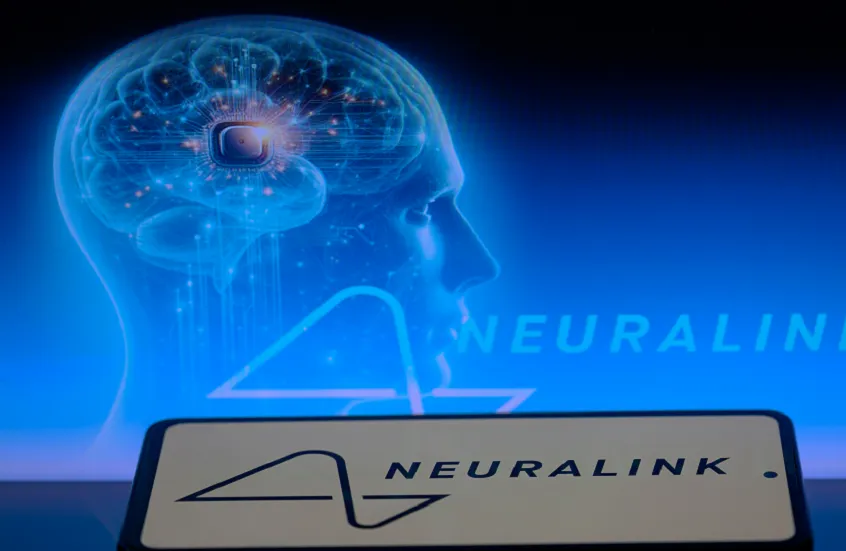
Musk announced that 2026 will mark the beginning of mass production of brain–computer interface devices, alongside a transition to fully automated surgical procedures for implant operations.
This represents a major technological milestone, following the launch of the company’s first human trials in 2024, after overcoming earlier safety concerns that led the U.S. Food and Drug Administration (FDA) to reject its initial application in 2022.
The brain implant is primarily designed to assist individuals with spinal cord injuries or paralysis, enabling users to interact directly with computers and control them through thought alone.
Practical evidence has shown that the company’s first patient has successfully played video games, browsed the internet, and controlled a computer cursor using only brain signals transmitted through the implant. Data released in September indicate that 12 individuals worldwide with severe paralysis are now using this technology to control digital and physical tools.
Musk’s vision for 2026 extends beyond Neuralink and is expected to be a pivotal year across all his companies. In the space sector, SpaceX is preparing to launch its new Starship V3 spacecraft, equipped with the powerful Raptor V3 engine—a development that could pave the way for long-duration missions to the Moon and Mars. The company also plans to deploy a new generation of Starlink satellites to provide faster and more advanced internet services.
In the field of cognitive enhancement, Neuralink is also expected to reach another milestone with the initial testing of its Blindsight implant, designed to restore visual perception in blind individuals by stimulating the brain’s visual cortex.
Meanwhile, Tesla is preparing to significantly scale up production through the launch of the Cybercab, mass production of the Tesla Semi truck and the humanoid robot Tesla Optimus, as well as the rollout of fully autonomous driving without supervision and the expansion of energy storage systems.
In artificial intelligence, Musk’s company xAI plans to expand the capabilities of its Colossus supercomputer, while the X platform is exploring new ways to increase creator monetization to attract and retain original content.
The clear synchronization across timelines for these large-scale projects highlights Musk’s strategy to push multiple technologies toward critical inflection points simultaneously, positioning 2026 as a defining year in his broader effort to shape the future.