Iranian Teams Win Title in Python, Golang Competitions
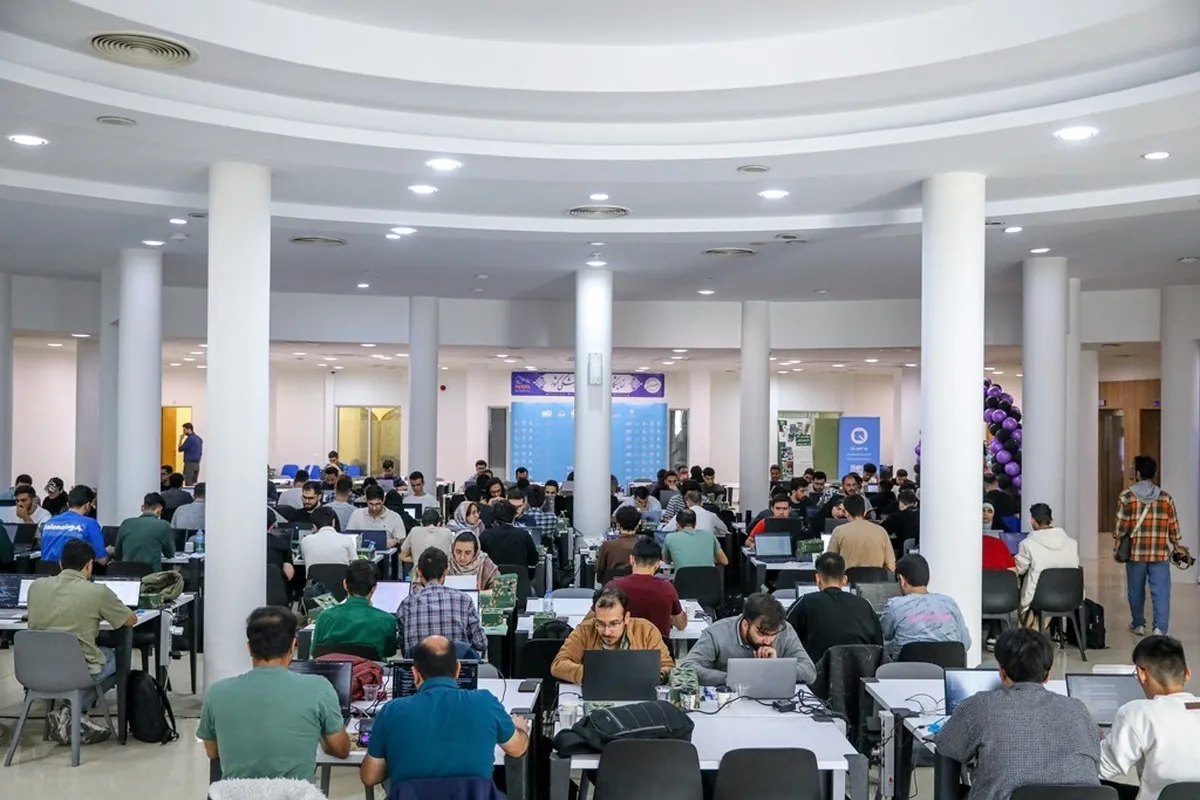
In the second round of the competitions, which started on October 27 at the Iran International Inovvation District in the capital city of Tehran, the selected teams competed in the ‘Front-End’, ‘Python/Django’, ‘Algorithm and ‘Golang’ leagues.
Mehdi Kordbacheh, the executive director of the programming and artificial intelligence competitions of the second Technology Olympics referred to the Python-Django programming competition, and noted, “The teams competed against each other for three hours, and in the end, the CodeC, Djangoro and Pandora teams were introduced as the top three teams in this section.”
He pointed to the second part of the programming competition, titled Golang Programming, and said, “This part was held for two and a half hours. In this part, teams from different countries are present to get acquainted with the competition atmosphere.”
Referring to the results of the ranking of the teams in the Golang League, Kordbacheh stated, “In the Golang programming competition, the teams Snapbox, Failures, and Crazy Programmers succeeded in obtaining the top rankings.”
In a relevant development, the Tehran-based Sharif University of Technology (SUT) had hosted West Asia regional international student programming competition on May 10-11, 2024, with the support of the Headquarters for Digital-Based Knowledge Economy Development and the private sector.
The West Asia regional student programming competition was held within the framework of the 48th International Collegiate Programming Contest (ICPC) and with the aim of improving technical capabilities, strengthening problem solving skills, solving real world problems, creating and strengthening team skills, attracting young talents and promoting engineering and computer science, etc..
Students from 70 universities from across Iran were accepted to participate in these competitions, the report added.
The prizes of the competition were given to the winners in three categories; In the first division, the first four teams received gold medals, the second four teams received silver medals, and the third four teams were awarded bronze medals.
The winners of the SUT-hosted West Asia regional competition were qualified for the International Collegiate Programming Contest which will be held later this year.
The SUT professors also held panels and workshops for the participants to teach them topics related to programming.
4155/v