Production of Personalized Facial Prostheses with 3D Printing in Iran
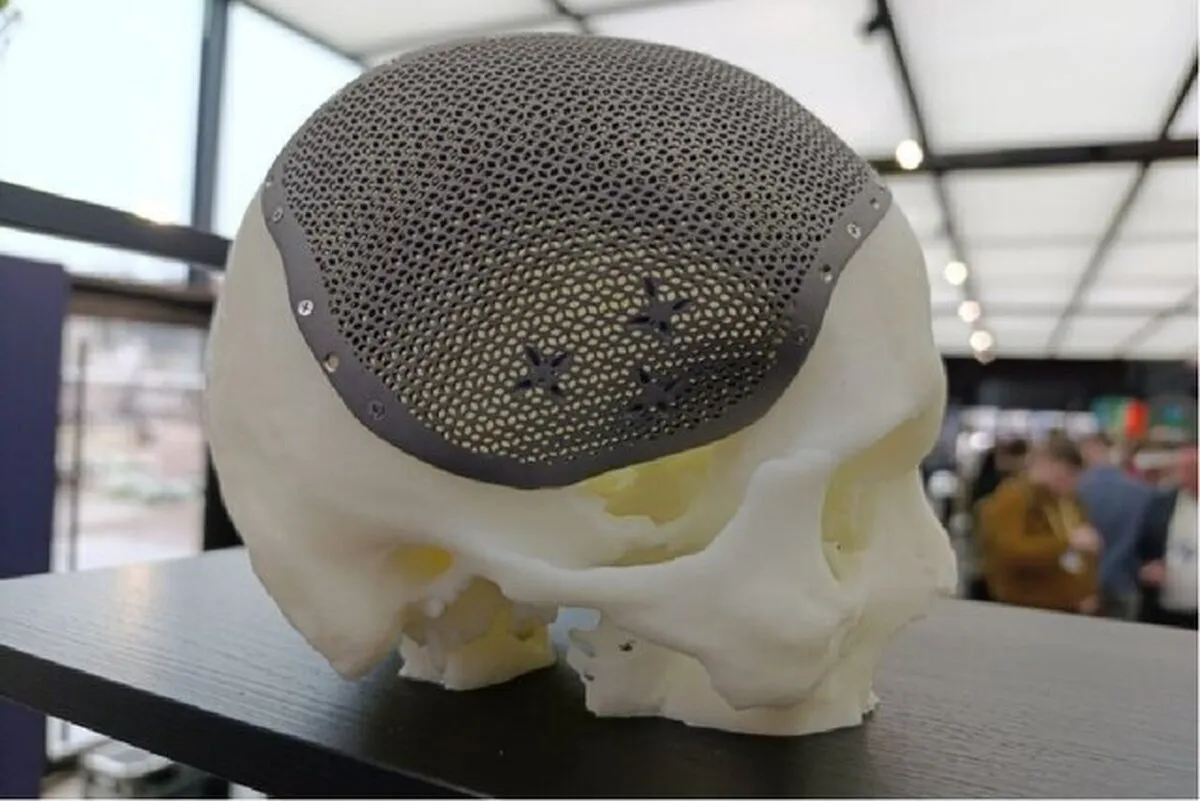
“Our company produces personalized prostheses that are designed and produced using 3D printers,” said Ali Poursamar, a faculty member of Isfahan University of Medical Sciences and the managing director of the knowledge-based company.
“These prostheses are made for people who have had a part of their face not formed properly due to car accidents or congenital problems. We use 3D scanning to reconstruct the damaged part and then place the prosthesis in the patient's body during surgery,” he added.
“The material loaded into these prostheses stimulates the body to form bone in the area of the implant. This process has an advantage over using metals or plastics because it can help the area gradually turn into real bone tissue,” Poursamar said.
In a relevant development in July, Iranian researchers at a knowledge-based company had also succeeded in designing and developing two advanced devices in the field of orthopedic and spinal surgeries by using 3D printing technology and artificial intelligence.
“At present, we have two main products, one of which is an intervertebral cage and the other is spinal guides,” said Kousha Abdollah Faridani, a member of the knowledge-based company.
Explaining about the intervertebral cage, he said, “This piece is used when the doctor diagnoses that the disc should be removed from the body for any reason, such as the growth of a cancerous tumor. After the disc is removed, a replacement piece is needed, and we have designed this cage to be placed between the two vertebrae and maintain the appropriate distance. This part must also have a specific geometry and be of the right material.”
“We have designed this cage in an innovative way and by using 3D printing technology. The porosity created in the cage structure is such that bone tissue quickly penetrates it and the part is integrated with the bone. This feature prevents the cage from slipping after implantation and will stabilize it over time,” Abdollah Faridani said.
He elaborated on the company’s second product which is spinal guides, saying, “When the doctor decides to use screws instead of a cage to connect the vertebrae, it is very important that these screws are inserted with high precision in the correct place, because otherwise they may damage the spinal canal or muscles. To solve this problem, we have designed guides that help the doctor determine the exact path of the screws.”
“These guides are generated in two ways; manually and by using artificial intelligence. In the second method, the doctor gives the patient's CT scan to our artificial intelligence algorithm, and the system designs the appropriate guide completely automatically,” Abdollah Faridani noted.
4155/v